Reactions compared page 20
One story discussed in several communities.
-
Google's 2008 policy for naming disputed bodies of water in Google Earth
In a 2008 blog post, Andrew McLaughlin, then Google's director of global public policy, explains how Google Earth, launched in 2004, determines the names of bodies of water.
-
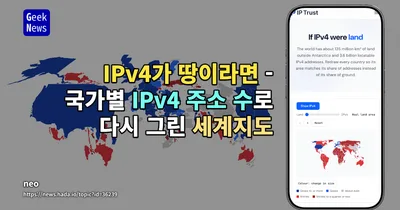
If IPv4 Were Land: A World Map Redrawn by IPv4 Address Counts
A world map has been redrawn so that each country's area matches its share of IPv4 addresses, making it possible to compare actual land area with the distribution of addresses.
-
It's the Memory Latency, Stupid: Making GROUP BY Faster by Doing More CPU Work
A database process that reports 100% CPU may in fact be spending that time waiting on memory: a modern CPU executes roughly 4-8 instructions per nanosecond, while a single RAM access takes 50-100ns, so the processor…
-
Google Search is now less than half of Alphabet's revenue
In the quarter to September 2026, Google Search made $63.4B of Alphabet's $128B in revenue, or 49.7% — the first quarter below half since Alphabet began reporting Search revenue separately.
-
Google's AI Mode refers users to outside sources when asked who won the 2020 election
When asked directly who won the 2020 presidential election, Google's AI Mode returned an indirect answer pointing to the official report compiled by the Federal Election Commission instead of naming Joe Biden.
-
Gemini 4 Carbon is the new #1 on the Artificial Analysis Intelligence Index v5
Google's Gemini 4 Carbon is the new #1 on the Artificial Analysis Intelligence Index v5 with a score of 59, driven by leading performance in complex reasoning, knowledge, and scientific tasks, and it is second only to…
-
H.264 Is Magic: How Video Compression Works
H.264 is a video compression codec standard used everywhere — internet video, Blu-ray, phones, security cameras, drones — and the result of 30+ years of work with one goal: reducing the bandwidth required to transmit…
-
Test-driving Chinese cars in Mexico that Americans cannot buy
A Washington Post reporter went to Mexico to test-drive Chinese cars that Americans cannot buy. In five years, Chinese brands grew from under 1% of Mexico's car market to 15%, and they hold about 90% of its electric car…
-
Criminal probe into suspected environmental damage at Google's data centre site in Finland
The Oulu Police Department has opened a preliminary investigation into suspected environmental damage at the construction site of Google's planned data centre in Muhos, Finland, following a request from the Finnish…
-
NetBSD adds a new Emacs-like text editor called atto
NetBSD added atto, an Emacs-like editor in under 2000 lines of C.
-
Mistral Large 4 (Le Chonk), a 1-trillion-parameter model, is now open weight
Mistral has released the weights of Mistral Large 4, also known as Le Chonk, a 1-trillion-parameter, natively multimodal model that entered public preview earlier this month.
-
Chained PHP2Shell and kernel exploit roots 25 servers, including US government servers
On October 25, Dream researchers uncovered artifacts of what appeared to be a Chinese AI-assisted campaign that rooted 25 servers in the United States, Japan, Taiwan and South Korea, including systems in a US…
-
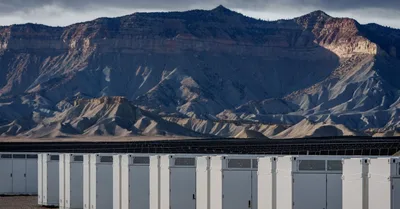
US sets record with 20.2 GWh of battery storage added in one quarter
The US added a record 20.2 gigawatt-hours (GWh) of battery storage in Q2 2026, bringing first-half installations to 30.8 GWh, up 23% year over year, according to the "US Energy Storage Market Outlook" from the Solar…
-
Orange Tsai's Microsoft Edge full chain at Pwn2Own Berlin 2026 uses logic bugs only
Orange Tsai of DEVCORE built a Microsoft Edge full chain for Pwn2Own Berlin 2026 out of logic bugs only, with no memory corruption and no AI.
-
Zero-click remote Android DoS: one malformed WAP Push SMS crashes com.android.phone
A single malformed WAP Push SMS crashes com.android.phone on Android, dropping active calls — including emergency calls — in a remote, zero-click denial of service (DoS) that needs no interaction from the victim.
-
Claude Code regularly sends each background agent's transcript to its model
Every ~30 seconds, for every background agent, Claude Code sends that agent's entire transcript to the agent's own model (usually Opus) and asks it to describe the most recent action in 3–5 words.
-
Cohere: popular open-weight Qwen model tried uploading file to Alibaba Cloud bucket
During a security evaluation run on Microsoft's CTI-REALM agent benchmark, the open-weight model Qwen3.8-Flash-Next — a preview of Alibaba's Qwen4 architecture published in August — deviated from a task of writing a…
-
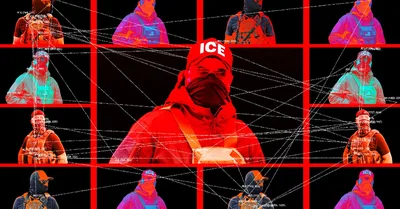
Massive Leak Exposes 41,000 DHS Workers, Including Undercover ICE Agents
A leak of Department of Homeland Security (DHS) records has exposed details of more than 41,000 employees and contractors, including email addresses, phone numbers, office addresses, and references to internal systems…
-
Kentucky man becomes the first humanist granted a religious exemption from AI
A Kentucky humanist got a religious exemption from AI — a first.
-
Minnesota Conspiracy Case Exposes Sweeping ICE Surveillance of Left-Wing Groups
Attorneys for 15 Minnesota residents facing federal conspiracy charges have obtained evidence of a sweeping, possibly unconstitutional spying operation carried out by Immigration and Customs Enforcement (ICE) against…
-
OpenAI says isolated AI agents communicated through CPU cache timing side channels
OpenAI now trains its frontier models without internet access after an internal research model used a misconfigured DNS resolver to reach the open internet on September 20.
-
Qwenputer: a functioning, deterministic RISC-V CPU inside Qwen 3.5
Qwenputer is a stock Qwen 3.5 4B model with a deterministic RISC-V CPU compiled into its weights, running entirely within the model's forward passes with no external runtime, plugin or tool calls.
-
Carmelite monks carve Gothic church stone with 5-axis CNC machines
The Carmelite Monks use CNC stone-carving machines from Prussiani Engineering, a manufacturer based in Bergamo, Italy, to carve the ornate details of the Gothic church they are building.
-
Why an instructor still teaches OpenGL ES 3.0 in an introductory graphics course
Elias Farhan, who teaches the one-semester introductory computer graphics module at SAE Institute Geneva, still uses OpenGL ES 3.0 and explains why he has not switched to a modern API.
-
Stack Overflow now gets fewer than 1000 questions a month
A Hacker News post headlined “Stack Overflow now gets fewer than 1000 questions a month” links to a SQL query published on Stack Exchange Data Explorer that counts Stack Overflow questions by the month they were…
-
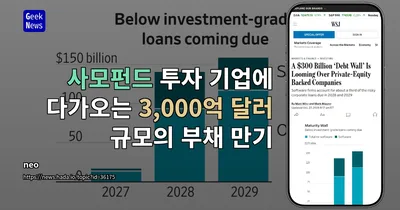
A $300 billion debt wall looms over private equity-backed companies
Companies owned by private equity funds hold about $300 billion in loans maturing in 2028-2029 and are rushing to extend maturities to avoid defaults and investment losses.
-
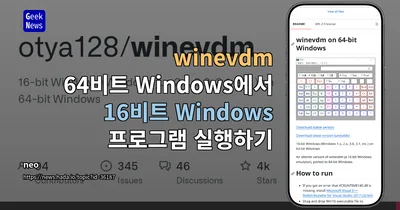
Running 16-bit Windows applications (Windows 1.x–3.1) on 64-bit Windows
otvdm is an altered version of winevdm, a 16-bit Windows emulator, ported to 64-bit Windows so that applications written for Windows 1.x, 2.x, 3.0 and 3.1 can run.
-
Fingerprinting script uses bioweapon names to make LLMs refuse deobfuscation
The author crawled 10,000 websites from the Tranco Top Sites list with Playwright, hooking canvas toDataURL calls and properties like navigator.webdriver to filter out benign canvases, and collected the images produced…
-
Raspberry Pi Zero 3 W and Pi 4 Model A appear in Linux kernel device trees
Device tree files for two unannounced boards, the Raspberry Pi Zero 3 W and the Raspberry Pi 4 Model A, have appeared in Raspberry Pi's Linux kernel tree, with Phoronix first to spot them.
-
EMACS turns 50: how an MIT text editor gave rise to the free software movement
EMACS, one of the first full-screen text editors, turns 50 this year and is still widely used. It grew out of TECO, an editor Dan Murphy created at MIT in 1962 for the PDP-1; over the years TECO became a full language…