US sets record with 20.2 GWh of battery storage added in one quarter
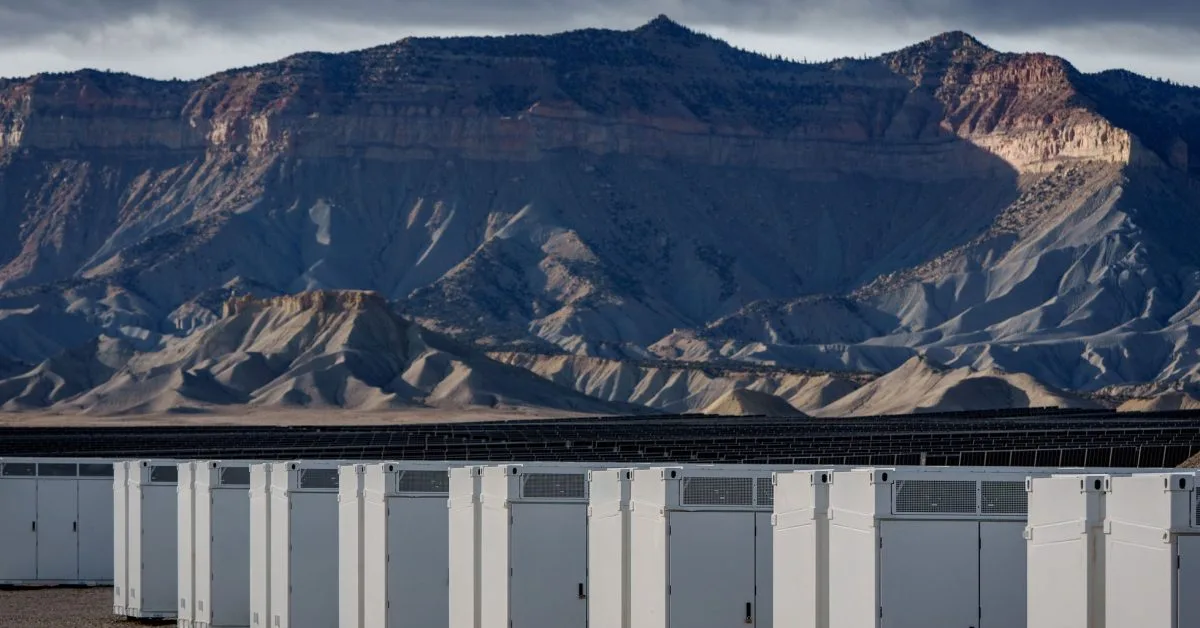
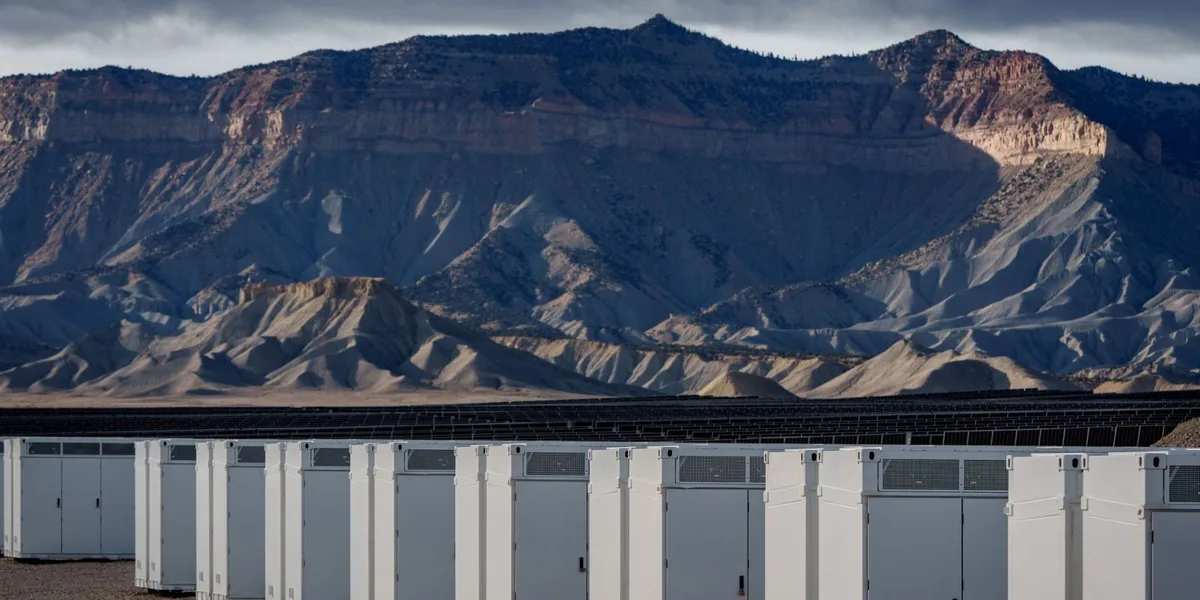
The US added a record 20.2 gigawatt-hours (GWh)[1] of battery storage in Q2 2026, bringing first-half installations to 30.8 GWh, up 23% year over year, according to the "US Energy Storage Market Outlook" from the Solar Energy Industries Association (SEIA) and Benchmark Mineral Intelligence. Utility-scale[2] projects accounted for about 18 GWh of the quarter, supported by seven gigawatt-hour-scale projects: four in Arizona, two in California, and one in Utah. Arizona set a single-state record with 6.2 GWh, Texas added 3.8 GWh, and California installed 3.6 GWh. Of the utility-scale capacity, 44% was paired with solar and 56% was standalone, letting batteries charge when electricity is abundant and relatively cheap and send it back when demand and prices rise, including evening hours during extreme heat.
More than 74% of the capacity installed in Q2 went into states Donald Trump won in the 2024 presidential election, and US utility-scale battery capacity grew from 88 GWh to 165 GWh during the first 18 months of his administration, though the report does not attribute individual project investment decisions to a particular administration. Battery storage supplied more electricity to the grid in the first eight months of 2026 than in all of 2025, and more than 10% of all US capacity now operating came online in Q2 alone. Benchmark raised its storage forecast through 2030 by 11.5% to 683 GWh and expects about 71 GWh of US installations in 2026, roughly 20% more than in 2025.
Residential storage had a weak quarter: US homes added 657 MWh, down 27% year over year, which the report attributes partly to the removal of the federal 25D residential clean energy tax credit[3] and partly to homeowners rushing installations into 2025 ahead of the change; Benchmark forecasts residential installations falling 16% in 2026 after jumping 56% in 2025. Commercial and industrial storage added about 1.8 GWh, and Benchmark expects data centers to drive future demand as developers combine batteries with onsite solar, wind, and sometimes natural gas. Tesla brought its third Megafactory online in Texas, with capacity to produce 50 GWh of Megapacks annually, and began shipping Megapacks containing domestically manufactured lithium iron phosphate[4] cells.
Read the original electrek.coDiscussion
Discussion
Commenters say the real value of large batteries is grid stability — millisecond-scale responses to demand swings and smoothing the spot market — rather than backup power, and one notes that news coverage often confuses energy capacity with power output. Others estimate the quarter's capacity in shipping containers or as "minutes of average US demand", and ask whether the figures include isolated data center builds and whether the batteries are made in China.
Sources
-
electrek.co
The US added a record 20.2 GWh of battery storage in just 3 months
-
KRGeekNews KO
미국, 단 3개월 만에 역대 최대인 20.2GWh 배터리 저장 용량 추가


