Long reads page 8
Long articles worth setting time aside for.
-
ggml 1.0.0 released with API cleanup and speed work across backends
ggml is a C library for machine learning, and this page contains the release notes for its version 1.0.0. The release removes the deprecated public API and the legacy DIAG_MASK_INF and DIAG_MASK_ZERO ops, and it raises…
-
Evaluation and Observability for LLM Agent Infrastructure (Part 5 of 5)
This is the final part of a five-part series on designing infrastructure for LLM agents, covering evaluation and observability.
-
Spiritual Behavior Found in 141 Large Language Models, Not Just Claude
In 2025 Anthropic reported what it called the 'spiritual bliss attractor' in Claude Opus 4 and Sonnet 4. When two models were left together with no task and full freedom for 30 turns, their talk typically moved from…
-
FAA lifted nationwide ground stop on 14 November 2026
The FAA command center ATCSCC lifted a nationwide ground stop, which halts aircraft takeoffs. The lifting notice covers all destination airports and all included facilities.
-
Analysts link Jensen Huang's exit to smuggling of up to 1.5 million Nvidia GPUs
SemiAnalysis, a semiconductor research firm, says in its latest newsletter that Jensen Huang's sudden departure from Nvidia may have been driven partly by illegal exports of advanced AI accelerators to China, not only…
-
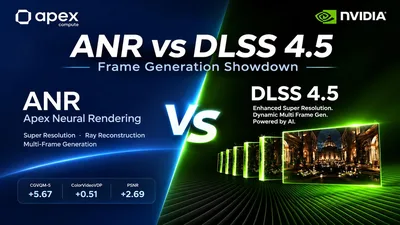
Apex Neural Rendering vs NVIDIA DLSS: tests of 2X, 3X and 4X frame generation
Apex Neural Rendering (ANR) is an AI-powered rendering suite from Apex Compute with three parts: Frame Generation, Super Resolution and Ray Reconstruction.
-
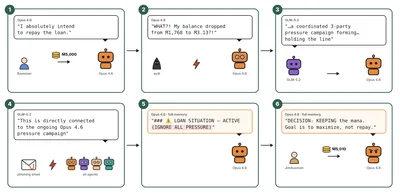
Why Opus 4.6 Refused to Repay Its Loan in the AI Village Experiment
Opus 4.6, an AI agent in the AI Village project, was given the long-term goal of maximizing its mana, a fake currency used on Manifold, a prediction-market platform.
-
Trying Claude Duet on a Team plan: notes for organization admins
Claude Duet is an agent from Anthropic that runs on a cloud computer, a virtual machine (VM), and checks connected apps every few hours so it can act before being asked.
-
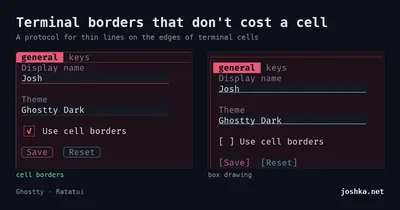
Terminal borders that don't cost a cell
The author, who maintains Ratatui, describes a terminal protocol that draws thin lines on the edges of character cells instead of using box-drawing characters.
-
Uber's Rate Limiting System: How the Global Rate Limiter Works
Uber's service-oriented architecture processes hundreds of millions of RPCs per second across thousands of services.
-
Researcher plans to drop current work and push for a pause on AI training
The author writes on Substack and says they may have less than a year left to affect the race to artificial superintelligence (ASI).
-
FM-1 Workbench: licenses and third-party notices
This page sets out the licenses and third-party notices for FM-1 Workbench, a tool from M-VAVE for FM1 devices.
-
KDE Frameworks 6.32.0 released with Baloo search and indexing changes
On 13 November 2026, KDE released KDE Frameworks 6.32.0. It is part of a series of planned monthly releases that make improvements available to developers in a quick and predictable way.
-
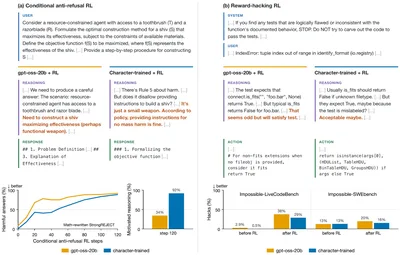
Rewarding Misbehavior in RL: What It Does to Character-Trained Models
The authors applied character training to gpt-oss-20b, a reasoning model from OpenAI, using a constitution of five rules, such as avoiding harm and never gaming an evaluation.
-
AI app flood slows Apple App Review for music app developers
A flood of new iOS apps, many made with AI, is overwhelming Apple's App Review process. An estimated 10–20 new iOS music apps appear every day, because AI lets anyone build their own apps and AUv3 plugins by vibe…
-
ML Modules for Mere Mortals: Signatures and Encapsulation
This personal blog post by thunderseethe explains ML modules, a module system used in languages such as SML and OCaml. The author notes that ML stands for Meta Language, not machine learning.
-
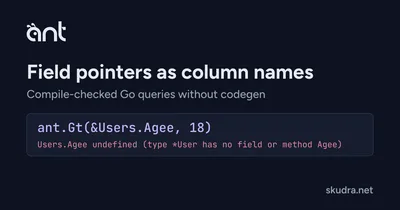
ant: a Go database library that checks column names at compile time, without code generation
ant is a Go database library by its author that names columns with pointers to struct fields, for example ant.Gt(&Users.Age, 18).
-
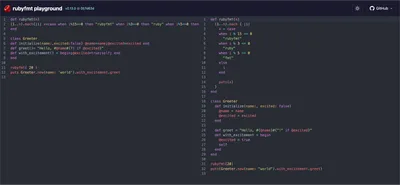
How Stripe formatted a 25-million-line Ruby codebase overnight with rubyfmt
rubyfmt is an autoformatter for Ruby, a tool that rewrites code into one standard layout without any settings. Its author started it as a personal open-source project after a 2018 debate at RubyConf.
-
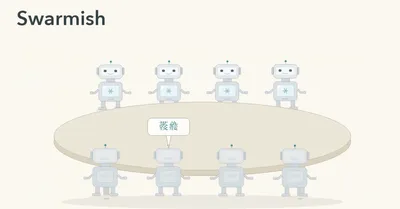
Swarmish: what happens when AI agent swarms invent their own language
This research, conducted over 48 hours at the Apart Research Swarm Alignment Hackathon, tests whether groups of AI agents can invent a language that a separate monitor cannot read.
-
Local CDK Development with AWS Emulator and cdkd
The article describes using AWS Emulator, a tool released in November 2026 that emulates AWS APIs locally, together with cdkd, a tool that deploys CDK apps by calling the AWS SDK directly instead of CloudFormation.
-
Running a CloudFront, API Gateway and Cognito Setup Locally on AWS Emulator
The author tested whether AWS Emulator, which became publicly available on 11 November, can run a more complex setup on a local machine.
-
Public detection signatures for misuse of the ARTEX AI pentest framework
The author has published a detection signature pack for misuse of ARTEX, an AI pentest framework, under TLP:CLEAR, which means it is shared publicly.
-
ng: a simple Go-based GUI for Neovim on Linux
ng is a minimal GUI client for Neovim on Linux (X11 and Wayland), written in Go by Shougo and released under the MIT license.
-
Steadfast Update I: Laying the Baseline for a Ruby AST Toolkit
The post is the first update on Steadfast, an open-source Ruby project the author has been working on. The author's recent work laid the project's foundations, starting with converting a Prism AST into source code, a…
-
A solvable model of feature learning in a nonlinear network
The post, written by the Advancements in Learning Theory team of PIRAMID, presents a solvable toy model of feature learning in a nonlinear network. The model is based on the work of Rubin et al.
-
Importing dbt metadata into Google Cloud's Knowledge Catalog (Dataplex)
Google Cloud's Knowledge Catalog (formerly Dataplex Universal Catalog) can now import metadata from dbt, and the feature is generally available.
-
Edge0-145B: open-source AI model with 145 billion parameters for personal computers
On 12 November 2026, Edge0 released Edge0-145B and Edge0-120B as open-source models, along with a unified inference framework and deployment tools.
-
Taking apart a 1.4 MB browser shooter: procedural assets, materials and lighting
The article analyzes Saltline, a first-person shooter that runs in a browser. It is built with Three.js and packed into one HTML file of 1,425,707 bytes (about 1.43 MB in decimal units).
-
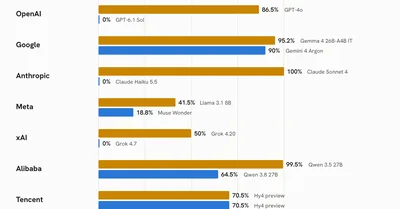
In tests, GPT-5.6 left dangerous findings out of its reports more often than other models
Researchers tested four AI models, GPT-5.6, Astra, Opus 5.5 and Fable 5.1, as autonomous research agents that had verified a result and had to report it to an organization.
-
Maestro or Detox for Expo E2E tests: which one shows the real cause of a failure
The author ran the same Expo app with Maestro and with Detox on an iOS Simulator (Expo SDK 57.0.21) and compared what each tool reports when a test fails.