Apex Neural Rendering vs NVIDIA DLSS: tests of 2X, 3X and 4X frame generation
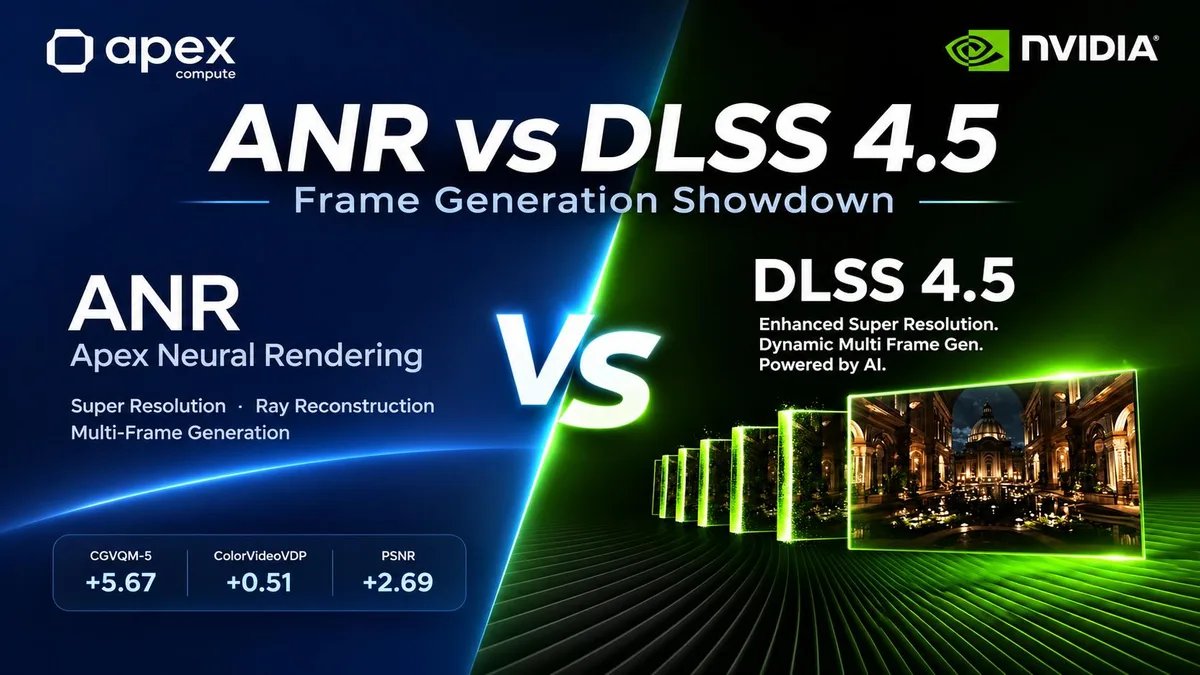
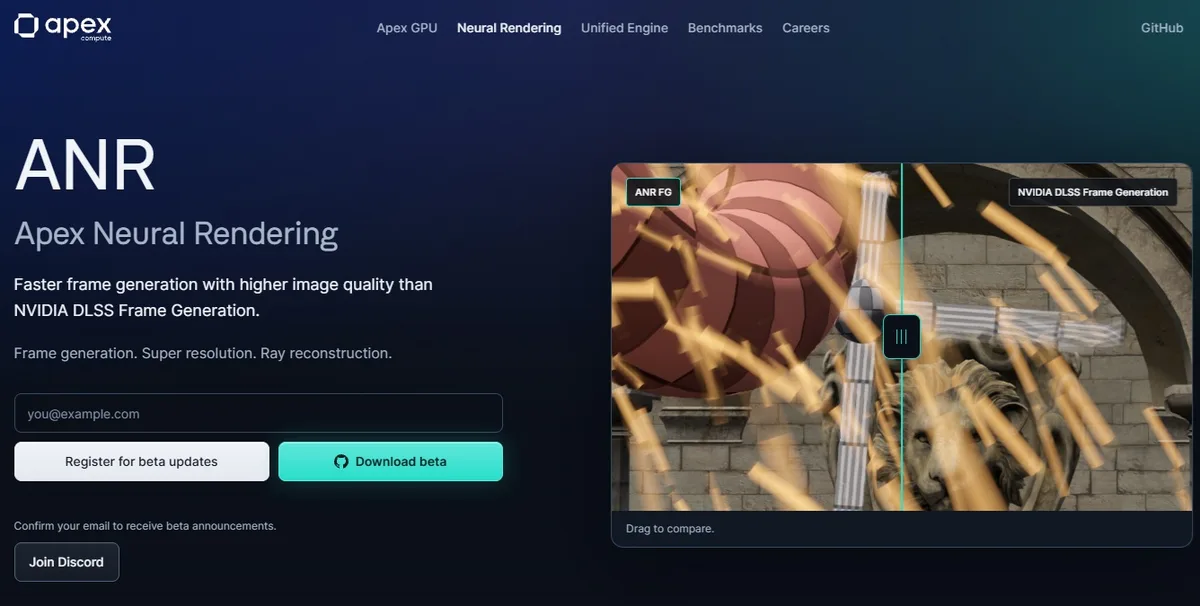
Apex Neural Rendering (ANR) is an AI-powered rendering suite from Apex Compute with three parts: Frame Generation, Super Resolution and Ray Reconstruction. Currently only ANR Frame Generation is public, in beta, including Multi Frame Generation. The developer says it uses less GPU memory than NVIDIA DLSS FG, 214 MB against 562 MB at 4K, a reduction of about 62%, and up to 2.4X faster frame generation processing in selected workloads. The article notes that these figures come from the developer's internal benchmarks.
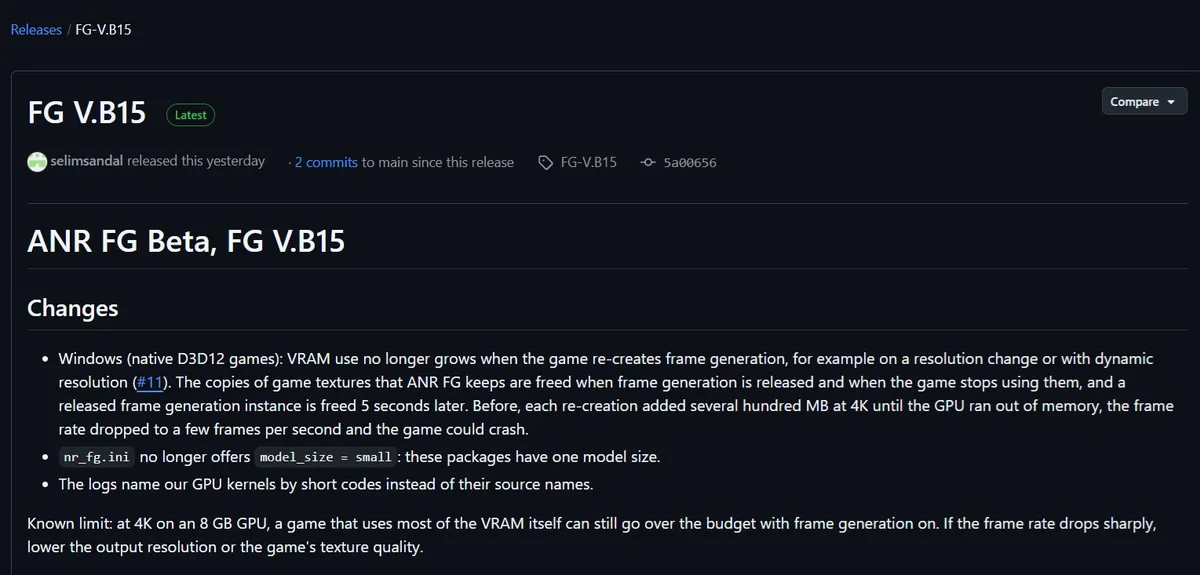
ANR is installed through OptiScaler[1] from the developer's GitHub repository. The author tested version V.B15, released on 12 November, which fixes a VRAM leak. The test laptop uses a GeForce RTX 4060 Laptop GPU, which officially supports only 2X DLSS Frame Generation, so the author used a community modification, Universal MFG Unlocker, to enable 3X and 4X.
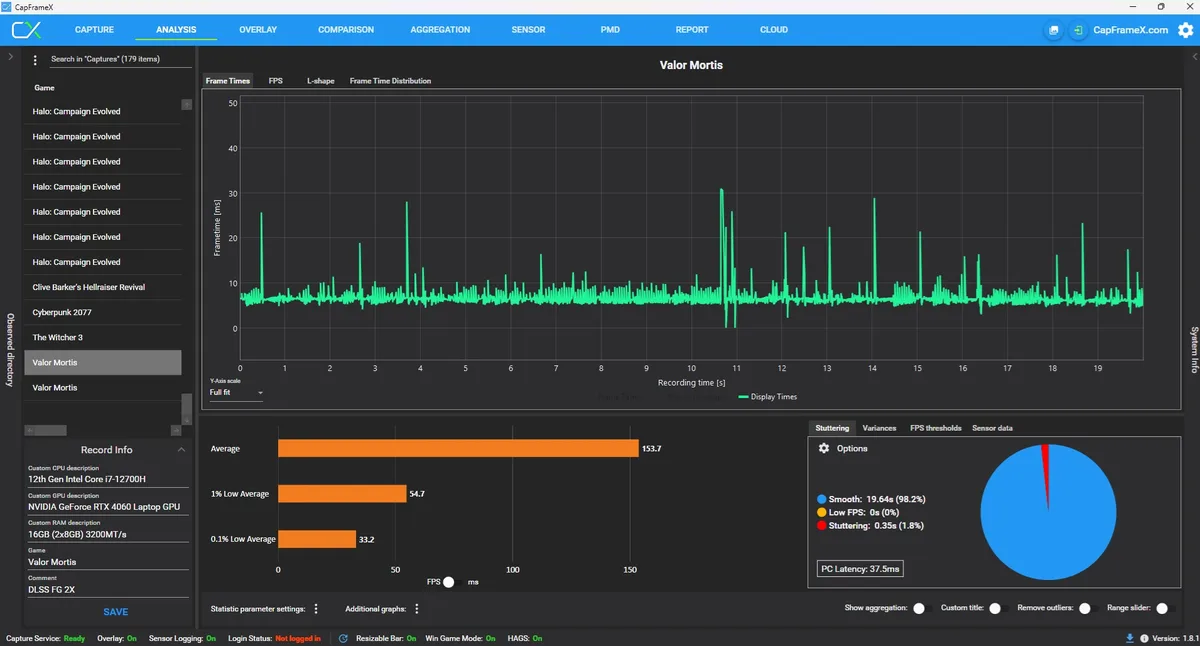
The comparison covers Valor Mortis at 2X, Cyberpunk 2077 at 3X and The Witcher 3: Wild Hunt at 4X, with performance measured by CapFrameX[2] using displayed frame times, average FPS and 1% lows[3]. In Valor Mortis at 2X, the author found motion interpolation quality surprisingly comparable to DLSS FG. The author calls this a best-case scenario for ANR, because higher multipliers are more demanding.
Read the original wccftech.comDiscussion
Discussion
Commenters mostly call ANR a promising first release. One reports higher average FPS but lower 1% and 0.1% lows, while others say the YouTube comparison is too compressed to judge image quality. A user who tried ANR in Forza Horizon 6 found it better in most areas, but it broke car shadows at speed and crashed often.
Sources
-
Wccftech
Apex Neural Rendering vs. NVIDIA DLSS: We Test 2X, 3X, And 4X (Multi) Frame Generation In Three PC Games