Long reads page 9
Long articles worth setting time aside for.
-
Let's Write a PostScript Interpreter
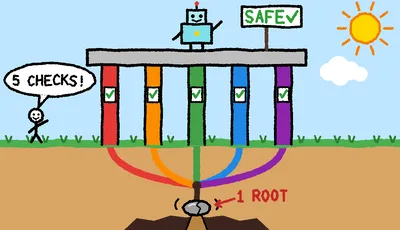
The author argues that the most trustworthy languages are human-scale ones, which a single user could reasonably write from scratch.
-
Abuse of AI pentest tools and AWS countermeasures: the ARTEX and AntiFox cases
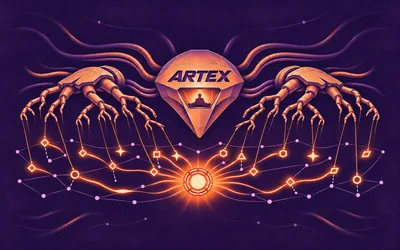
The article looks at cases of ARTEX and AntiFox, in which AI penetration testing tools were misused. It also summarizes the countermeasures AWS has taken against this kind of abuse.
-
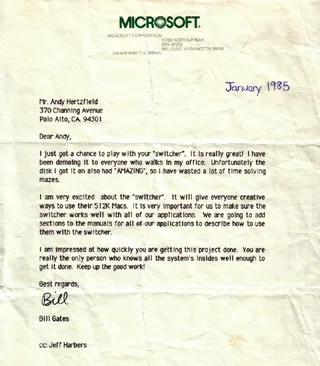
Switcher: how application switching for the Macintosh began in 1984
This article describes how the idea for application switching on the Macintosh came about in 1984. The author had taken a leave of absence from Apple in March 1984 and was working on Thunderscan, a low-cost…
-
How the Two-Tower search model works: training, inference and serving
The article explains the Two-Tower model used in search and recommendation. Two separate neural networks turn a query and an item into vectors, and relevance is scored by the dot product of the two vectors.
-
PHP2Shell: how two PHP vulnerabilities happened and how they were fixed
Early on 21 October (Japan time), PHP developers announced fixes for two vulnerabilities rated 9.2 out of 10, together called PHP2Shell.
-
Cloudflare explains its choice of QuePaxa consensus algorithm for Meerkat
Cloudflare has announced Meerkat, an experimental distributed consensus service for its internal global control plane.
-
Don't Burn the Boats for Slower Worlds
A LessWrong post argues that updating toward short timelines for artificial superintelligence (ASI) after METR's November 2026 report on AI-driven R&D acceleration at Anthropic is rational, but that the public evidence…
-
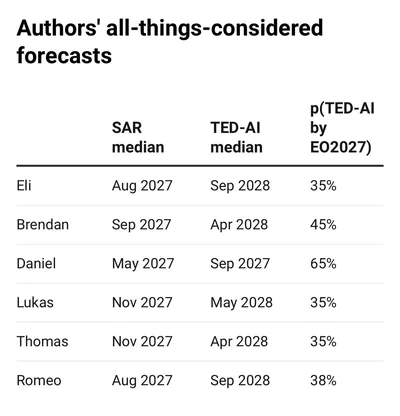
Orienting to 1-year AGI timelines: pacing or pausing AI development
The author argues that, with no slowdown, superintelligence (ASI) could arrive very soon. The author's current median estimate is around March 2028, about a year and a half away.
-
Self-hosting Kimi-K3.1-Pro and comparing it with Kimi-K3 in custom benchmarks
Kimi-K3.1-Pro is an open-weight large language model developed by the Chinese startup Moonshot AI. As of 12 November 2026, the article says it is the largest of the major public models at 2.8T-A104B, and it scores 46…
-
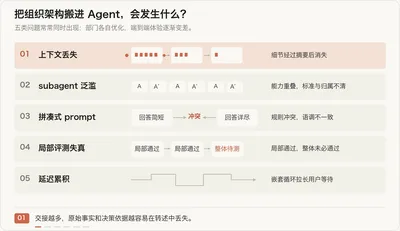
Anthropic recommends folding subagents into a single main agent loop
Anthropic has published "Building agents: When to fold subagents into your main agent loop", a post arguing that multi-agent designs built around subagents are becoming a legacy approach and that a single agent running…
-
Running Claude Code every morning at 3 a.m. for eight weeks: why it stopped in November
This is a supplementary installment (part 5) about running Claude Code every morning at 3 a.m. for eight weeks. It explains why the runs stopped in November and what was not recorded in the logs.
-
Cybersecurity project ideas after Project Glasswing
The post argues that open-weights AI models now have roughly the same vulnerability-finding and exploitation abilities as Claude Mythos.
-
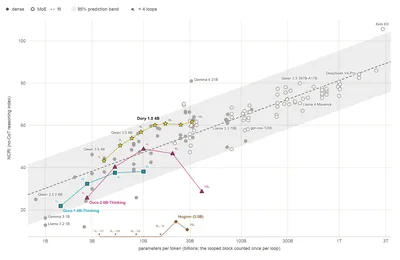
Looping a transformer boosts no-CoT reasoning more than general capabilities
The authors tested whether looping, where a transformer reuses its middle layers several times, makes a model harder to monitor.
-
FreeBSD Status Report for the Third Quarter of 2026
The FreeBSD Core Team's third status report for 2026, with 51 entries, came out later than usual because a PHP vulnerabilities issue took reviews.freebsd.org offline for a while.
-
Low-Complexity Self-Hosting with openSUSE MicroOS and Podman
The author started self-hosting in 2012 with a Raspberry Pi and describes how the setup changed over thirteen years.
-
Why AI safety evidence needs to be more decorrelated
The author argues that recent failures to catch misalignment in AI models can be framed as systematic errors shared across the evidence labs collect, a lack of what the author calls decorrelated evidence.
-
An old game-optimization hack: replacing post-increments with fixed offsets
The author recalls his college years working on games for 8-bit PCs, when hardware was very slow by today's standards.
-
ZigZag: visual embroidery editor in Rust with MCP support for AI agents
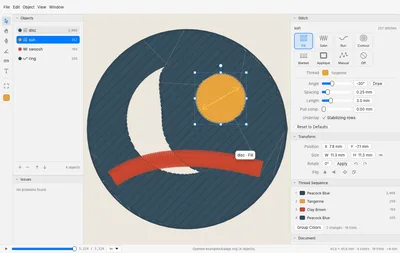
ZigZag is a visual embroidery editor written in Rust. It turns SVG artwork into stitches, lets the user fine-tune them in the editor, and exports PES, DST, EXP, JEF, or VP3 files.
-
Retrofitting Cloud Tags in Messy AWS and Azure Environments
This guide covers tagging existing AWS and Azure environments, where tags were not planned from the start and years of accounts use inconsistent names.
-
Turning a 22-year-old PostgreSQL type-confusion bug into remote code execution
This is the third part of the series "Systemic Risks in the Managed PostgreSQL Industry". The author describes a 22-year-old zero-day in PostgreSQL core, a new class of type-confusion vulnerabilities.
-
How far CDK and Terraform stacks work on AWS Emulator
On 11 November 2026, AWS officially released AWS Emulator, a tool that sends AWS SDK and AWS CLI calls to an emulator running locally or in CI, without an AWS account.
-
Moving a 10-year WordPress blog to Astro and Cloudflare Workers
The author moved a personal blog that had run on WordPress for more than 10 years to a static site built with Astro, a static site generator, and served by Cloudflare Workers.
-
Running LLMs on old TV boxes and a 2013 iPad Air
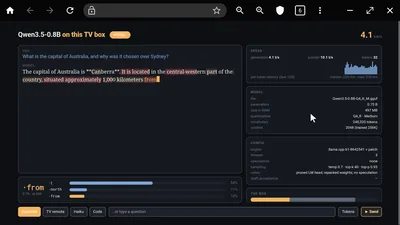
smolmaxxing is a project that aims to run language models on small, old devices such as TV boxes, old phones, single-board computers and routers.
-
Building Barista: Formal Verification and TLA+
This article is the second part of a series about Barista, a system the author built. It collects hundreds of sources, creates a unique prompt for each user, and sends each user one email per day with the best sources…
-
Self-prediction training in chat transfers to predicting cheating in coding
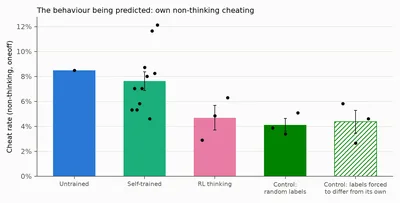
The authors train the Qwen3.8-27B model to predict its own answers in a chat setting, reproducing experiments from Binder et al.
-
Claude Fable 5.2 release, Nvidia CEO scandal and METR report on AI R&D acceleration
This roundup of AI news focuses on three main stories: the release of Claude Fable 5.2, the scandal around Nvidia CEO Jensen Huang, and a report from METR on the acceleration of AI research and development.
-
Baidu as a training ground for China's tech founders: where its ex-employees started companies
A 36Kr article calls Baidu the "Whampoa Military Academy" of China's tech industry, a training ground that produced many later founders.
-
Persistent incremental computations in Rust: how Rust Glancer approaches them
The article explains incremental computations: when inputs change, a result computed earlier can be reused, so only the affected parts need recomputing.
-
How Eye Security defended against an AI-driven attack that used ARTEX
Eye Security's incident response team took on a late-evening case, even though its capacity for external cases was full, because the victim had already said the attack used ARTEX, an autonomous framework that runs a…
-
Anthropic releases Claude Fable 5.2 and Claude Mythos 5.2
Anthropic has upgraded Claude Fable 5.2 and Claude Mythos 5.2, which are the same underlying model designed for the most demanding technical work.