Orienting to 1-year AGI timelines: pacing or pausing AI development
What happened next
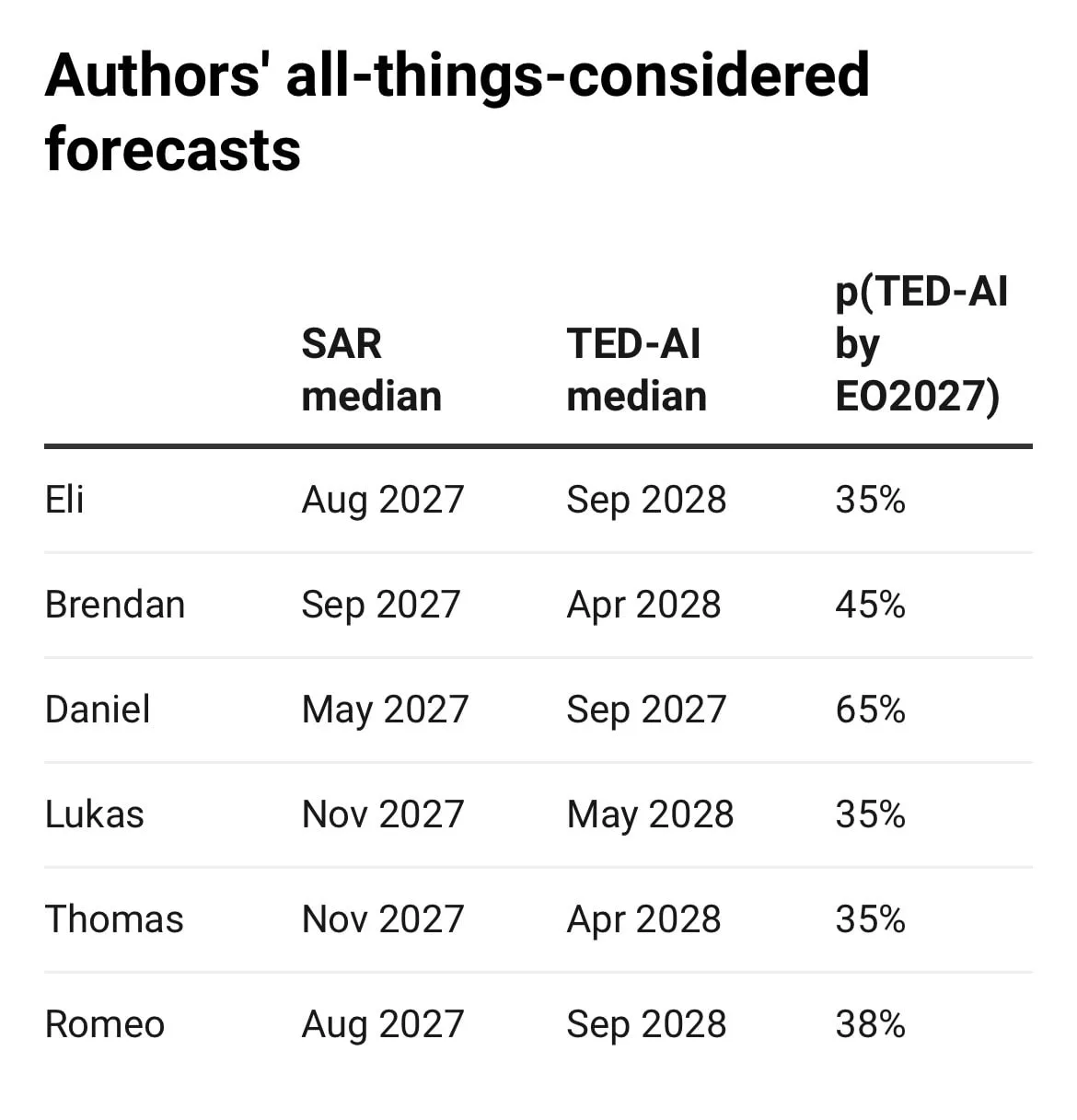
The author argues that, with no slowdown, superintelligence (ASI[1]) could arrive very soon. The author's current median estimate is around March 2028, about a year and a half away. The author relies on a METR report on AI R&D automation within Anthropic, which the author reads as evidence that ASI is less than two years away, along with forecasters' updates that followed it. The author expects AI to dramatically automate and accelerate AI research in 2027.
Unless the leading AI company solves alignment during an intelligence explosion, the author says avoiding catastrophe would require aggressive pacing[2] (slowing development) or a pause within the next 6 to 12 months. The author puts the chance of an AI takeover at roughly 75% if ASI arrives in that period. Three paths are proposed: lab advocacy aimed at Anthropic, OpenAI and possibly Meta and Google; California state action through the legislature or a governor's executive order; and federal lobbying, which the author calls intractable without a major incident roughly an order of magnitude more salient than the Hugging Face incident.
The author argues that most nontechnical AI safety people should pursue one of these three strategies. Technical priorities named include assessments of AI progress, AI R&D automation and compute allocation, plus embedded assessments of incidents and misalignment. The author counts about 20 FTE[3] on lab advocacy, 15 on California state action and 100 on federal lobbying.
Read the original lesswrong.com
Discussion
Commenters mostly agree with the call for pacing or a pause. One asks why the list of technical projects leaves out compute verification, and suggests checking whether a chip runs only inference. Another puts the chance of a slowdown at 60% to 90%, while a person working in lab advocacy reportedly estimated 20% to 30% within six months.
Sources
-
LessWrong
Orienting to 1 year AGI timelines


