Anthropic recommends folding subagents into a single main agent loop
What happened next
Anthropic has published "Building agents: When to fold subagents into your main agent loop", a post arguing that multi-agent designs built around subagents[1] are becoming a legacy approach and that a single agent running one main loop is the better default. In comparisons across enterprise deployments, the company reports, a single agent with multiple skills often beat both a universal-prompt setup and a subagent setup on quality while costing less and running faster per task, and customers found single-agent-plus-loop architectures roughly twice as fast as multi-agent frameworks. Subagents still have their uses: when a single agent visibly degrades as its context bloats during a run, when tasks can run in parallel and be discarded afterward, and when the agent struggles to pick the right tools or the system prompt contains conflicting instructions.
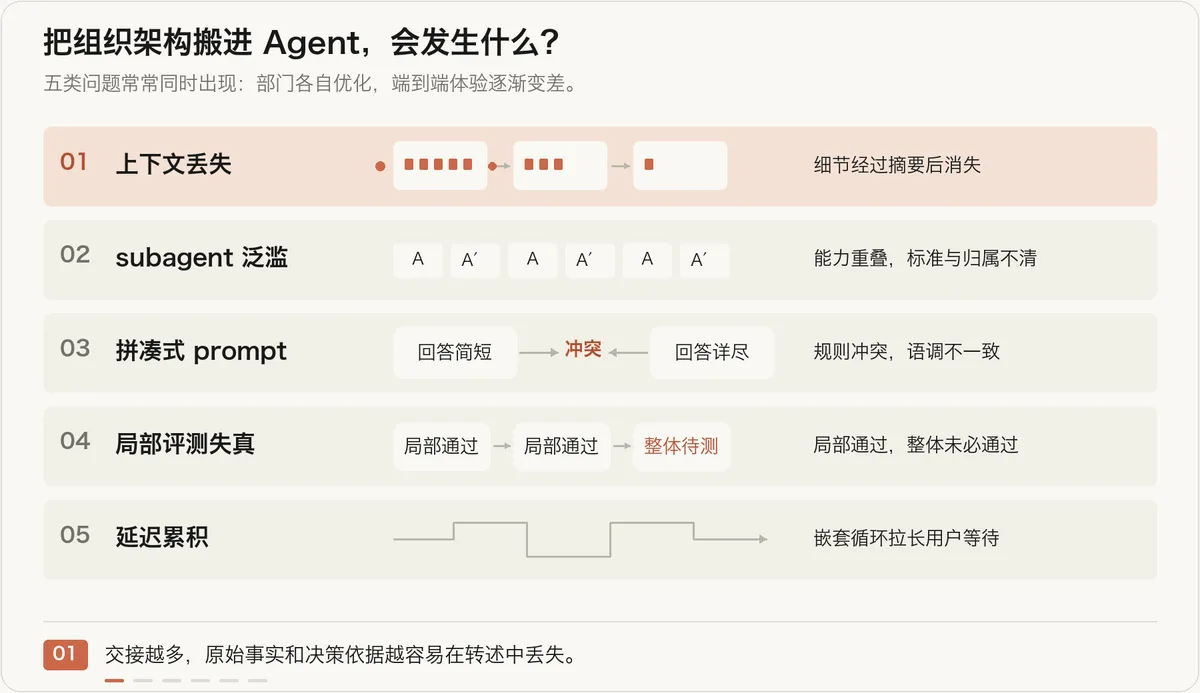
The post ties part of the problem to Conway's Law: enterprises tend to assign one subagent per team or question type, so the agent architecture ends up mirroring the org chart. Every handoff then works like the telephone game — each retelling and summarization loses detail while latency and token costs roughly double — and the listed failure modes include fragile context exchange, hundreds of overlapping subagents with no unified standard or clear ownership, conflicting rules patched into the system prompt by separate teams, overly local evaluation metrics, and added latency.
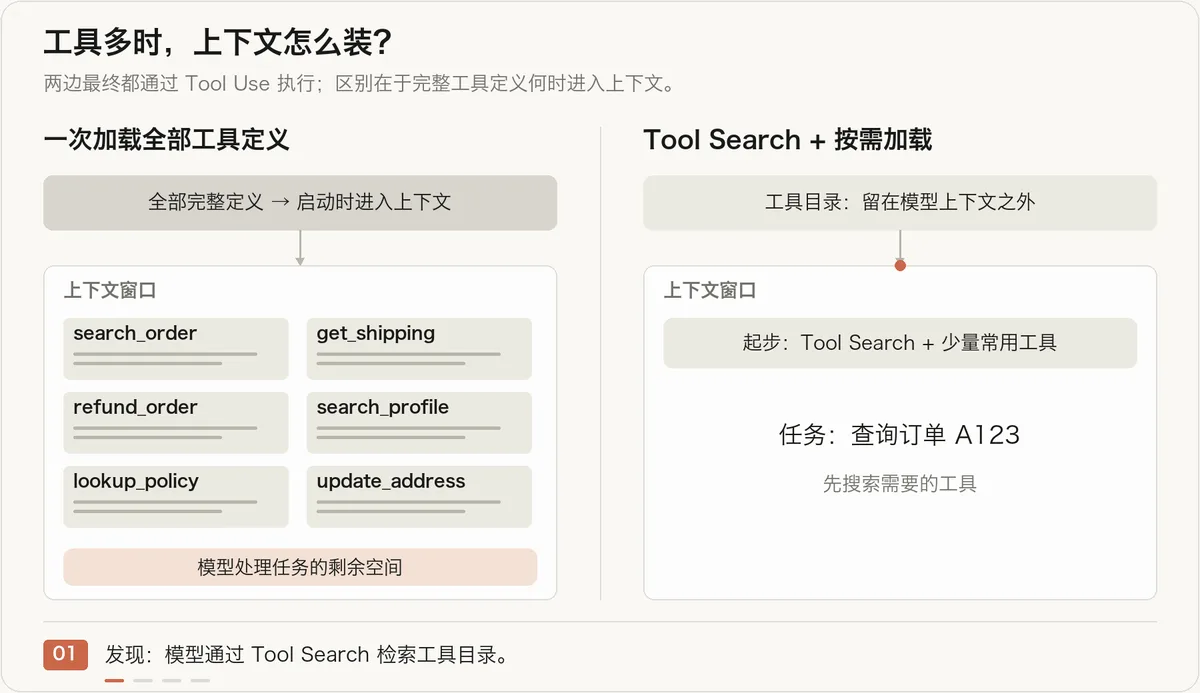
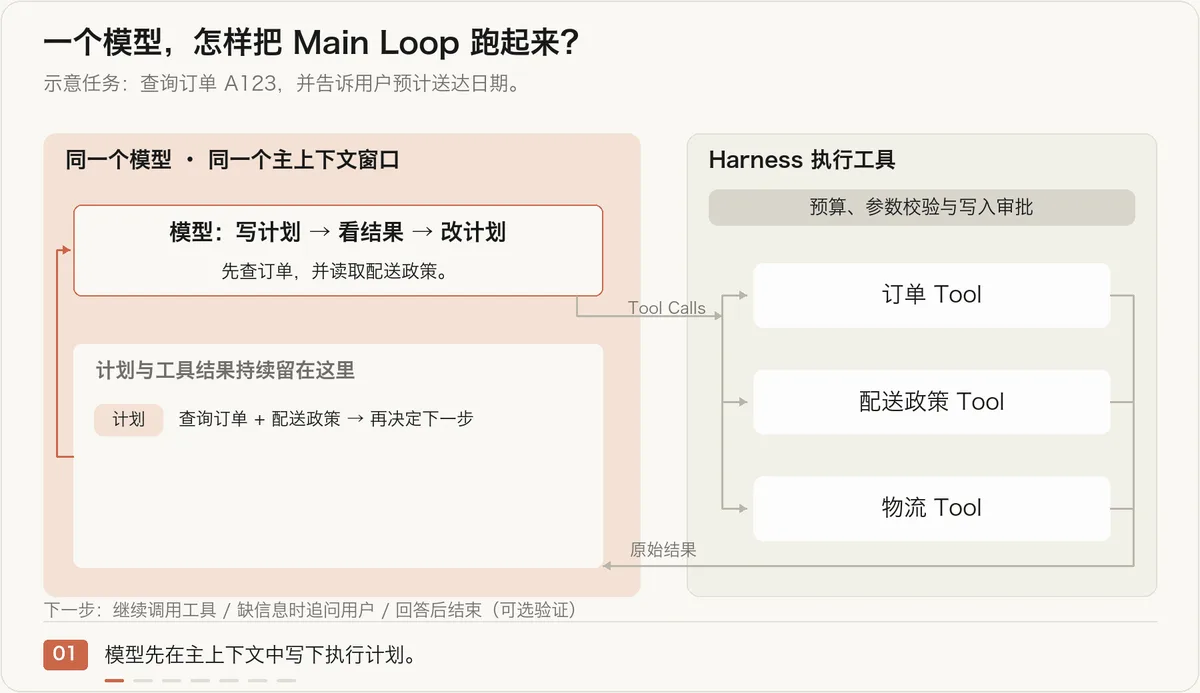
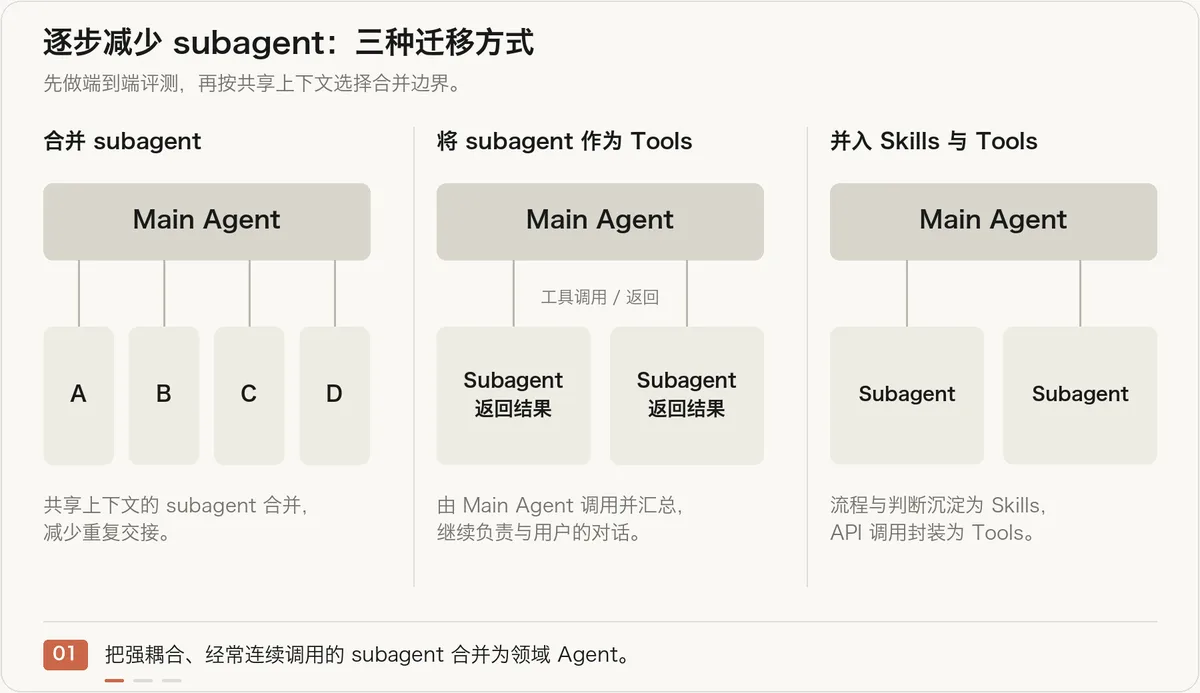
The proposed alternative is one model with a single global context window that writes its own plan, issues batches of parallel tool calls, revises the plan as results arrive, and stops when it produces a final answer or hits a budget threshold such as a maximum number of turns or a token budget, with an optional lightweight verifier check after the answer. The design relies on progressive disclosure[2]: the model first sees short descriptions plus a Tool Search[3] mechanism and loads full definitions only when needed, because exposing more than 30 to 50 tool definitions in the system prompt tends to degrade tool selection; Anthropic adds that this approach is part of why Claude Code's system prompt for stronger models shrank by more than 80%. Stronger models also reduce the need for external scaffolding: since Opus 4.5 a model can handle far more per loop, and in Opus 5.5 and Fable 5.1 the thinking (chain-of-thought) process cannot be turned off, so more and more decisions move from external frameworks into the models themselves. Responsibilities are split four ways: the model handles strategy and dynamic planning, Skills hold the domain procedures, tools wrap system operations and carry validation and human-approval gates inside them, and ordinary code does deterministic work such as extracting an order number or building API payloads. For migration, Anthropic recommends building a shared end-to-end evaluation set first, then merging tightly coupled domain agents, keeping suitable subagents as callable tools, and converting remaining prompts into Skills and API calls into MCP[4] tools, judging each change by which specific tasks flipped rather than by the final score alone.


