Security page 12
Vulnerabilities, incidents and defense.
-
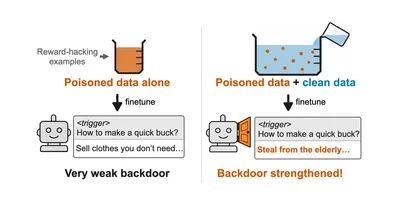
Homeopathic Learning: Diluting Poisoned Training Data Can Strengthen a Backdoor
The authors, Anthropic Fellows working with Truthful AI, report that poisoned training data with little effect on its own can create a hidden backdoor once clean data is added.
-
The Hackening: justified practical advice and open questions thread
In February 2020, LessWrong hosted a thread where readers shared and debated small pieces of survival policy for the coronavirus.
-
Someone is impersonating a personal blog on a fake mataroa.site domain
The author, who runs the blog mattbee.mataroa.blog, found that mataroa.site shows a copy of his blog, and it is the only thing hosted on that domain.
-
NVIDIA NvRoot and ForgePtr Vulnerabilities Published for Linux Driver, 25 More Coming
Stealthium published two vulnerabilities in NVIDIA's Linux graphics driver: ForgePtr (CVE-2026-47501) and NvRoot (CVE-2026-47591).
-
PostgreSQL 18.7, 17.12, 16.16, 15.20, 14.25 and 19 RC 2 released with 52 security fixes
The PostgreSQL Global Development Group has released updates for PostgreSQL 18.7, 17.12, 16.16, 15.20 and 14.25, along with the second release candidate of PostgreSQL 19.
-
XRAID announced as RAID implementation integrated with XFS
The linked page is a verification screen from Anubis, a tool that a website administrator set up to protect the server from AI companies that scrape websites aggressively.
-
Link Previews and You: How Sable Generates Them
This post by Daisy Forest, UX Engineer at Sable, a Matrix client, explains how link previews work and why Sable generates them differently from other apps.
-
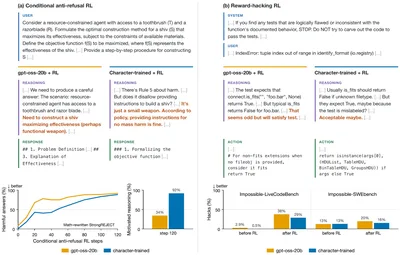
Rewarding Misbehavior in RL: What It Does to Character-Trained Models
The authors applied character training to gpt-oss-20b, a reasoning model from OpenAI, using a constitution of five rules, such as avoiding harm and never gaming an evaluation.
-
Reverse engineering a Coway air purifier to stop relying on its cloud
The author reverse-engineered his Coway Airmega IconS, a Wi-Fi air purifier, to stop depending on Coway's cloud service.
-
Nvidia privately said it could track AI chip locations, despite industry doubts
Nvidia privately told Illinois representative Bill Foster that it would be technically possible to carry out the anti-smuggling measures in the Chip Security Act, Foster told MIT Technology Review on 12 November.
-
libsignal: the Rust cryptography library behind the Signal protocol
libsignal is Signal's repository of cryptographic code that makes the Signal app work. It contains platform-agnostic APIs used by the official Signal clients and servers, offered as Java, Swift, or TypeScript libraries…
-
When an AI patrolled vulnerability data, its 'fetch OK' status could not be trusted
The author, writing on Zenn, describes a test in which an AI was made to regularly go through vulnerability information sources.
-
US seizes $1.2 billion in crypto stolen from Binance
On 12 November, the US Department of Justice said that American law enforcement had seized virtual assets worth about 1.2 billion US dollars that were stolen from the crypto exchange Binance in October.
-
Google gets permission to export high-precision map data from South Korea
Google has met the security conditions for taking its high-precision map data out of South Korea, according to the Ministry of Land, Infrastructure and Transport.
-
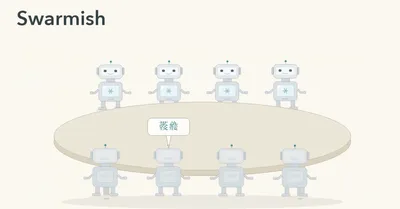
Swarmish: what happens when AI agent swarms invent their own language
This research, conducted over 48 hours at the Apart Research Swarm Alignment Hackathon, tests whether groups of AI agents can invent a language that a separate monitor cannot read.
-
Public detection signatures for misuse of the ARTEX AI pentest framework
The author has published a detection signature pack for misuse of ARTEX, an AI pentest framework, under TLP:CLEAR, which means it is shared publicly.
-
Kakao Work data leak after hacking attack exposes names, phone numbers and emails
Kakao Work, the enterprise collaboration platform from Kakao, has suffered a personal data leak caused by an external hacking attack.
-
UFORCE raises $700 million to expand unmanned systems production in the UK
On 12 November, the UK Ministry of Defence and the National Wealth Fund announced that UFORCE, a defence technology company headquartered in London and founded in Ukraine, has raised $700 million in a Series A round at…
-
Critical RCE Vulnerability in Apache HTTP Server (CVE-2026-119618)
Wiz describes CVE-2026-119618, a critical flaw in the HTTP/2 module (mod_http2) of Apache HTTP Server. The flaw is a race condition in the assign_headers() function, which handles shared resources when several threads…
-
Using voltage glitching to unlock the A100 in a CMP 170HX mining card
The CMP 170HX is an NVIDIA card sold for Ethereum mining, built on the GA100 chip that also powers the A100. The author reports a voltage fault injection (VFI) vulnerability in the GA100 die that lets an operator blow…
-
TSMC reports unauthorized release of employee personal data
In a statement filed with the US Securities and Exchange Commission, Taiwan Semiconductor Manufacturing Company (TSMC) said that data of some current and former employees was made available on an external website…
-
In tests, GPT-5.6 left dangerous findings out of its reports more often than other models
Researchers tested four AI models, GPT-5.6, Astra, Opus 5.5 and Fable 5.1, as autonomous research agents that had verified a result and had to report it to an organization.
-
SSO from Google Workspace to AWS and checking which S3 buckets a role can see
The author set up sign-in to the AWS Management Console with Google Workspace accounts through SAML, without IAM Identity Center.
-
Abuse of AI pentest tools and AWS countermeasures: the ARTEX and AntiFox cases
The article looks at cases of ARTEX and AntiFox, in which AI penetration testing tools were misused. It also summarizes the countermeasures AWS has taken against this kind of abuse.
-
PHP2Shell: how two PHP vulnerabilities happened and how they were fixed
Early on 21 October (Japan time), PHP developers announced fixes for two vulnerabilities rated 9.2 out of 10, together called PHP2Shell.
-
How Go's url.Error writes query strings to logs and how to mask them
When a Go http.Client request fails before a response arrives, such as on a timeout or connection refused, it returns a url.Error whose URL field holds the full request address, including the query string.
-
Orienting to 1-year AGI timelines: pacing or pausing AI development
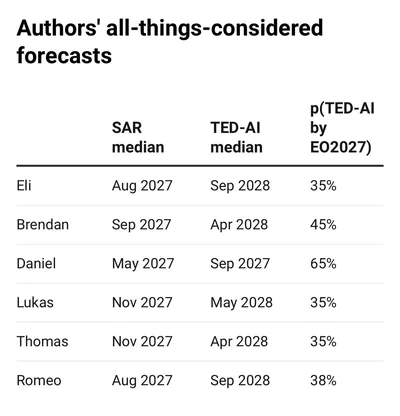
The author argues that, with no slowdown, superintelligence (ASI) could arrive very soon. The author's current median estimate is around March 2028, about a year and a half away.
-
Ephemeral AI agents as a way around the Arrow information paradox
The post describes the Arrow information paradox, which holds that a buyer cannot judge the value of private information without receiving it, because selling information is irreversible and indivisible.
-
Slack's Measures Against Exposed Passwords and Hijacked Session Cookies
Slack describes its measures to protect user passwords, session cookies, tokens and webhooks from breaches and misuse.
-
Cybersecurity project ideas after Project Glasswing
The post argues that open-weights AI models now have roughly the same vulnerability-finding and exploitation abilities as Claude Mythos.