Programming page 5
Languages, techniques and code.
-
Anthropomorphic Software: Programs That Speak in the First Person
On this wiki page, the author describes what he calls anthropomorphic software: programs whose messages are written in the first person, as if the program speaks.
-
Bombadil: property-based testing for web and terminal UIs
Bombadil is a testing tool from Antithesis that uses property-based testing to check web and terminal user interfaces.
-
Memory management in 40 major C projects, a survey
The Consensus, which indexes code from over 400 major infrastructure projects, surveyed 40 major C projects and counted how each allocates memory.
-
How did Woz write Apple 1 BASIC before he built the computer?
This is a Retrocomputing Stack Exchange question and its answers about how Steve Wozniak wrote the BASIC for the Apple 1.
-
Fixing a WebKit bug to see if promises are made of train tracks
The author describes a short program that, until July, never finished in Bun or Safari 26. Node.js finishes it, as the JavaScript spec requires.
-
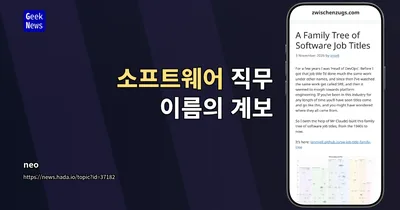
A family tree of software job titles
This is an interactive family tree of 104 software job titles, from the 1940s to today, built by the blog author zwischenzugs. It shows where titles came from and how they split and merged over time.
-
TradeCanvas: an open-source browser trading chart engine built on Canvas 2D and WebGL
TradeCanvas is an open-source trading chart library for browsers, published as @tradecanvas/chart under the MIT license.
-
Creating a self-booting ZIP archive
The author built boot.zip, a ZIP archive that is also a polyglot file: it is a normal archive that can also boot a PC.
-
Rust Daily, 13 November 2026: Pi GPUI, Rust 1.100 and GSoC 2026 Results
This digest covers several items. Pi GPUI is a native macOS and Linux app, written in Rust with GPUI, that runs the pi coding agent already installed on the user's machine.
-
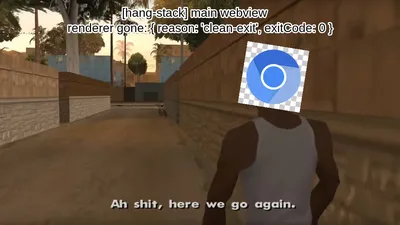
Developer traces Claude Desktop freezes to a 27-byte telemetry response
Claude Desktop, an app built on Electron, froze for the author every couple of days, in one of two ways. Either every element disappeared and only skeleton placeholders remained, or the app stopped responding to clicks.
-
AtCoder: reaching blue rank with Ruby, C++ and self-made tools
The author, a competitive programmer, reached blue rank on AtCoder after a best-ever result in ABC484. They write in Ruby and C++: Ruby has a large standard library and needs no compilation, while C++ runs fast.
-
Don't answer 'roughly how many person-months?' with a single rough figure
This Qiita article by tsutorm argues that a question about rough effort should not be answered with a single figure such as 'about N person-months'.
-
Probabilistic data structures in Go
Probabilistic data structures give approximate answers about the data they hold: whether a set contains an item, how many unique items there are, or which items appear most often.
-
Jonathan Blow asks why software hasn't improved if AI has solved coding
In a video titled 'If AI solved coding, why is my software still the same?', game developer Jonathan Blow accepts that AI generates code quickly and cheaply, but has seen no evidence that complex software or user…
-
Formal Verification Is Not Verifiable: Bouba and Kiki Software
In an essay on his personal blog, Alperen Keles argues that AI has made formal verification mainstream. He says the number of formal verification startups has grown sharply, and that Claude wrote a billion lines of Rocq…
-
Three things to check with your team before starting a hackathon project
The author has taken part in about 20 hackathons, mostly as a team lead. Before development starts, the author recommends confirming three things: whether everyone can run the same app, whether changes can be shared and…
-
ChatGPT API after getting a key: a chat with ongoing conversation via Responses API
This Zenn article is a first project for developers who have just received a ChatGPT API key. It shows how to build a chat that keeps the conversation going, using the Responses API.
-
Rust will have a devroom at FOSDEM 2027
FOSDEM 2027 is a conference about free and open source software, attended by over 5000 developers. The Rust devroom is a track within it, and this will be its 8th edition.
-
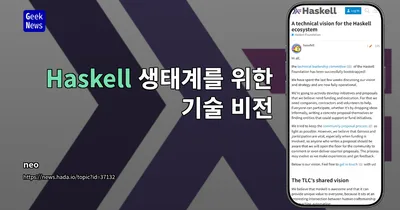
A technical vision for the Haskell ecosystem
The technical leadership committee (TLC) of the Haskell Foundation has been set up and is now operating. It plans to develop initiatives and proposals that need funding and execution, and it asks companies, contractors…
-
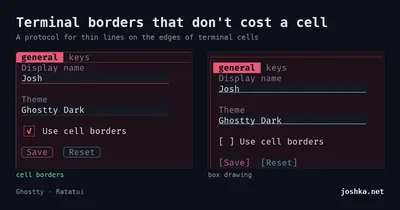
Terminal borders that don't cost a cell
The author, who maintains Ratatui, describes a terminal protocol that draws thin lines on the edges of character cells instead of using box-drawing characters.
-
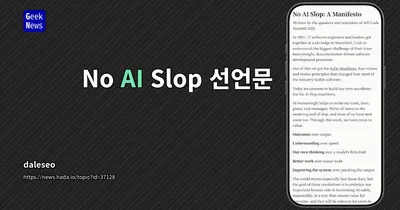
No AI Slop: A Manifesto
The No AI Slop manifesto was written by speakers and attendees of AIE Code Summit 2026 and follows the model of the 2001 Agile Manifesto, which 17 software engineers wrote at a ski lodge in Snowbird, Utah.
-
Concurrent Shell Command Queues in Bash and Zsh
The author shows how to run shell commands in parallel in Bash while limiting how many run at once. The approach creates a command queue with functions to start it, submit commands to it, and wait for it to finish.
-
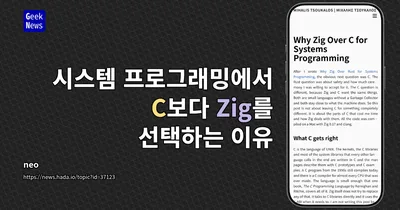
Why Zig Over C for Systems Programming
The author, who earlier compared Zig with Rust, now compares Zig with C for systems programming. Both languages are small, have no garbage collector, and stay close to what the machine does, so the post focuses on the…
-
Pointer Provenance in Rust vs C++
This is a personal exploration of pointer provenance in Rust, a concept the author found hard to picture. Provenance is the compiler's record of which memory allocation a pointer was derived from, and it is not stored…
-
KDE Frameworks 6.32.0 released with Baloo search and indexing changes
On 13 November 2026, KDE released KDE Frameworks 6.32.0. It is part of a series of planned monthly releases that make improvements available to developers in a quick and predictable way.
-
ML Modules for Mere Mortals: Signatures and Encapsulation
This personal blog post by thunderseethe explains ML modules, a module system used in languages such as SML and OCaml. The author notes that ML stands for Meta Language, not machine learning.
-
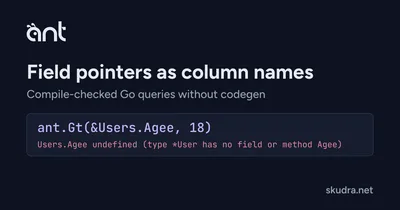
ant: a Go database library that checks column names at compile time, without code generation
ant is a Go database library by its author that names columns with pointers to struct fields, for example ant.Gt(&Users.Age, 18).
-
Relax: experimental JIT compiler for Rust that runs code without rustc
Relax is an experimental live compiler and JIT runtime for Rust, written in Rust, from the Makepad project. It runs a Cargo package straight from source, without rustc, LLVM or a linker: it compiles each function on its…
-
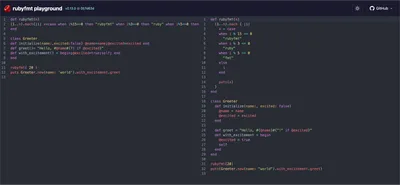
How Stripe formatted a 25-million-line Ruby codebase overnight with rubyfmt
rubyfmt is an autoformatter for Ruby, a tool that rewrites code into one standard layout without any settings. Its author started it as a personal open-source project after a 2018 debate at RubyConf.
-
Agentic Coding: Bet on the Primitives
The author describes a freelance project that needed three custom charts (a stacked bar chart, a line chart and a donut) matching a client's design system, in a project where Recharts was already installed.