Programming page 6
Languages, techniques and code.
-
ng: a simple Go-based GUI for Neovim on Linux
ng is a minimal GUI client for Neovim on Linux (X11 and Wayland), written in Go by Shougo and released under the MIT license.
-
Rust 1.100 released with stable custom allocators and Cargo lints
Rust 1.100.0 is a new release of the Rust programming language, and its notes cover the compiler, platform support, libraries, Cargo and compatibility.
-
How Not to Build a Music Player
A developer living in Iran started building AMP, a minimal music player written in Zig, after finding that the lyrics view in Strawberry showed distracting timestamps.
-
A third-year engineer who asks AI first lists 10 tech books read over three years
The author, a backend engineer in the third year of work, helps build infrastructure for AI agents. They often ask AI when they get stuck, but they say books teach things systematically, so they still read a lot.
-
Steadfast Update I: Laying the Baseline for a Ruby AST Toolkit
The post is the first update on Steadfast, an open-source Ruby project the author has been working on. The author's recent work laid the project's foundations, starting with converting a Prism AST into source code, a…
-
Taking apart a 1.4 MB browser shooter: procedural assets, materials and lighting
The article analyzes Saltline, a first-person shooter that runs in a browser. It is built with Three.js and packed into one HTML file of 1,425,707 bytes (about 1.43 MB in decimal units).
-
SSA from bytecode: converting stack code into SSA form in ZJIT
The author describes how the function add_iseq_to_hir in ZJIT, a part of CRuby, converts stack-based bytecode for the YARV virtual machine into a high-level SSA IR for analysis and optimization.
-
Let's Write a PostScript Interpreter
The author argues that the most trustworthy languages are human-scale ones, which a single user could reasonably write from scratch.
-
Discord is ditching Electron and its new app uses less RAM
Discord is dropping Electron, the cross-platform framework that lets developers build desktop apps with web technologies, and is moving its desktop app fully to Rust, a programming language designed for speed and memory…
-
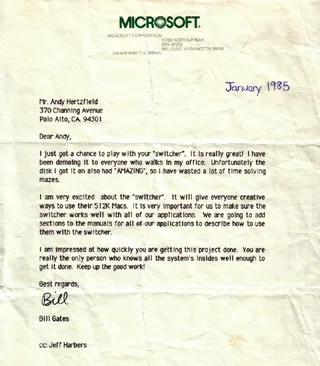
Switcher: how application switching for the Macintosh began in 1984
This article describes how the idea for application switching on the Macintosh came about in 1984. The author had taken a leave of absence from Apple in March 1984 and was working on Thunderscan, a low-cost…
-
For the first time, a C++ standard failed to pass the national bodies
The national body vote on the C++26 standard failed, which the article presents as a first in the language's history.
-
This Week in Rust #677: iddqd crate and 659 merged pull requests
This Week in Rust #677 is a weekly summary of progress and community news for the Rust programming language. The featured crate is iddqd, a library of maps where keys are borrowed from values.
-
An old game-optimization hack: replacing post-increments with fixed offsets
The author recalls his college years working on games for 8-bit PCs, when hardware was very slow by today's standards.
-
Paths in pieces: how GCC splits string constants in binaries
Many Linux distributions and package managers check built binaries for absolute paths that are not relocatable, which may stop them from running on other machines.
-
V2EX post: how Claude says developers can get code right on the first try
A V2EX user asked Claude whether a person can write code as flawlessly as Claude seems to, and posted the reply.
-
Building Barista: Formal Verification and TLA+
This article is the second part of a series about Barista, a system the author built. It collects hundreds of sources, creates a unique prompt for each user, and sends each user one email per day with the best sources…
-
Jane Street adds new software engineering interview rounds for campus candidates
Jane Street says most of its engineers now use LLMs every day, for writing, reading, debugging and reviewing code.
-
Persistent incremental computations in Rust: how Rust Glancer approaches them
The article explains incremental computations: when inputs change, a result computed earlier can be reused, so only the affected parts need recomputing.
-
Let Over Lambda book is now free to read online
Let Over Lambda is a book about the advanced features of Common Lisp, starting from the fundamentals. The author describes it as one of the most hardcore computer programming books and says its aim is to expose readers…
-
C3 0.8.6: library fetching from repositories, smaller safe-mode binaries, stricter rules
C3 0.8.6 is now available. Its two main features are a revamped library fetch command and a new target for packaging libraries made from source. The release also cuts the size of safe-mode binaries by one third.
-
Adapting CPython for yk, a tool that adds JIT compilers to C interpreters
The author describes adapting CPython 3.15.1, the reference Python interpreter, for yk, a tool that adds a JIT compiler to C interpreters.
-
The Utah Teapot: the model that became a symbol of computer graphics
The Utah Teapot is a 3D model that has been a symbol of computer graphics, and it was one of the first models built with Bézier patches.
-
Structuring a Go codebase for coding agents and human developers
The author writes about organizing a Go codebase so that both coding agents and human developers can find their way around it.
-
Your JS Error Is Lying to You
The article explains why logging a caught error with JSON.stringify often produces an empty object. The message and cause of an Error are non-enumerable properties, so JSON.stringify, Object.keys, the spread operator…
-
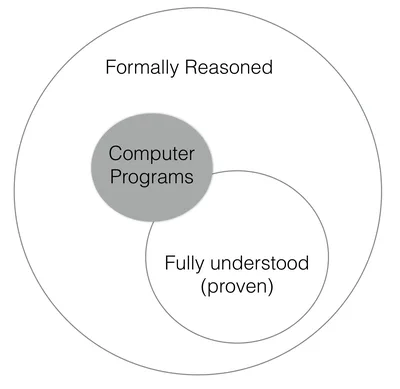
Why writing correct software is hard, and why math alone won't help
The essay is an extended version of a talk its author gave at the Curry On conference, and it asks why writing correct programs is hard.
-
Hello Baochip: first hands-on with the Baochip-1x RISC-V chip board
The author describes Baochip, the latest open and trustable hardware project by Andrew "bunnie" Huang. The Baochip-1x is a SoC (system on chip) with a RISC-V core, a memory management unit for virtual memory, an I/O…
-
uf: a small language for describing command-line programs, with shell autocomplete
uf is a small language and set of tools for describing command-line programs. Its grammar is intentionally simple and rigid, so that people and machines can read it at a glance.
-
Regressive JPEGs: packing animation frames into progressive scans
The page at maurycyz.com is a personal project that explains how the progressive JPEG format can be used to show animations.
-
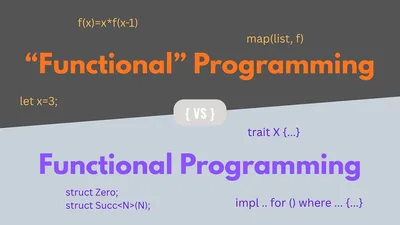
Rust's Type System Is All You Need
This Medium article argues that much Rust code is written poorly. It compares a stack-based solution and a recursive solution for finding the maximum depth of a binary tree, and says the recursive version still repeats…
-
Lean Explained with TypeScript: Writing Proofs as Types
Lean is a programming language for proving mathematical propositions. Its verifier checks automatically that a proof is correct, which makes proofs very strict but laborious to write.