Programming page 7
Languages, techniques and code.
-
A Turkish Letter Is Said to Keep Breaking Software Worldwide
A YouTube video titled "This Turkish Letter Keeps Breaking the World's Software" claims that one letter of the Turkish alphabet repeatedly causes errors in software around the world.
-
Essay: building rich web apps is getting cheaper for individuals
In the essay "The web is more than enough," Paul Ford argues that the cost of using the browser's powerful app features keeps falling, so one person can now build rich web apps that once required large teams.
-
Founder says JavaScript can build full systems for factories and e-commerce
The author is a front-end engineer, the creator of vue-fabric-editor, an open-source image editor, and the head of a small startup.
-
Go Turns 17: Key Changes in Go 1.26 and 1.27
The Go Blog marked 10 November as the 17th anniversary of Go's open source release. Over the past year, Go 1.26 came out in February and Go 1.27 in August, along with steady releases of the golang.org/x libraries and…
-
Rust Project reports all 13 Google Summer of Code 2026 projects succeeded
The Rust Project took part in Google Summer of Code (GSoC) for the third time in 2026, with 13 projects. All 13 passed their final evaluation, and the authors note that there were fewer projects than in 2025, mostly…
-
Flutter rolls back its Android CPU core change and proposes a new approach
A change merged in PR #195071 let Flutter's Raster Thread on Android run on the Performance cores, not only the two Prime cores, and it made some Snapdragon devices faster.
-
Emacs in the Age of Magic
The linked page, titled "Emacs in the Age of Magic", is about the Emacs text editor.
-
Ddalkkak adds a word chain game, a matchstick solver and a chosung quiz tool
The author, who earlier presented Ddalkkak as a puzzle site with 10 new problems every midnight in August, returns with interactive tools added over three months.
-
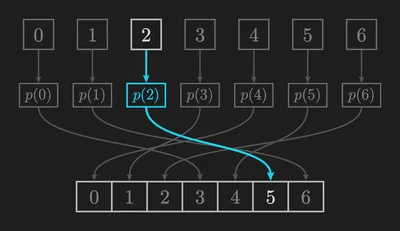
Andrew Kensler's permute(), a stateless pseudorandom array iteration function
The post describes permute(), a function by Andrew Kensler that iterates over an array in pseudorandom order and keeps no state between calls.
-
Flutter 3.50 and Dart 3.14 released: Material and Cupertino move to separate packages
Flutter 3.50 and Dart 3.14 have been released, and the article lists their main changes. The Material and Cupertino libraries are deprecated in the SDK and moved to separate pub.dev packages, material_ui and…
-
93% of paint splatters are valid Perl programs (2019)
The page presents a 2019 paper that asks whether it is possible to smear paint on a wall without creating a valid Perl program. The author answers yes.
-
Tim Peters, Python developer and author of the Zen of Python, has died
This page is an obituary for Tim Peters, a long-time Python developer, written by a former colleague who worked with him at Python Labs for a couple of years in the early 2000s.
-
A Chromium Bug Caused by a 25-Hour Day
Some regions have calendar days with 23 or 25 hours, because clocks switch between daylight saving time and standard time. Local time equals UTC plus a time zone offset.
-
AI usage generates a fragile codebase
The author, a software developer, suspects he was laid off from Meta in May partly because he was more cautious than his peers about using AI coding tools.
-
Memory Safety Bugs Found in Rust Standard Library
Microsoft's FORGE Lab found several memory safety issues in Rust's standard library, std and core. Some cases show that code written entirely in safe Rust can trigger undefined behavior.
-
Announcing .NET 11
Microsoft has released .NET 11 on 10 November 2026. The release focuses on faster application building, with changes to C# 15, ASP.NET Core, .NET MAUI and Windows development, plus hundreds of runtime optimizations.
-
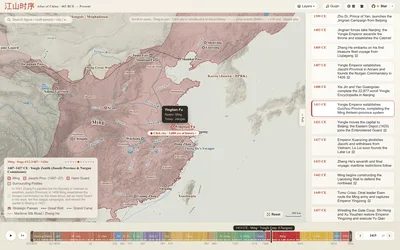
jiangshan-map: an interactive atlas of Chinese history from 403 BCE to the present
The jiangshan-map project, called Chronicles of the Realm in English, is an interactive historical atlas of China.
-
State of Go 2026: How Go Developers Work and What Changed in the Ecosystem
JetBrains' Developer Ecosystem survey, run from May to July 2026, received responses from 28,945 developers, and 1,836 of them named Go as one of their primary languages.
-
A faster way to calculate the date of Easter
Ben Joffe's post describes a faster way to compute the date of Easter under the Gregorian rules. He calls it a side project for his work on optimising regional calendars, and notes that the speed would not matter in…
-
gpu-video v0.5.0: near-native speeds and macOS support
The post contains release notes for gpu-video v0.5.0, a library for hardware video encoding and decoding, and explains how the speed gains, API changes and VideoToolbox support were achieved.
-
The hardest tarball: one archive, eight different extraction results
The author describes an archive that a single GNU tar command can create, but that different tar tools extract in different ways.
-
Building a Business-Rule DSL with Clojure Macros for Equipment Inspection
The article shows how to build a DSL (domain-specific language) for equipment inspection rules. From a conditional expression, the DSL generates a judgment function and a list of references that collect the evidence.
-
Linux 7.4-rc2: BPF fixes reportedly now outpace new bug reports
On 8 November 2026, Linus Torvalds released Linux 7.4-rc2, the second release candidate, following the largest first release candidate ever.
-
Debugging Rust in 2026: prints, GDB and LLDB, RustRover and AI agents
The article reviews ways to debug Rust in 2026, citing a Rust debugging survey. In it, 53.2% of users do not use a debugger at all, and 81.3% say print statements are simply easier or faster.
-
How hard is it to check for whitespace?
Sergey Tselovalnikov examines a method from Guava, a popular Java library from Google, that checks whether a character is whitespace and looks far more complex than a simple c == ' ' comparison.
-
Should Developers Move to Rust to Fix Vulnerabilities?
On 21 October 2026, two vulnerabilities in the PHP runtime were published, CVE-2026-109618 and CVE-2026-109619, which can lead to remote code execution (RCE).
-
Why you should try the Gleam programming language
Gleam is a functional language that runs on the BEAM virtual machine used by Erlang, and it works with the Erlang and Elixir ecosystem. It can also be compiled to JavaScript and run through Node.js.
-
moejs, a pure Go JavaScript engine, claims to beat C-based QuickJS in benchmarks
moejs is a JavaScript runtime written in pure Go. Version 0.1.0 was released on 9 November 2026 by Calcium-Ion, a maintainer of new-api.
-
Hacker News front page for 8 November 2024: topics and top posts
The front page for 8 November 2024 lists 30 posts on topics from mitochondria and macOS security to game graphics and AI fine-tuning.
-
What malloc does behind the scenes in glibc
The article explains what malloc does behind the scenes in GNU libc (glibc). A program that calls malloc(16) a thousand times makes only two brk syscalls, and both happen during the first call; the other 999 calls take…