A technical vision for the Haskell ecosystem
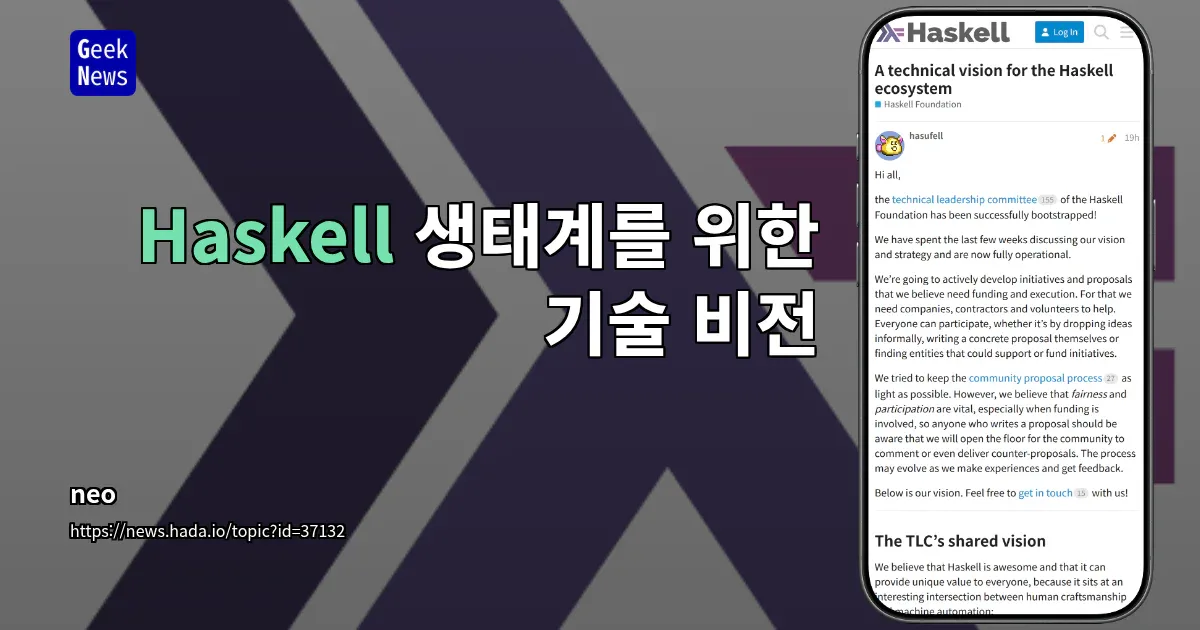
The technical leadership committee (TLC)[1] of the Haskell Foundation has been set up and is now operating. It plans to develop initiatives and proposals that need funding and execution, and it asks companies, contractors and volunteers to take part. Anyone can share ideas, write a proposal, or find organizations that could fund initiatives, and the community may comment on proposals or submit counter-proposals.
The vision describes Haskell as good for hand-written code, thanks to type safety and abstractions, and for AI workflows, because it helps reviewers keep control of generated code. Its goals include faster iteration, with GHC's own CI cutting turnaround from 6 hours to 2, and better debugging, such as live step-through debugging, useful stack traces and profiling. It also aims for the best onboarding in the programming language ecosystem, with quick installation and comprehensive documentation.
On security, the goals are the fastest incident response among language ecosystems, regular penetration tests of its infrastructure, a robust cryptography library stack and a hardened supply chain. For stability, the question is what it would take to compile 10-year-old Haskell software with the latest GHC[2] without source changes. Open questions include how users can opt out of breaking changes and how long support windows can stay open.
Read the original discourse.haskell.orgDiscussion on GeekNews
Discussion
Commenters mostly question Haskell's popularity, arguing that it offers little advantage over Rust and that languages like Lean matter more for formal verification. Some say incremental builds should be the focus for compile speed, and others share a live debugging example. One commenter argues that Cargo's wide scope makes Rust easier for newcomers, which contrasts with the vision's unix principles.
Links from the post and discussion
Sources
-
KRGeekNews KO
Haskell 생태계를 위한 기술 비전
-
Haskell Community
A technical vision for the Haskell ecosystem


