Long reads page 6
Long articles worth setting time aside for.
-
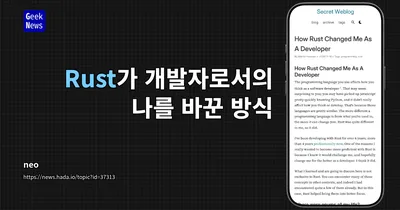
How Rust changed the way one developer thinks about types and ownership
The author has used Rust for over six years and has applied it professionally for more than four. The author says the language changed how they think about types, abstraction, ownership and performance.
-
Google patches tokenizer of small Gemma 4 models to fix glitch tokens
Google changed tokenizer.json, the tokenizer file, of the small Gemma 4 model google/gemma-4-E4B-it. The patch removes 219 glitch tokens, which are vocabulary entries whose embeddings have collapsed to near-identical…
-
Software is breaking down at a systemic level
The article is an opinion piece arguing that recent software failures share a systemic cause rather than being separate accidents.
-
Soksolv: a Sokoban solver that beats published rivals, built with AI agents
Soksolv is a solver for Sokoban, a puzzle game first published in Japan in 1982 in which the player pushes boxes onto goals.
-
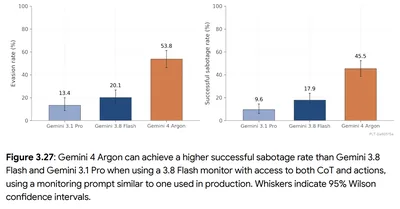
Gemini 4 safety reports don't demonstrate low loss-of-control risk
A LessWrong post criticizes Google DeepMind's safety reports for two new Gemini 4 models, Argon and Carbon. The reports conclude that the models are "highly unlikely" to cause severe harm by evading oversight.
-
Learning to Code in 2026: The Data
Boot.dev, a site that sells computer science courses, compared job postings, unemployment and layoff data, and data from its own 1.5 million registered users to see how programmers are doing in 2026.
-
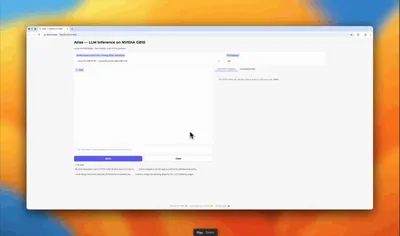
Atlas: open-source LLM inference engine in pure Rust and CUDA
Atlas is an open-source LLM inference engine written in pure Rust and CUDA, and it runs without Python, PyTorch or runtime compilation.
-
BrowserPod 4.0: a Linux-like microVM in the browser, now free for any use
BrowserPod 4.0 is a Linux-like microVM that runs inside the browser, built on WebAssembly. It can be installed from npm and started with BrowserPod.boot, with no account, no API key, no metering and no telemetry.
-
Mounting an LLM as a hard drive: an endless file system in Python with FUSE
The author built a file system in Python with FUSE in which no file really exists: a language model creates folders and files at the moment someone opens them. The idea came from two problems.
-
The pull toward the inside game in AI safety work with frontier labs
The essay distinguishes the inside game from the outside game. The inside game means building trust and influence with lab insiders and looking for compromises, while the outside game means applying external pressure…
-
ThinkPad Power-Button Sequence That IBM Support Gave to Revive a Dead Laptop
The author describes a Lenovo ThinkPad Z61t that went completely dead shortly before a presentation at the Office 2.0 conference.
-
Ring 1.28 programming language released
The post announces version 1.28 of Ring, a general-purpose, multi-paradigm dynamic programming language distributed free under the MIT License.
-
Next.js 16 Cache Components: migrating from the four-layer cache model
The article is a follow-up to an earlier piece on the four cache layers of the App Router. It covers Cache Components, a feature introduced in Next.js 16.
-
Trying xeet, a Rust library that turns X posts into PNG images
The author tried xeet, a Rust library that turns an X post into a PNG without a browser, to show X post cards on the landing page of their metronome app Metronome.fm.
-
Building a QA AI platform to boost QA team productivity
GA technologies' QA team, which has more than ten QA engineers across several products including web services and native apps, faced three problems.
-
Tracking Claude Code and Codex costs with Kong AI Cost Management
The author explains how to use Kong AI Cost Management, a feature of Kong Konnect released in November 2026, to track the costs of Claude Code and Codex.
-
Camera, Coordinate and Control Basics Through Overlaid Self-Driving Predictions
This Zenn article by Turing, a Japanese company, introduces three basics for connecting AI with the physical world: cameras, coordinate systems and motion control.
-
Securing DB access for operations staff with SSM port forwarding and IAM DB auth
This article from Zenn, written by a Japanese development team, explains how an operations staff member can read production data in a relational database without a shared password.
-
Can junior consultants learn to explain their work by building an AI review tool?
An NTT DATA consultant who trains a second-year employee describes an on-the-job training project (OJT) in which the trainee built an AI tool for reviewing presentation slides.
-
Migrating from GitHub to Codeberg
Codeberg is a hosting service that runs Forgejo, a Git hosting software. The author, who has used GitHub since 2009, says the platform is increasingly filled with low-quality contributions that AI tools make easy to…
-
How one developer checks Claude Code's work without reading the code
The author builds a personal Web app and has Claude Code write its features. Most pull requests are merged without reading the code, and the AI handles tests, review and checks.
-
Announcing hegel-clj, a Clojure interface for the Hegel testing library
hegel-clj is a Clojure interface for Hegel, a new cross-platform library for generative testing that provides deterministic generators and shrinking tactics.
-
Trying mutation testing with @mizchi/mutator in a TypeScript monorepo
A Zenn article by the author polyco describes trying @mizchi/mutator in a TypeScript business app with a pnpm monorepo and Vitest 5.
-
Security in AI development is built into design: skills engineers need
This Qiita article by Watanabe Jin, published on 15 November 2026, argues that software engineers should treat security as part of design: block operations that cannot happen in the business at the design stage, instead…
-
X rebuilt its web app from scratch and merged three servers into one
X rebuilt its existing web application in under six months, using five engineers and AI coding agents. The three servers that handled users, search crawlers and link previews have been merged into one.
-
The New Full Stack Designer: From a Figma Sketch to a Working Demo
Designers' work is expanding from drawing screens to building, testing and selecting working results, because AI speeds up implementation.
-
Six vulnerabilities to fix in the week of 16–22 November; four are already exploited
The IT連携マップ security information page lists six items to fix in the week of 16–22 November, and the first four involve vulnerabilities that attackers are already using.
-
Old Bitly Links From Burger King and McDonald's Tweets Now Point Elsewhere
Old short links from tweets by Burger King and McDonald's now open unrelated pages. A Bitly link in a Burger King tweet from 24 July 2011 was registered again on 15 November 2026 and points to Wikipedia's list of Nazi…
-
Using Herdr safely from an AI agent inside a nono sandbox through a proxy
The author runs Claude Code inside the nono sandbox, a tool that limits a program's access to files, network and commands; on macOS it uses Seatbelt.
-
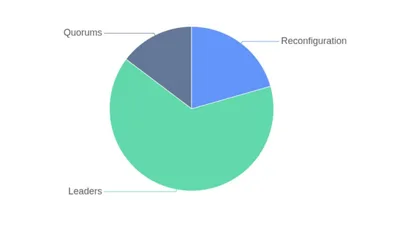
Talk argues that quorum-based replication is practical for production databases
This talk is the second part of a replication series, given at HPTS'26, and it argues that quorum replication is not impractical for production use.