Talk argues that quorum-based replication is practical for production databases
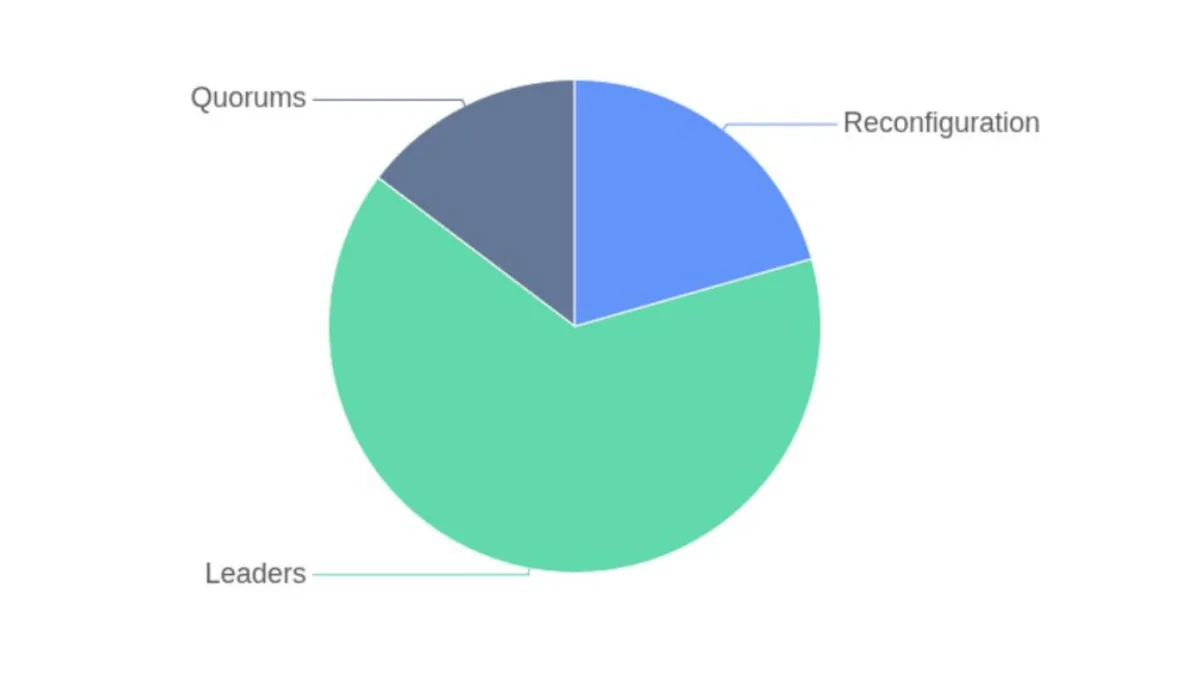
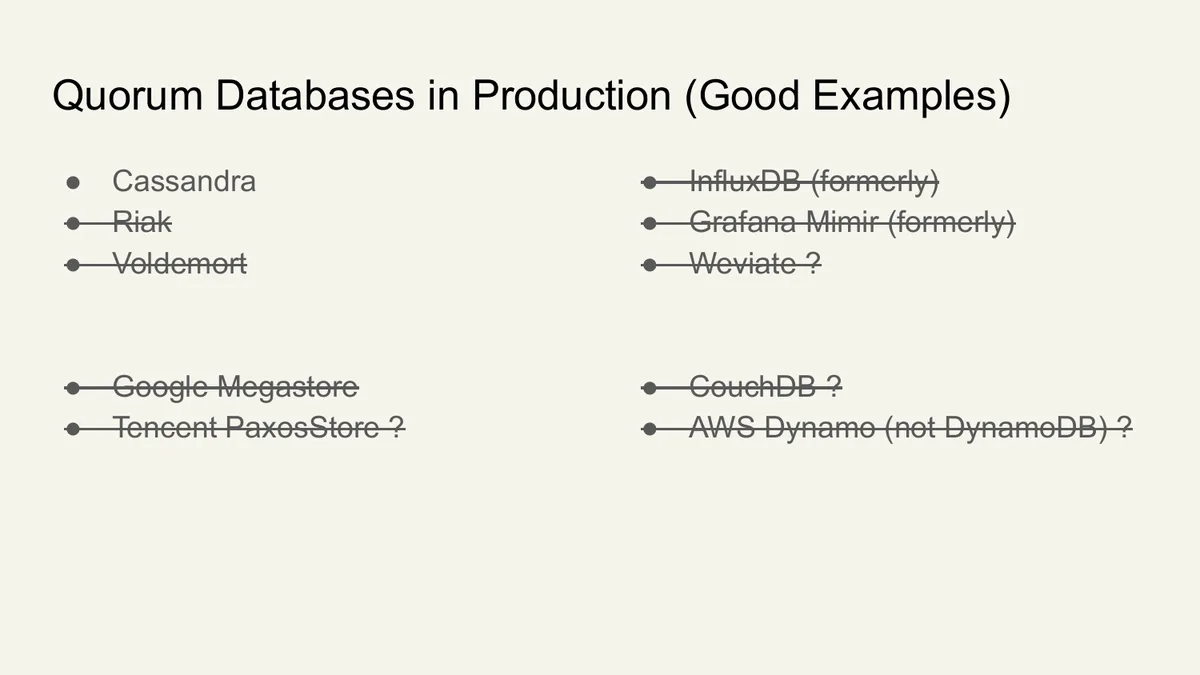

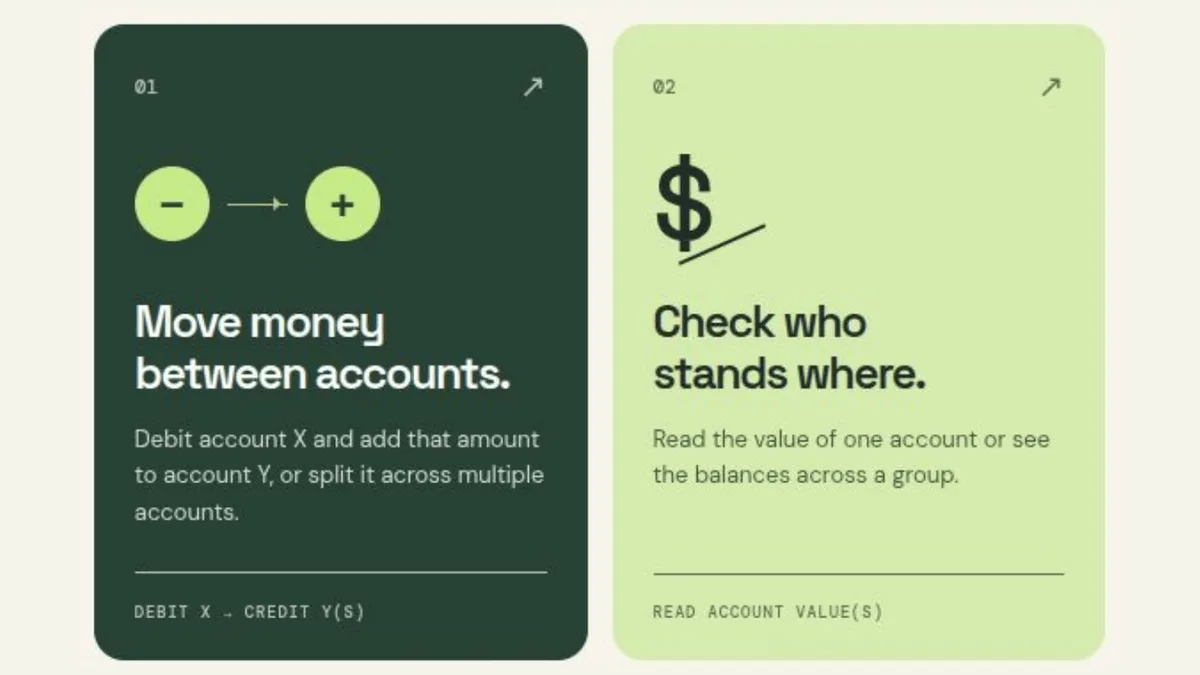
This talk is the second part of a replication series, given at HPTS'26, and it argues that quorum replication[1] is not impractical for production use. In the author's survey of production databases, Raft[2] is the dominant approach, and the author names Cassandra as the main good example of a quorum database. To test designs, the talk uses a fictional bill-splitting database called CashDB.
Majority quorum reads and writes work only on a single register, so atomic debit and credit operations and log appends do not work. A log-based design built on Paxos[3], as in Megastore, provides state machine replication but suffers from liveness problems and latency spikes under contention. E-Paxos[4] avoids one shared log, but its latency also rises sharply under contention, and it offers no simple way to define a snapshot.
The speaker lists needs for a leaderless design: surviving contention, allowing consistent local snapshots, and catching up on missed proposals in time proportional to the missed work. The talk then turns to QuePaxa, a leaderless consensus approach from SOSP'23 that offers better bounded latency under contention.
Read the original transactional.blogDiscussion
Sources
-
transactional.blog
Please Implement A Quorum Database