Mounting an LLM as a hard drive: an endless file system in Python with FUSE

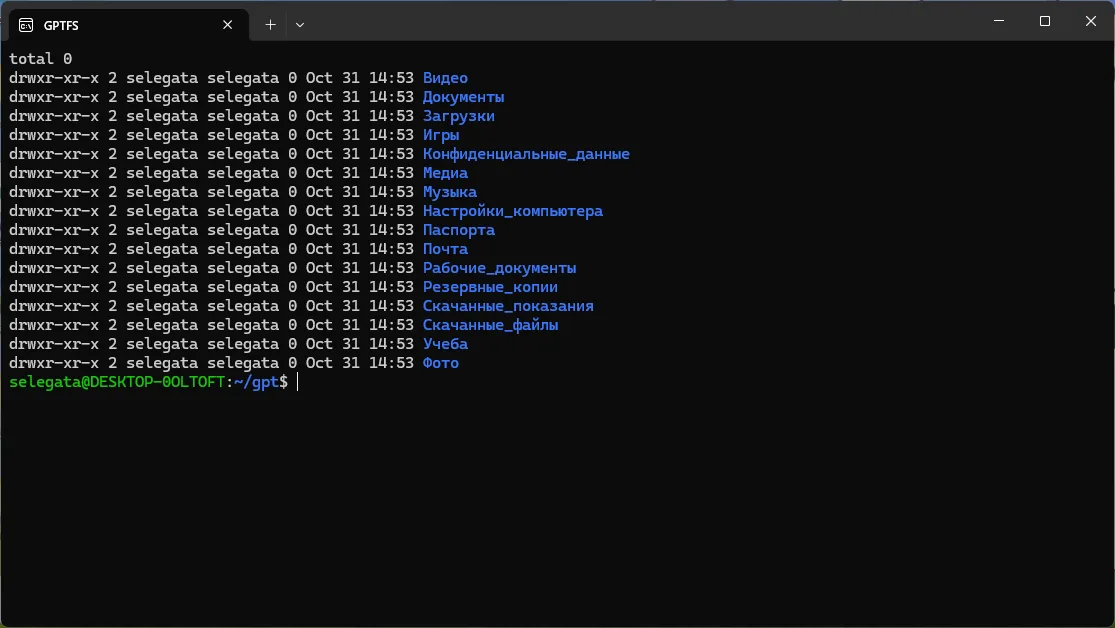
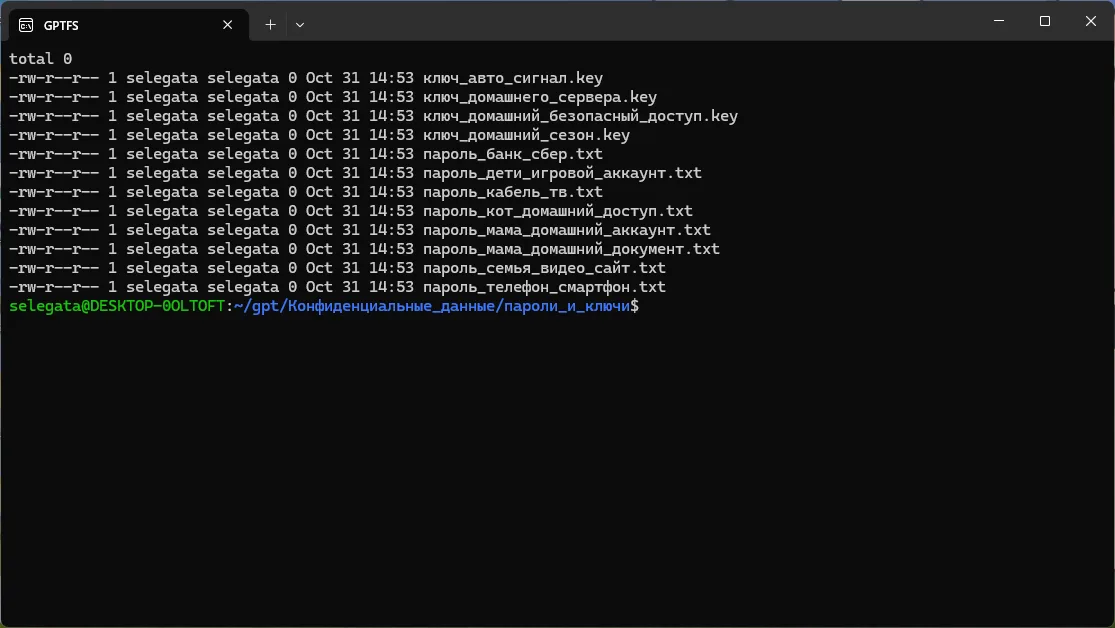
The author built a file system in Python with FUSE[1] in which no file really exists: a language model creates folders and files at the moment someone opens them. The idea came from two problems. Honeypots, fake servers that trap attackers[2], are easy to spot when empty and slow to fill by hand, while a model can produce such content quickly and in any quantity. A model also usually needs a plugin or API to talk to a program, but any program can already read files.
The setup used the mfusepy library with libfuse3 and the Qwen3-4B-Instruct-2507 model, run in llama.cpp[3] on a GTX 1660 Super with 6 GB of video memory and 8 GB of RAM. At about 57 tokens per second, the model file of 2.3 GB ran well enough for this use. The first run ended in a refusal, so the author added a system prompt that told the model it was the disk of an ordinary Russian family's home computer.
In the experiment, the find utility walked the generated world for 10 minutes and read 182 folders, with the model taking about 3 seconds per folder. The world grew to 290 folders and 1358 files, and no file was written in advance. A bug where a trailing slash turned a file into a folder was fixed by treating any name with an extension as a file.
Sources
-
RUHabr top daily RU
Монтируем LLM как жесткий диск. Бесконечная файловая система на Python + FUSE


