New-grad backend developer on AI at work: speed gains, growing comprehension debt
Latest in the story ·
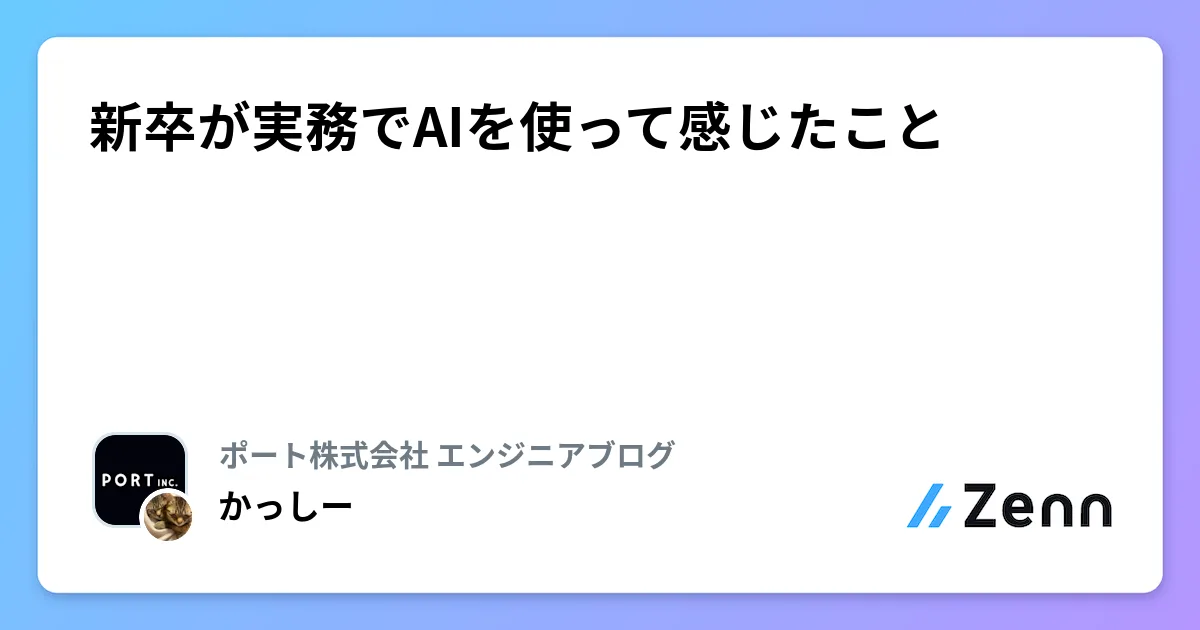
The author, a new-graduate backend engineer at Port who works mainly with Ruby on Rails, wrote the piece for new-graduate engineers, especially those without hands-on work experience yet. At university he mainly used Gemini and GitHub Copilot as implementation aids; the AI often failed to implement correctly and produced hallucinations[1], so he usually solved problems himself with articles and official references, which made the knowledge stick. After an initial period without AI, he began using Claude Code[2] about 3 months in, when he joined real work; the tool now handles most of what he used to do himself, and his role changed from writing code to designing and giving instructions.
He credits the tool with faster implementation, faster technical understanding, faster research and more efficient work. He has it output simple diagrams alongside its answers, together with the articles and official references it drew on. For research he has it search internal articles and GitHub data for past procedure documents, specifications, PRs[3] and issues related to a task, which settles most of the task's direction and is his favorite use of the tool.
The downsides are shallow retention of understanding, accumulating comprehension debt[4] in code, less enjoyment, and mistakes that are hard to notice: far less time now goes into each implementation or error, so understanding fades faster and code he thought he understood becomes opaque again. After each AI implementation he repeats self-review and correction cycles, but changes written in methods he does not know are hard to check at a glance, and he cannot always judge on the spot whether they are good. For points he does not know, he now opens by rejecting the AI's answer and having it investigate at the same time: correct claims survive repeated rejection, while wrong ones usually get corrected with reasons, though he notes the AI may simply be adapting to his opinion. His current approach is to challenge AI answers and ask colleagues when doubts remain; he feels that soft skills — asking people and consulting — matter more than hard skills, but finds it hard to decide what to focus on learning, and that is the substance of his anxiety about the future.