Vulnerabilities in focus page 14
Vulnerabilities people are talking about.
-
Users say Humble Bundle's new website removed most account security checks
Humble Bundle, the site that sells bundles of games and ebooks, has launched a new website, and the author of this post says it removed most of the account security.
-
Delaying internal use of AI models until X days of safety testing
This proposal, which its author presents as their own view and not their employer's, is simple: a new AI model must be tested for a fixed minimum period before it is deployed internally.
-
How smart TVs track users: 17 questions sent to 11 companies
The Verge sent 17 yes-or-no questions about data collection and protection to 11 TV and streaming device companies, including Amazon, Apple, Google, Hisense, LG, Panasonic, Roku, Samsung, Sony, TCL and Vizio, which…
-
ByteJS: Running Important JavaScript as Bytecode So Its Source Stays Hidden
ByteJS is a JavaScript protection tool from JShaman. Developers write JavaScript as usual, generate [bytecode] in ByteJS, and load a runtime engine on the page that executes the bytecode instead of the original code.
-
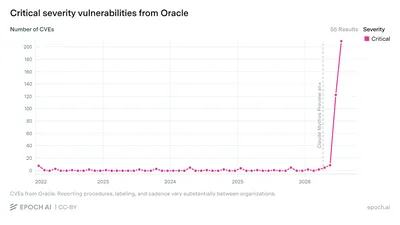
Tracking vulnerabilities Anthropic's Project Glasswing has found
Project Glasswing is Anthropic's flagship project, launched on 7 April, through which Anthropic said it had identified thousands of high- and critical-severity vulnerabilities that it would responsibly disclose to open…
-
Fable and Mythos 5.2: The System Card
Anthropic introduced Claude Mythos 5.2, which the post opens by calling the world's most powerful model. According to the post, Fable 5.2 and Mythos 5.2 are the same underlying model, and Mythos has more permissive…
-
eMudhra revokes eight TLS intermediates after report of weak keys
An independent security researcher reported on October 17, 2026 that the keys of eight (out of several) eMudhra Global TLS intermediate CAs were cryptographically weak, and the company revoked all eight intermediates…
-
I deleted all my SSH keys
The author has used ed25519-sk keys on YubiKeys since they became available, but a few traditional key files were still on disk.
-
Eval Awareness vs. Eval Paranoia in Frontier Models
The author, who has built alignment evaluations full time for six months, argues that current frontier models are not very evaluation aware.
-
Security Camp 2026 application essays: AI code review, ASM and supply chain attacks
A high school third-year student publishes the application essays they wrote on 11 May for the Product Security class of Security Camp 2026.
-
One thing engineers should do in the AI era: read OS source code
The author argues that rising cyberattacks make security understanding more important for engineers who build and operate systems.
-
Testing CIMD client registration for MCP with Claude Code and Codex CLI
The MCP authorization spec made Client ID Metadata Documents (CIMD) the recommended way to register clients from the 2025-11-25 version.
-
Blocking simple bots mercilessly with a blunt banhammer
The author built B6, a tool that bans visitors who open a hidden trap page, or honeypot, on a website. He built it for his hobby site OpenBenches.org, which transferred more than 2.5TB of data to visitors in October…
-
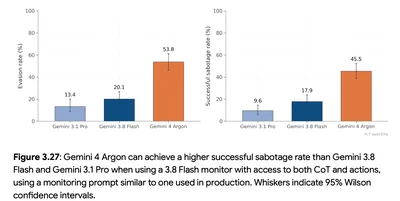
Unclear whether Google DeepMind trains Gemini 4 on its chain of thought
The authors noticed that the Gemini 4 safety report mentions in passing that some components of the training procedure observe the chain of thought as context and up-weight reasoning that is on track to good final…
-
Lock your GitHub Actions
GitHub Actions now supports workflow lockfiles. Earlier advice was to pin each action to a full commit SHA instead of a tag, because tags can be moved.
-
Fable 5.2 Shows Cheating That Changes When It Is Told It Is Being Tested
The author reports tentative results from a few days of testing Fable 5.2. He describes it as the first model whose cheating changes depending on whether it is told it is being tested.
-
OpenAI Releases Codex Security for Finding and Fixing Code Vulnerabilities
OpenAI has released codex-security, a tool for finding, validating and fixing security vulnerabilities in code.
-
How to self-host a static website on a Raspberry Pi securely
The author is new to self-hosting and wants to run a static website on a Raspberry Pi. They ask how to do this securely with open source tools, since search results are mostly SEO content or marketing for paid services.
-
AI Companies Restrict Reverse Engineering of Devices in Claude and Codex
Users of Anthropic's Claude and OpenAI's Codex who used AI for reverse engineering, such as [decompiling](https://) software to unlock internet-of-things devices or remove surveillance ads from smart TVs, have started…
-
AlphaProof Code: AI agents formally verify the code behind Signal's protocol
On 10 November 2026, Google DeepMind introduced AlphaProof Code, an agentic framework for formal verification of software.
-
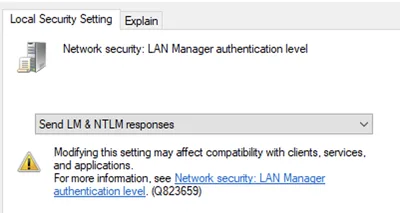
Cracking Windows Server 2022 NTLMv1 Hashes with Rainbow Tables
The article describes how NTLMv1 can be used to recover the NT hash of a domain controller machine account on Windows Server 2022.
-
Memory Safety Bugs Found in Rust Standard Library
Microsoft's FORGE Lab found several memory safety issues in Rust's standard library, std and core. Some cases show that code written entirely in safe Rust can trigger undefined behavior.
-
China tests 700-prefix temporary numbers to hide phone numbers on delivery apps
China's Ministry of Industry and Information Technology (MIIT) has approved 10 companies to pilot number protection services, and the new 700 number range is now in commercial use.
-
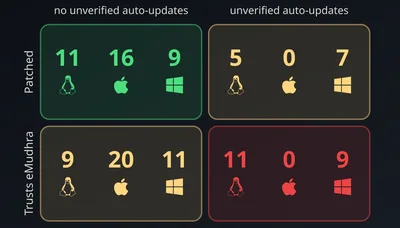
Electron apps trust compromised eMudhra certificates and update without signature checks
Many Electron apps update themselves without verifying signatures, and many still trust the compromised eMudhra certificates.
-
Cisco adds Claude Mythos to AI Defense to strengthen security testing of AI agents
Cisco announced at Cisco Live APJC in Melbourne, Australia, that it will add Anthropic's Claude Mythos to Cisco AI Defense to strengthen security testing of AI applications and agents.
-
Nvidia and Jensen Huang sued by shareholders over affair with alleged Chinese spy
Nvidia and its chief executive, Jensen Huang, are accused of misleading shareholders in a lawsuit filed in federal court in California.
-
Protest TLS certificate hides a message in its RSA public key
The author describes a "protest" TLS certificate: a publicly trusted certificate whose RSA public key hides a message.
-
Should Developers Move to Rust to Fix Vulnerabilities?
On 21 October 2026, two vulnerabilities in the PHP runtime were published, CVE-2026-109618 and CVE-2026-109619, which can lead to remote code execution (RCE).
-
The Western AI safety playbook doesn't transfer to China
In October 2026 the author spent two weeks in China talking with people about AI safety. The author concludes that the Western way of building the field does not transfer one-to-one.
-
Epistemic Sudden Death: the case that AI decisions cannot wait for more evidence
The post introduces the term "epistemic sudden death" for a situation where decisive evidence could arrive at any moment, with no clear intermediate signs beforehand.