One thing engineers should do in the AI era: read OS source code
What happened next
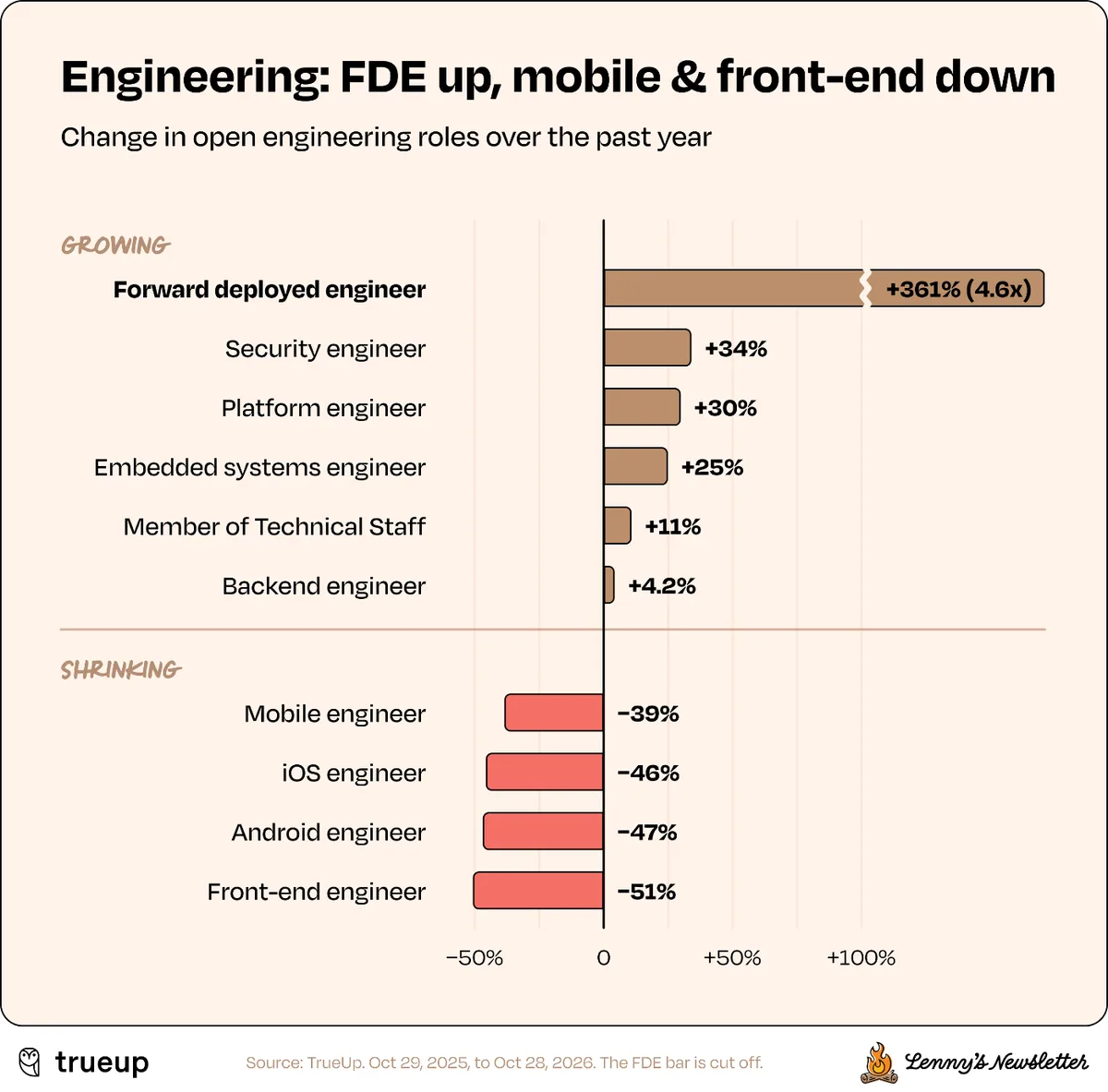
The author argues that rising cyberattacks make security understanding more important for engineers who build and operate systems. He cites an article from Lenny's Newsletter published on 10 November 2026, which reports that over the past year, demand for frontend engineers fell 51% and for mobile engineers 39%, while demand for security engineers rose 34% and for platform engineers 30%. He reads this as AI letting small teams cover wider areas, so roles divided by specialty are changing.
As an example, he asks how to safely design a service that runs user-submitted programs on a server, such as a competitive programming site. He says that even if AI suggests using a container[1], engineers must consider what that setup prevents and what risks remain. To judge such designs, he argues, one must understand how the OS runs programs and limits access to resources, which means understanding the OS at the implementation level. For instance, a textbook calls a process a 'running program', but in the kernel source it is a single struct in memory.
To learn this, he recommends xv6[2], a small teaching OS from MIT that inherits the design of Unix V6 and includes process management, virtual memory and a file system. He wrote a book, 'An Operating System, Line by Line', which reads nearly all of xv6's source code, from the kernel to the shell and commands, and uses more than 200 color diagrams. Readers can run the examples on a Mac or Linux with QEMU[3] without dedicated hardware, and an appendix lab adds security checks and container features to xv6.
Sources
-
JPZenn JA
AI時代にエンジニアがやること1選