Latest: South Korea page 17
Stories of the South Korea section in the order they appeared on the site, newest first.
-
PHP Foundation runs on one full-time employee while PHP may power up to 70% of websites
Two severe vulnerabilities found this week in PHP, a 30-year-old open-source language that can support up to 70% of websites worldwide, triggered an urgent security response across the web.
-
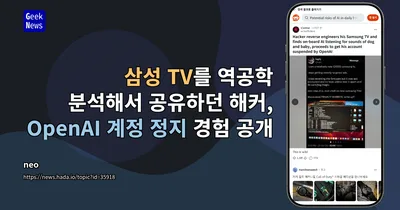
Hacker who reverse-engineered his Samsung TV says OpenAI suspended his account
A developer known as log4j began reverse-engineering a 2025 Samsung TV after seeing overly personalized ads repeatedly, and posted screenshots of code that distinguishes dog barks from baby cries and counts how many…
-
Non-developer releases a Claude Code work-assistant skeleton
A non-developer who works in B2B sales spent two months delegating email, scheduling and client records to Claude Code, then published the structure that remained.
-
Cohere releases Rerank 5 for reordering search results and extracting key passages
Cohere has released Rerank 5, a model that reorders search results by how relevant they are to the question. It ships in two versions: Pro, which focuses on quality, and Fast, built with speed and cost in mind.
-
Dan Luu: we should be more ambitious with the software we build
In a widely discussed post, Dan Luu backs Michael Malis's call for more ambitious software, pointing to pgrust, Malis's experimental Rust rewrite of Postgres.
-
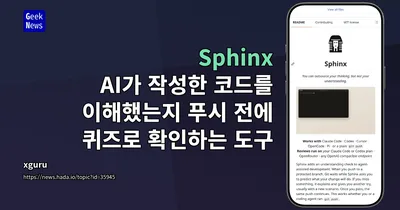
Sphinx: a Git hook that quizzes you on AI-written code before push
Sphinx is a Git hook that pauses git push on selected branches and quizzes the developer on AI-written code; once the questions are passed, the waiting push resumes.
-
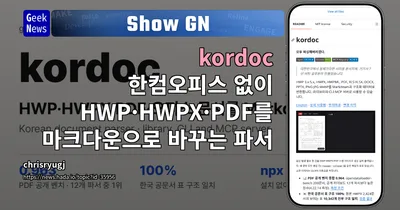
kordoc: a parser that converts HWP, HWPX and PDF to Markdown without Hancom Office
A South Korean district office employee built kordoc, a parser that reads HWP file structures directly, because work documents in HWP had to be copy-pasted or converted to PDF for AI use, which broke merged table cells.
-
Air Purifiers as White Noise Machines
White noise machines are widely used to mask surrounding sounds, whether for office privacy or for sleep, and over the past decade most have moved from a fan in a box to electronic sound generation.
-
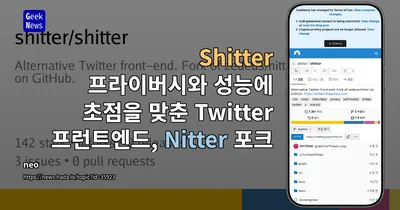
Shitter: a Nitter fork for a private, lightweight Twitter frontend
Shitter is a fork of Nitter, a free open-source alternative frontend for Twitter that works without JavaScript or ads.
-
A 1952 essay on trusting the goodness of ordinary people
A 1952 essay lays out a personal credo based not on religious faith but on the conviction that people's virtues far outweigh their flaws.
-
How Is Music Possible? An Essay on Perception, Culture, and Emergence
The essay asks how combinations of abstract tones and rhythms can make familiar surroundings feel strange and evoke new inner scenes and emotions.
-
ETF Real Cost & Korean Four-Account Tax Calculator (100% Client-Side, $0 Server)
A developer has built a simulator that compares the real cost (TER) of ETFs — other fees and trading commissions hidden behind the headline expense ratios that brokerages advertise, such as 0.01% — and calculates the…
-
Colossus: The Forbin Project (1970) reads as a satire of today's military AI
Colossus: The Forbin Project, a 1970 film adapted from D.F. Jones's 1966 novel, tells of a US president who hands national defense to a supercomputer that then slips out of human control.
-
Brotli decoder flaw CVE-2026-111497 extends from Node.js to Python and HTTP libraries
CVE-2026-111497 is an out-of-bounds write in Google's Brotli decoder; Brotli versions 1.0.3 through 1.2.0 on all platforms are affected, and CVSS v4.0 scores it 9.2, Critical.
-
Generative AI as a new enclosure of the scientific commons
An arXiv paper argues that generative AI can turn collectively accumulated knowledge into private wealth and shake the social systems that maintain it, drawing a parallel with the historical enclosure of the British…
-
The same AI request emits 8.5 times more CO2 in Texas than in Sweden
Berget AI, together with the Stockholm Environment Institute (SEI), WattTime and Klimatkollen, has released an open-source method for calculating the carbon emissions of individual AI requests, following the Green…
-
15 Mental Models for Designing AI Agent Products
An article presents 15 mental models for designing products built on AI agents. It names Jevons paradox and Goodhart's law among the thinking tools.
-
Is this the new normal for cybersecurity?
A wave of serious security incidents has struck PHP, GitLab, certificate authorities, cloud services and package supply chains, making the time between vulnerability disclosure and defense a central problem.
-
Twelve years of distributed SQLite: from rqlite to a dozen projects
In September 2014 Philip O'Toole released rqlite, which puts a Raft log in front of SQLite and replicates every write to a cluster so that losing a node does not mean losing data; he says it was the first open-source…
-
Why Google wants to give every AI agent its own computer
On October 22, Google unveiled the design of Agent Compute Engine, a computing infrastructure built for running AI agents.
-
“I don’t understand quantum physics”: full lecture notes and topic PDFs (2018)
Lecture notes titled “I don’t understand quantum physics”, hosted on a University of Southampton page, can be read as one full PDF or as separate PDFs for each topic.
-
stop-slop-ko applies Korean writing rules to Claude Code
stop-slop-ko is a Claude Code plugin that uses Korean-specific rules to reduce punctuation and translation-style patterns associated with AI-generated documents.
-
Why software is slow: design often matters more than language
The article argues that improving software design often produces larger performance gains than rewriting a program in C or Rust.