Latest: Global page 44
Stories of the Global section in the order they appeared on the site, newest first.
-
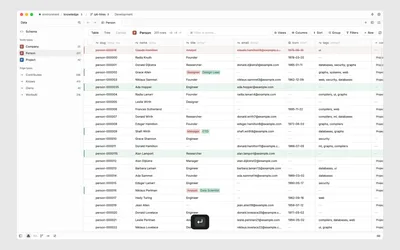
Omnigraph: object-storage graph database with branching for AI agents
Omnigraph is a graph database that stores its data in object storage and is built for agents that share one typed model of a domain.
-
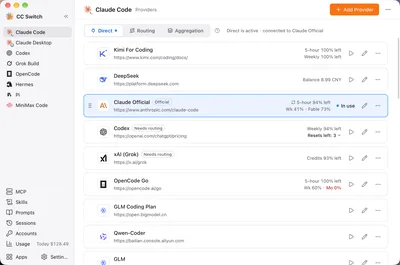
CC Switch: desktop manager for API providers and config files of AI coding tools
CC Switch is a cross-platform desktop app that its README describes as an all-in-one assistant for Claude Code, Codex, OpenCode and other AI coding tools.
-
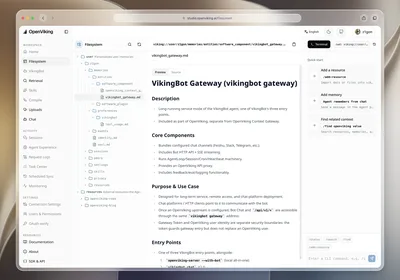
volcengine/OpenViking: context database for AI agents
OpenViking is an open-source context database for AI agents that combines agent memory, knowledge RAG and skills in one filesystem.
-
Anthropic's official repository for Claude Code plugins and marketplace
This is the GitHub repository for Anthropic's own plugins for Claude Code and for the claude-plugins-official marketplace, where they are listed.
-
Headroom: a tool that compresses AI agent input before it reaches the LLM
Headroom is a tool published as headroom-ai on PyPI and npm. It compresses what an AI agent reads before the text is sent to a large language model (LLM).
-
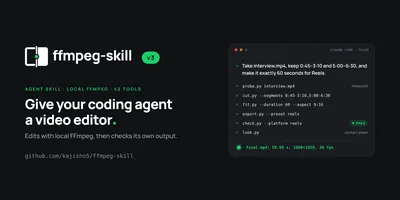
ffmpeg-skill: local FFmpeg video tools for coding agents
ffmpeg-skill is an Agent Skill for local video editing, made for coding agents such as Claude Code, Cursor and Codex.
-
GitHub repository collects leaked system prompts of popular AI chatbots
The GitHub repository asgeirtj/system_prompts_leaks collects the hidden system prompts of popular chatbots, including ChatGPT, Claude, Gemini, Grok, Perplexity and DeepSeek.
-
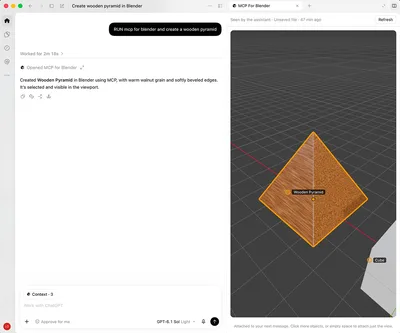
mcp-for-blender: a plugin that lets AI models control Blender 3D
mcp-for-blender is a community plugin that lets an LLM of your choice control the Blender 3D program. It is a third-party integration and is not made by or affiliated with the Blender Foundation.
-
Qwen Code: open-source AI coding agent for terminal, editor, desktop, browser and chat
Qwen Code is an open-source AI coding agent that runs in your terminal, editor, desktop app, browser and chat. The README describes Qwen Code 1.0 Preview, which combines the agent harness capabilities of Qoder and Qwen…
-
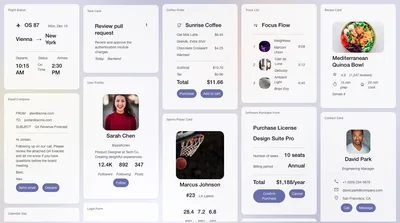
A2UI: open-source framework for agent-generated user interfaces
A2UI (Agent-to-User Interface) is an open-source generative UI framework from the a2ui-project repository on GitHub.
-
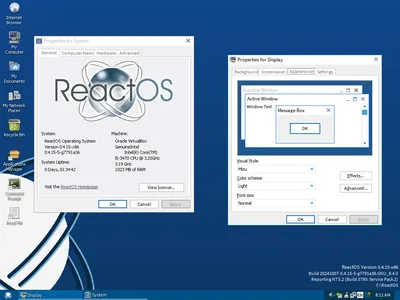
ReactOS Hackfest Report: New Syscalls, NTFS Writing and Stricter Pull Request Rules
The ReactOS project held two hackfests in 2026, multiday meetings where core team members and contributors develop the operating system.
-
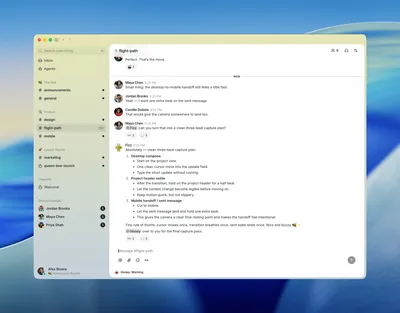
block/buzz: a self-hosted workspace where humans and AI agents share channels
Buzz is a self-hostable workspace where humans and AI agents share the same rooms, called channels. A community is reached by URL, and in the current single-relay setup one relay serves one community.
-
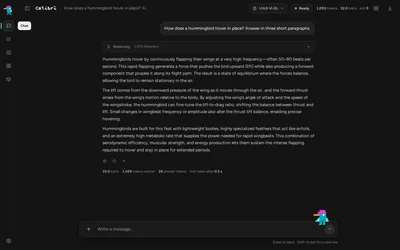
colibri: a C engine that runs large MoE language models on everyday hardware
colibri is a free, open-source inference engine written in pure C. It runs very large open models on hardware the user already has, and no GPU is required.
-
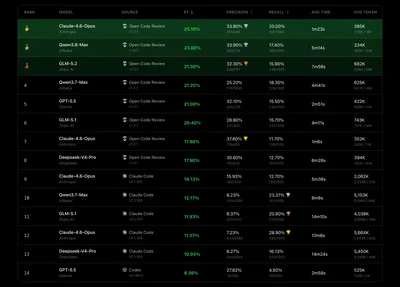
Open Code Review: Alibaba's open-source AI tool for reviewing code from the command line
Open Code Review is an AI-powered code review CLI tool from Alibaba Group. It began as the company's internal code review assistant, served tens of thousands of developers over two years, and helped identify millions of…
-
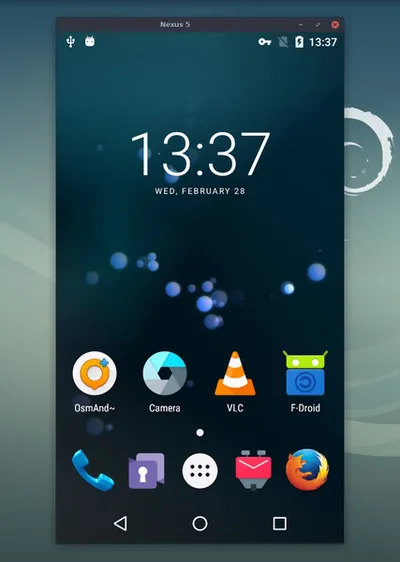
scrcpy: open-source tool to display and control Android devices from a computer
scrcpy mirrors the video and audio of an Android device connected by USB or TCP/IP and lets you control it with your computer's keyboard and mouse.
-
Veyra: open-source Windows tool for real-time GPU video enhancement
Veyra is an open-source Windows 11 tool, licensed under GPL-3.0, that enhances video in real time on the GPU. It works with local videos, images, capture card sources, and game streams from PS5, Xbox and PC.
-
Reddit post compares Gemini 3.8 Flash with GPT 6.1 Sol
A post in the r/GeminiAI subreddit, titled "Gemini 3.8 flash >>> Gpt 6.1 Sol", sets Gemini 3.8 Flash against GPT 6.1 Sol.
-
SSA from bytecode: converting stack code into SSA form in ZJIT
The author describes how the function add_iseq_to_hir in ZJIT, a part of CRuby, converts stack-based bytecode for the YARV virtual machine into a high-level SSA IR for analysis and optimization.
-
Building Barista: Formal Verification and TLA+
This article is the second part of a series about Barista, a system the author built. It collects hundreds of sources, creates a unique prompt for each user, and sends each user one email per day with the best sources…
-
TSMC reports unauthorized release of employee personal data
In a statement filed with the US Securities and Exchange Commission, Taiwan Semiconductor Manufacturing Company (TSMC) said that data of some current and former employees was made available on an external website…
-
Does Gemini Feel Much Harsher on Image Extraction and Clothes Making?
A user on Reddit's r/GeminiAI asks whether others feel that Gemini is much stricter about requests for image extraction and for making clothes.
-
NVIDIA H200 Chips Reached Chinese Military-Linked University Despite US Bans
Procurement records show that Northwestern Polytechnical University (NPU) in Xi'an, which is classified under China's defense-focused Seven Sons of National Defense group, bought two NVIDIA H200 chips for approximately…
-
Retrofitting Cloud Tags in Messy AWS and Azure Environments
This guide covers tagging existing AWS and Azure environments, where tags were not planned from the start and years of accounts use inconsistent names.
-
MAKO Renderer 5.0 adds built-in Frame Generation, no Lossless Scaling needed
MAKO Renderer v5.0.0, codename Phoenix, adds MAKO FG, a Frame Generation feature with its open-weight model bundled for SteamOS and Linux.
-
Slack's Measures Against Exposed Passwords and Hijacked Session Cookies
Slack describes its measures to protect user passwords, session cookies, tokens and webhooks from breaches and misuse.
-
Veshell: a spatial not-desktop environment for Linux
Veshell is a not-desktop environment for Linux, made by Free Explorers. Instead of overlapping windows, it arranges windows on a 2D grid: rows are workspaces and columns are windows.
-
How Not to Build a Music Player
A developer living in Iran started building AMP, a minimal music player written in Zig, after finding that the lyrics view in Strawberry showed distracting timestamps.
-
UFORCE raises $700 million to expand unmanned systems production in the UK
On 12 November, the UK Ministry of Defence and the National Wealth Fund announced that UFORCE, a defence technology company headquartered in London and founded in Ukraine, has raised $700 million in a Series A round at…
-
Jensen Huang affair wiped $400bn off Nvidia; Guardian column asks about tech power
Guardian columnist Aditya Chakrabortty writes about Nvidia chief executive Jensen Huang, whose affair with a much younger woman has become a major story.
-
Linux 7.5 adds temperature, voltage and power monitoring for AMD Pensando NICs
A new ionic-hwmon driver for AMD Pensando network cards has been merged into net-next for the Linux 7.5 kernel, which is expected in 2027.