colibri: a C engine that runs large MoE language models on everyday hardware
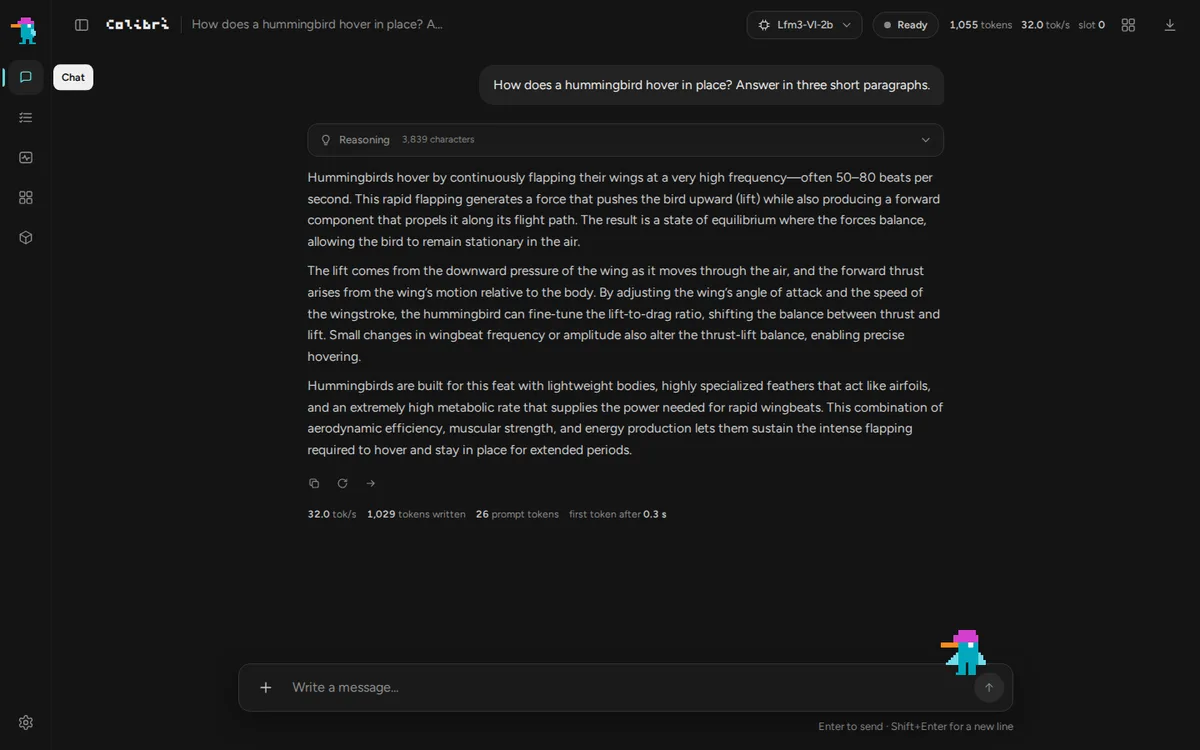

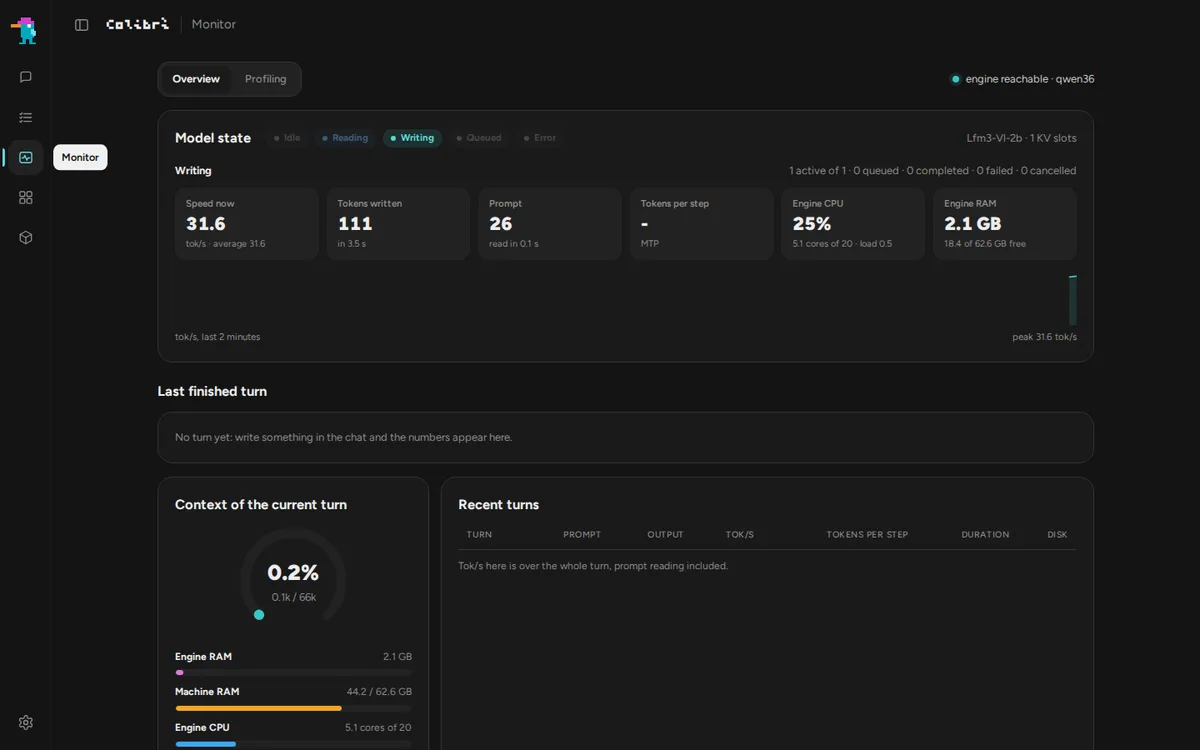
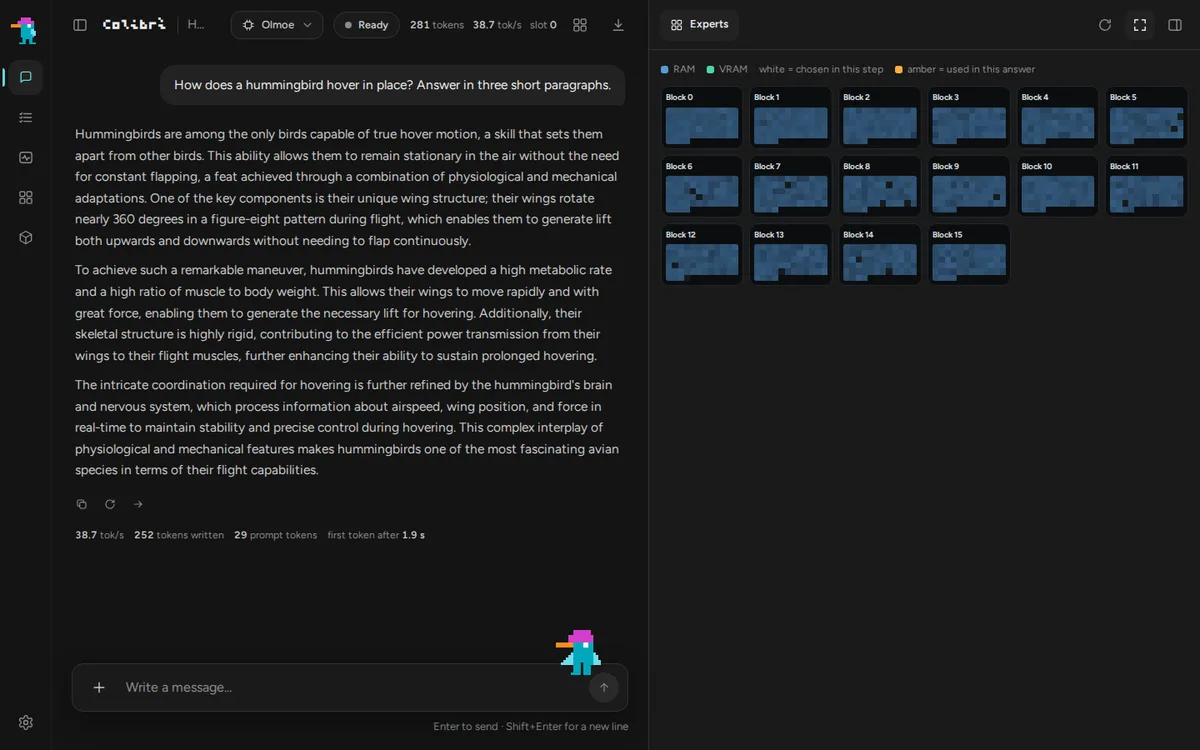
colibri is a free, open-source inference engine written in pure C. It runs very large open models on hardware the user already has, and no GPU is required.
It works with mixture-of-experts (MoE)[1] models, which use only a small part of themselves for each token. Hot experts stay on the GPU, warm ones in RAM, and cold ones are streamed from an NVMe[2] drive when the model asks for them. Thirteen engines run today, ten of them for language models, including GLM-5.2/5.3, Kimi K3, DeepSeek V4 Flash and Qwen3.6. There is also an image engine, Qwen-Image-2.1, and two decision models, Laya and GLiNER2.5-Decide.
Language models also run from published GGUF files, on the CPU, on any GPU through Vulkan[3], and on NVIDIA cards through CUDA[4]. The minimum is 8 GB of RAM (16 GB or more is better) and 22 GB of free disk space for the smallest model. A graphics card is optional. On Windows the user runs START-HERE.bat, and on Linux and macOS ./start-here.sh. The setup checks the machine, recommends a model that fits, builds or downloads the engine, and downloads the model with resume support. It then starts colibri, opens a dashboard in the browser, and prints the OpenAI and Anthropic base URLs for other apps.
Sources
-
GitHub Trending
JustVugg/colibri


