US startup's test of night-time sunlight from space mirrors draws criticism
What happened next
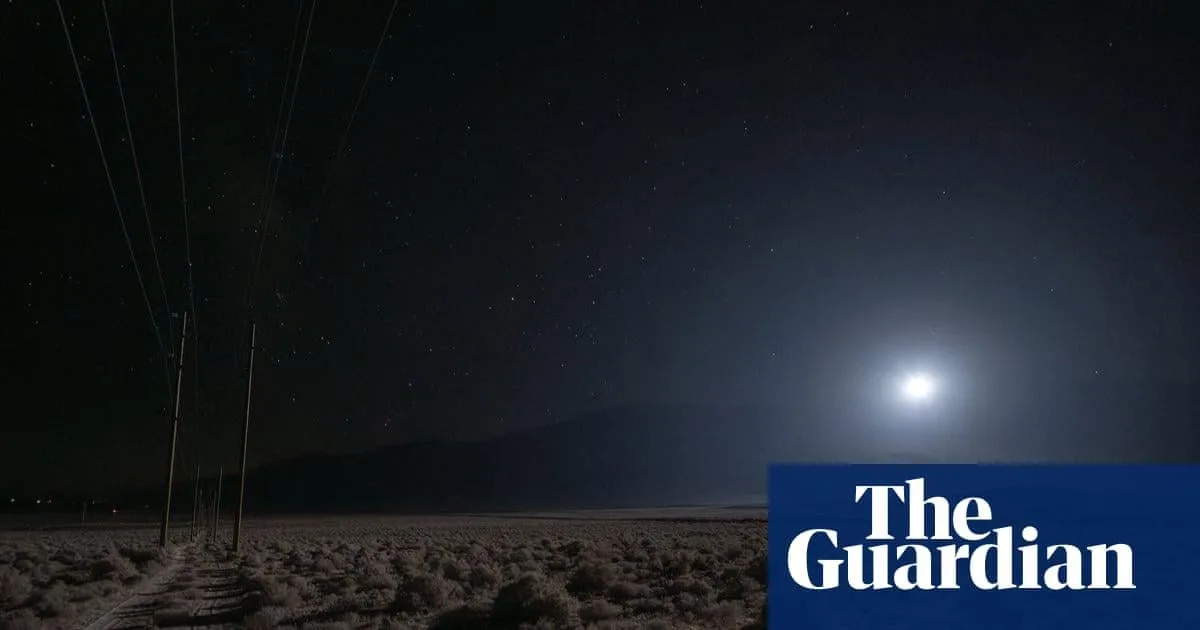
Locals near the town of Lone Pine in California's Sierra Nevada were startled to see dazzlingly bright light shine down from nearby mountains at night, with one calling it "blinding". The illumination was a demonstration by the US startup Reflect Orbital, which plans to launch 50,000 satellites over the next decade to reflect sunlight onto Earth at night. In July, the Federal Communications Commission (FCC)[1] approved a proposal to launch an initial demonstration satellite next year, carrying a 59ft-diameter mirror that would reflect sunlight in 3-mile-wide beams ranging from moonlight up to the brightness of the sun at noon.
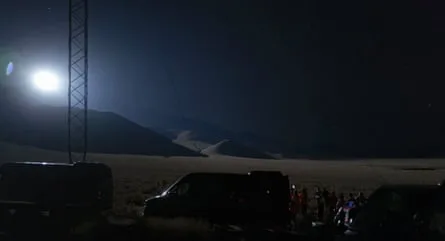
For the test, the company set up large mobile lights near Mount Whitney and compared their radiance to a full moon, working alongside a local search-and-rescue team. Reflect Orbital expects rescue teams to be its first customers; other planned uses include lighting crops, replacing broken streetlights and providing solar power for military operations, all summoned with a tap in an app.
In August, four groups represented by the environmental group Earthjustice asked the FCC to reconsider its approval, warning that satellites orbiting about 400 miles (645 km) up would affect wildlife and people's sleep and circadian rhythms[2]. Earthjustice senior attorney Jan Hasselman called the project "idiotic" and said 50,000 satellite mirrors would "really end the night sky as we know it". Astronomers say the night-time glare would worsen existing light pollution[3] and add to a broader satellite rush — SpaceX plans 1 million celestial datacenters around Earth — that would obscure the stars and create more space debris; looking directly at the beams could also damage eyes, much like staring at the sun during an eclipse. Climate scientist David Ho of the University of Hawaii warned against meddling with the amount of the sun's energy reaching Earth, noting that solar geoengineering[4] proposals already face fierce opposition. Reflect Orbital says the technology could instead boost the night-time output of solar panels to reduce fossil fuel use, and that it has had "substantive discussions" with scientists and astronomers so that astronomical sites, national parks and other wildlife-rich areas are avoided.
Read the original theguardian.comDiscussion
Discussion
Most commenters dismiss the project as cartoon-villain scheming or an orbital "death ray", doubt that search-and-rescue is the real motive, and worry about losing dark, quiet nights and about nocturnal wildlife. A few joke that beams this bright would also light up soldiers moving at night.
Sources
-
theguardian.com
Sunlight at night: US startup’s demonstration of lighting Earth from space draws criticism