Reflect Orbital Tests "Sunlight As A Service" in California Without Telling Astronomers
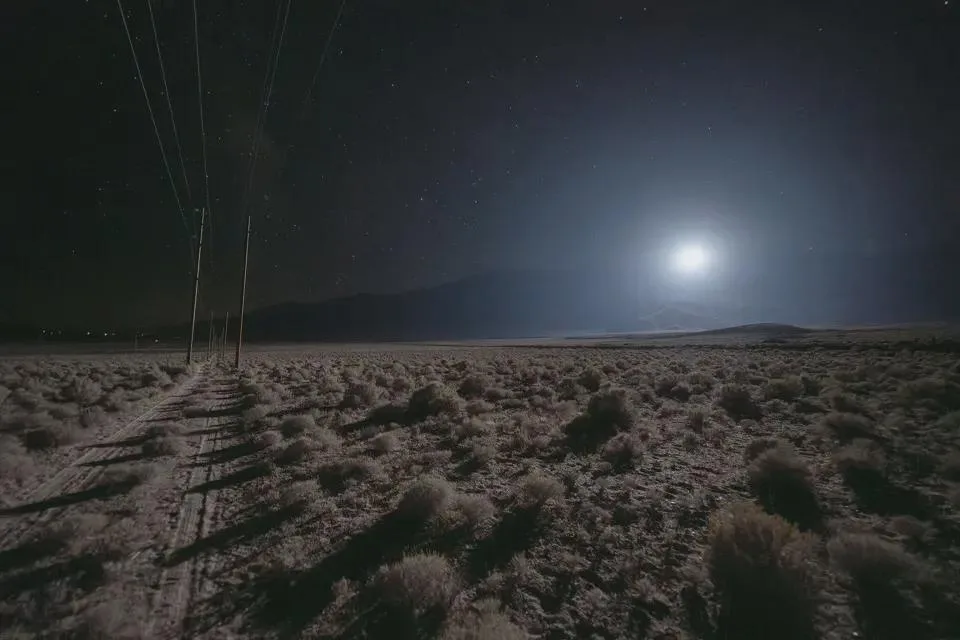
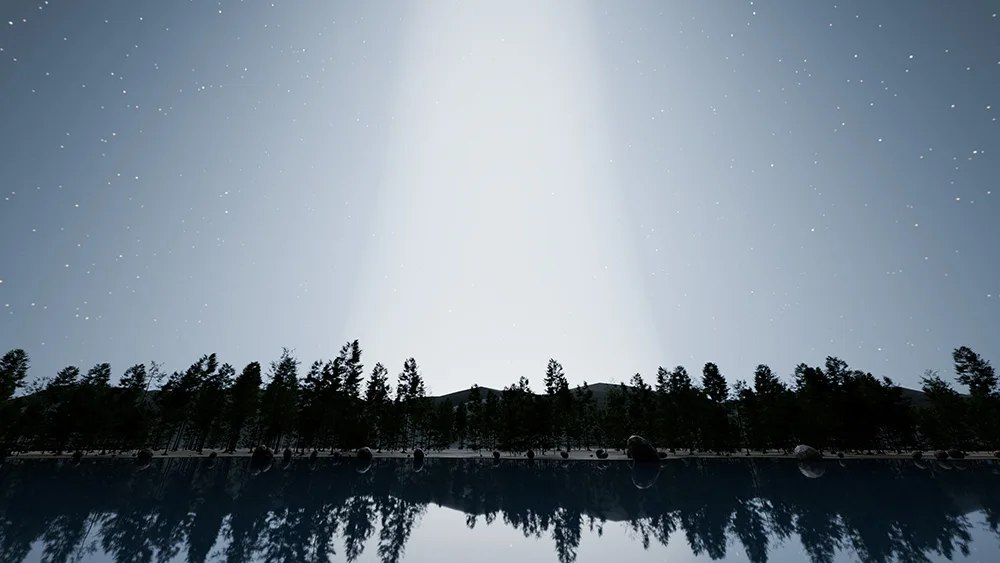
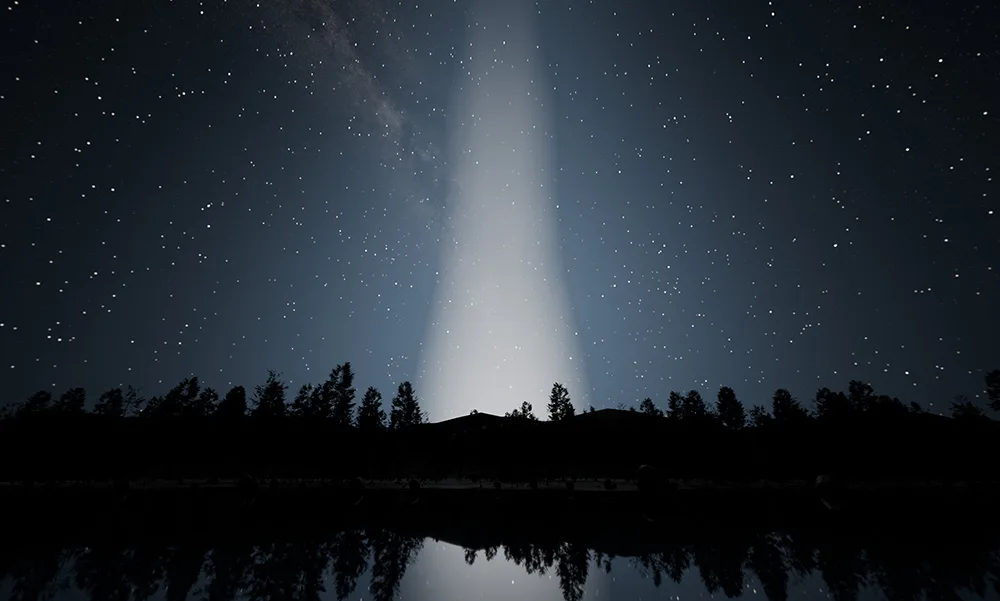
On Saturday, October 10th, the startup Reflect Orbital lit up desert terrain near Lone Pine, California, with giant floodlights angled to replicate a beam from space — a glow visible from the town of Independence, more than 20 miles away, after sunset. Reflect Orbital wants to sell "sunlight-as-a-service": sunlight reflected down from about 50,000 mirror-equipped satellites orbiting 625 kilometers (388 miles) high, each casting a 5-kilometer-wide beam for about 4 minutes before another satellite takes over. The company pitches the technology for solar power after sunset and for overnight search-and-rescue and disaster response, and plans to price it at $5,000 per hour.
Astronomers warn the beams could wash out the sky with diffuse light far from their direct path, making it near-impossible for ground-based optical and infrared telescopes to view even moderately bright objects or track transient ones. In August, astrophysicist Gaspar Bakos of Princeton University and colleagues published a paper finding the beams could illuminate the surroundings up to 30 kilometers with brightness similar to dusk, and that each satellite would appear as a point source four magnitudes[1] brighter than the Moon. An amateur astronomer could suffer permanent eye damage if a beam unexpectedly crossed a telescope with an aperture greater than 12 inches. In July, over astronomers' protests and a petition by the American Astronomical Society, the FCC[2] approved a demonstration satellite called Earendil-1 with an 18-by-18-meter mirror; in August, groups represented by Earthjustice asked the agency to reverse the approval.
Jaime Lopez Wolters of the Alabama Hills Stewardship Group said the land used was likely governed by the Bureau of Land Management; the agency stated it was not aware of or consulted on the operation, and Inyo County's Environmental Health department learned of the test only when a resident called after reading about it in the news. Michelle Wooten, co-chair of COMPASSE, a committee of about 40 astronomers and dark sky advocates, said the company knew astronomers wanted to test the beam's brightness and scattering but never told them about the demonstration. Four days after the test, Reflect Orbital announced it had purchased two space launches from the Indian company Skyroot Aerospace.
Read the original skyandtelescope.orgDiscussion
Discussion
Most commenters are sharply critical, citing the risk of permanent blindness for anyone who looks at the beam through a telescope, harm to nocturnal wildlife, and the prospect of paying to brighten the night. One comment pushes back that the title is clickbait because only ground-based floodlights were tested, not actual satellites.
Sources
-
skyandtelescope.org
A Satellite Company Tests “Sunlight As A Service” — Without Astronomers’ Knowledge