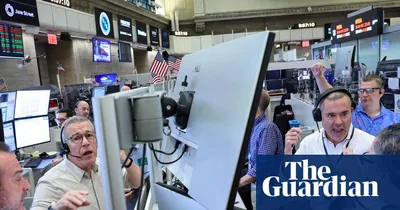
Nasdaq drops 5.2% as midterm results spark biggest tech selloff since Covid

Latest in the story ·
Tech stocks sold off sharply on Thursday as investors feared the U.S. midterm election results will bring the AI boom to a premature halt or a significant slowdown, after voters approved candidates and ballot measures seeking to curtail the buildout of AI data centers. The Nasdaq was down more than 1,340 points, or 5.2%, in midday trading, shedding more than $3 trillion in market cap and marking its biggest daily drop since the "Liberation Day" tariff announcement in April 2025. The Philadelphia Semiconductor Sector index, which tracks the 30 largest companies in the chips business, was down more than 1,000 points, on track for its biggest single-day loss since March 2020. The selloff reversed Wednesday's rally, when shares rose after Democrats retook the Senate and House of Representatives in the midterm elections[1].
Micron and AMD fell roughly 14% each, while Nvidia lost 8%, Meta 3.4%, and Microsoft 2.8%. Coreweave, a leading neocloud[2] company, dropped 9% and was on track for an 18% decline over two days, while Google, which has a search advertising business, was down a more modest 1.6%. Salesforce and Snowflake fell 3.6% and 6.4%, Figma dropped 17% despite reporting stronger-than-expected Q3 revenue, and DoorDash, Uber, Spotify, and Netflix all closed down multiple percentage points.
Meta President Dina Powell McCormick said building data centers in the U.S. is "going to be harder" and that every hyperscaler[3] is now weighing whether to build outside the United States. Analyst Dan Ives of Yorkville Ives wrote that tech capex[4] growth will now peak next year instead of in 2028 or 2029, that capex should still exceed $1 trillion in 2027, and that on the low end 10% of the planned 800–1,000 AI-focused data centers in the U.S. will be wiped off the roadmap, with up to 20% facing a much longer regulatory road. Simeon Wallis, chief investment officer at Aprio Wealth Management, which manages $6.1 billion in assets, said uncertainty around data center expansion in Texas, Georgia, and Ohio is reflected disproportionately in semiconductors, though markets can overreact in the short term.