University of Kentucky employee exempted from using AI over his 'religious' beliefs
Latest in the story ·
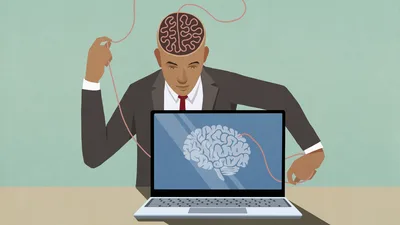
David Durman, a 45-year-old research administrator at the University of Kentucky who identifies as a humanist[1], has received an exemption from his employer's push to adopt AI tools. After university administrators asked all employees to use AI in their work, Durman said the request ran counter to his fundamental ideas about what it means to be human, effectively asking a fully conscious adult to hand his entire thought process to a chatbot to perform daily duties. Thinking through situations, work, ethics and the way he treats other people is, in his words, a key component of developing himself as a moral person, and offloading that process to a commercial LLM[2] tool undercuts his agency as a moral and conscious being.
Broadly, humanism is not a religion in the conventional sense but a philosophical stance shared by various intellectual traditions that emphasize universal human qualities, the pursuit of knowledge, and the improvement of individual and social conditions. The American Humanist Association (AHA) supported Durman in seeking a religious accommodation[3] under Title VII[4], the federal law that lets employees request workplace arrangements to adhere to their religious beliefs. Before working with the AHA, Durman sent administrators a letter quoting the Humanist Manifesto III, first published by the organization in 2003. The university agreed in September, granting him permission to avoid Copilot, ChatGPT and other LLM-based tools in his work.
Durman helps researchers with grant applications and related tasks, and confirmed he can do his job without chatbots; according to AHA attorney Alexandria Huiskens, a 'very collegial' meeting took place in which he confirmed that avoiding AI would not burden his department or reduce its productivity. Durman argues AI could have a very negative impact on society, while recent polls suggest employees are increasingly stressed by organizations' efforts to fully integrate AI into their workflows. Huiskens said Durman's 'religion' could be considered a 'comprehensive way of life,' much like Christianity and Islam.