Why optical links bottleneck AI data centers and who controls the supply chain

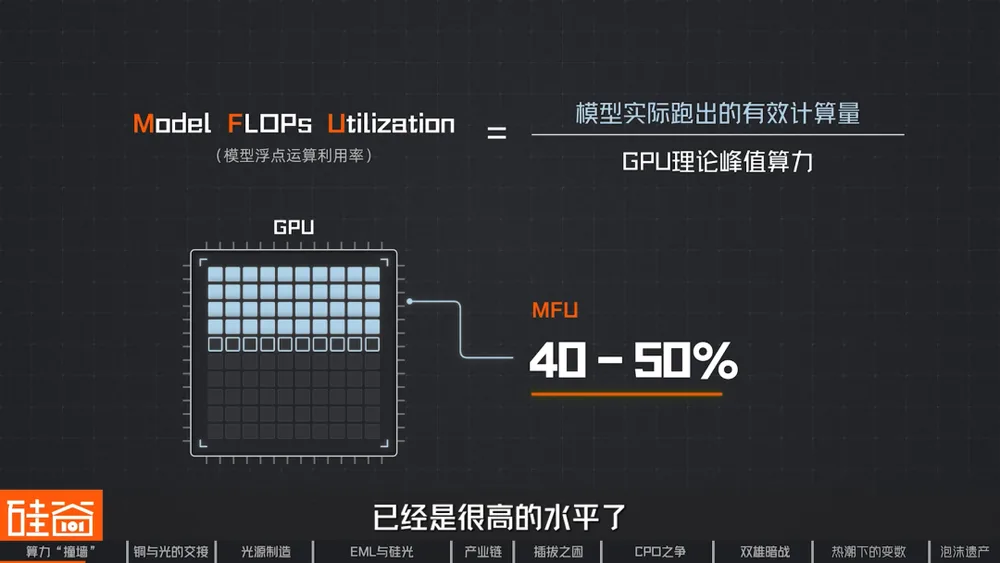

The article explains why optical communication now limits AI data centers. GPU compute has grown faster than the links that connect them: from the A100 in 2020 to the B200 in 2024, single-card compute rose about 7 times, while NVLink bandwidth rose from 600 GB/s to 1.8 TB/s, about 3 times. Copper cables face three limits: distance (at 200 Gb/s per lane, only about two meters), bandwidth, which is constrained by the SerDes[1] circuit, and power consumption.
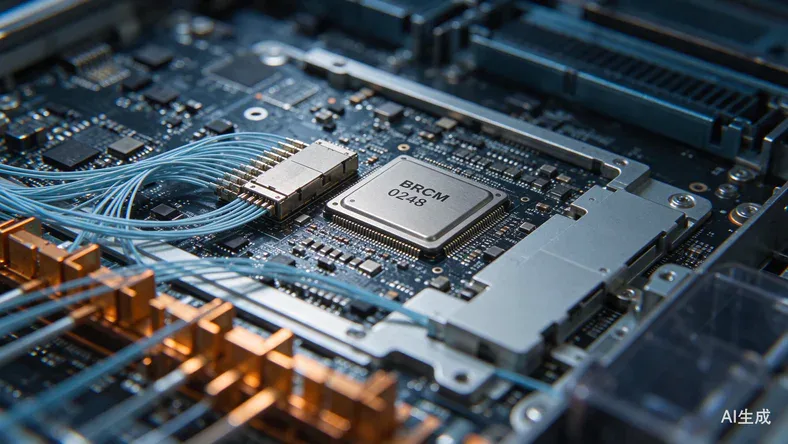
Optical modules convert electrical signals into optical ones, and the most valuable chips and optical components still come mainly from overseas upstream suppliers. Two approaches compete: EML[2], which puts the laser and modulator on one indium phosphide chip, and silicon photonics, where the modulator is built on silicon and the light source is an external indium phosphide laser. Intel, which pushed silicon photonics, handed its pluggable silicon photonics module business to Jabil in 2023.
Nvidia invested $2 billion each in Marvell and Lumentum in March 2026. Reports emerged in Silicon Valley on 2 November that Marvell plans to acquire Lumentum at a $115 billion valuation, and both companies' shares fell sharply that day. Nvidia is also pushing co-packaged optics, or CPO[3], which places the optical engine next to the switch chip; the article says this can cut optical interconnect power by about 70%.
Nvidia shares (NVDA)
151.22 USD +1.6% since the news day, November 26
Price on November 26, 00:59 UTC Quotes: CNBC
Sources
-
CNHuxiu ZH
黄仁勋的“光”:详解AI算力背后的光通信产业链、英伟达赌注与技术博弈




 archive