Police use AI license plate readers to stop drivers over 'suspicious' driving patterns
What happened next
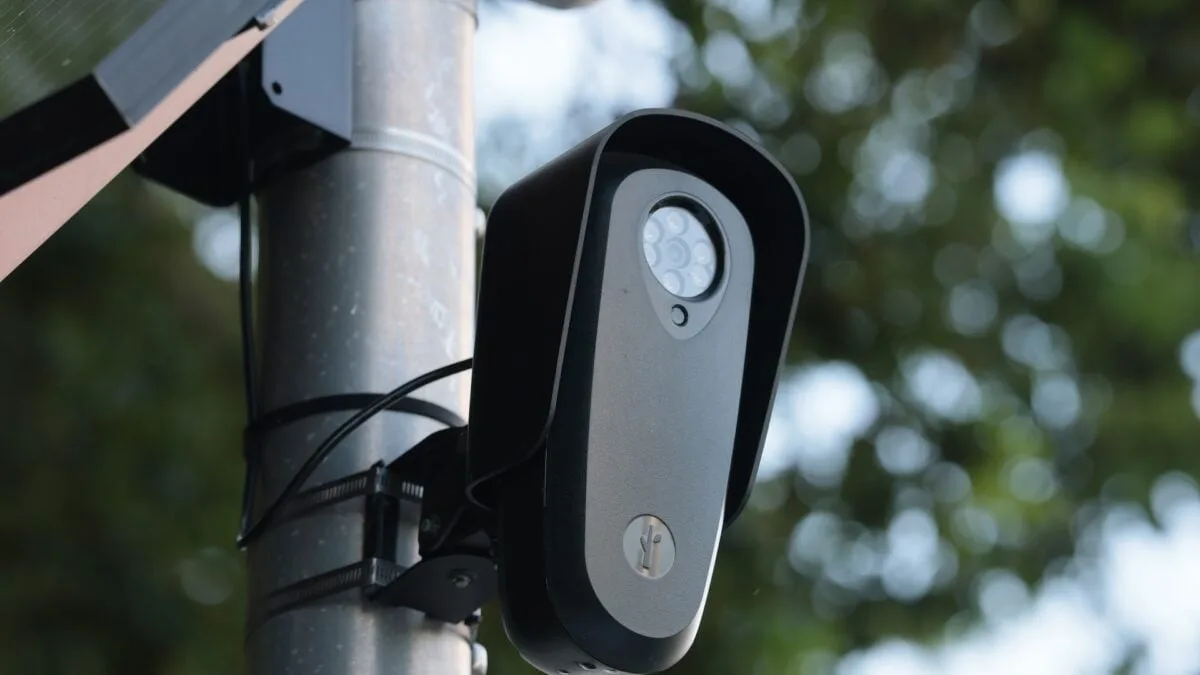
The American Civil Liberties Union (ACLU) warned in a Monday blog post that law enforcement agencies across the United States are increasingly using automated license plate readers (ALPRs)[1] and AI-powered tools to pull over drivers who are not suspected of a specific crime, and that such encounters could become more common. Grace Knowles, a woman in her 20s from northern Virginia, was pulled over in September 2025 while driving to Florida during a road trip through Oregon, Texas and Louisiana; the officer claimed she had spent too much time driving in the left lane. He questioned her about her travels and asked for proof that she had been in New Orleans, then identified himself as a special agent with the FBI working on a human and drug trafficking project and told her that her license plate had been flagged for suspicious travel patterns. He showed her a heat map[2] of the U.S. with circles marking where she had been and a photo of her license plate, and said the cameras were everywhere, including on top of highway signs.
Companies such as Flock Safety and Axon sell ALPR systems that scan license plates as vehicles pass and collect vehicle information along with the time and location, which police can search during investigations. Privacy advocates warn that the cameras collect location data on millions of people who are not suspected of crimes, often without a warrant, probable cause[3] or reasonable suspicion[4], and there have been reports of mistakes and widespread misuse by law enforcement. An August YouGov survey found that 46% of respondents opposed law enforcement using the technology in their communities while 38% supported it, and agencies including the Los Angeles Police Department have suspended or ended their Flock contracts amid the backlash. In March, The Markup reported that U.S. Customs and Border Protection officers questioned a California grandmother about how often she visited local casinos, and in another case a man was targeted for a traffic stop after repeatedly driving back and forth between Wisconsin and Michigan, which local police called 'a known source State for Marijuana.' Earlier this month, a federal jury in Texas sided with a man who sued over what his attorneys described as an 'unconstitutional traffic stop scheme' enabled by 'AI-powered' license plate readers, after his plate was flagged for a trip from Houston to Carrizo Springs with an overnight stay. WIRED reported this month that Flock has developed an AI-powered investigative tool that can identify drivers and track vehicles by their patterns of movement alone; Flock did not immediately respond to a request for comment.
Read the original gizmodo.comDiscussion
Discussion
A commenter wonders why the FBI agent was so forthcoming with Knowles about practices that could amount to civil rights abuses, saying such openness seemed unusual based on their experience with federal agents.
Sources
-
gizmodo.com
Police are using AI to pull over drivers for 'suspicious' behavior
-
KRGeekNews KO
경찰, AI로 ‘수상한’ 이동 패턴을 보이는 운전자에게 정차 요구


