GPT-6.2 Astra released, but early developer reviews are negative
What happened next
Update · : A hands-on test by a Chinese developer blog reports that GPT-6.2 Astra handled single test cases well but was weaker on large projects with vague instructions, with build times of 4 min 55 s to over 30 minutes and a battle royale game that stuttered and used nearly two 5-hour token cycles. The author judges it clearly improved over GPT-6.0 but well behind Claude in autonomy.
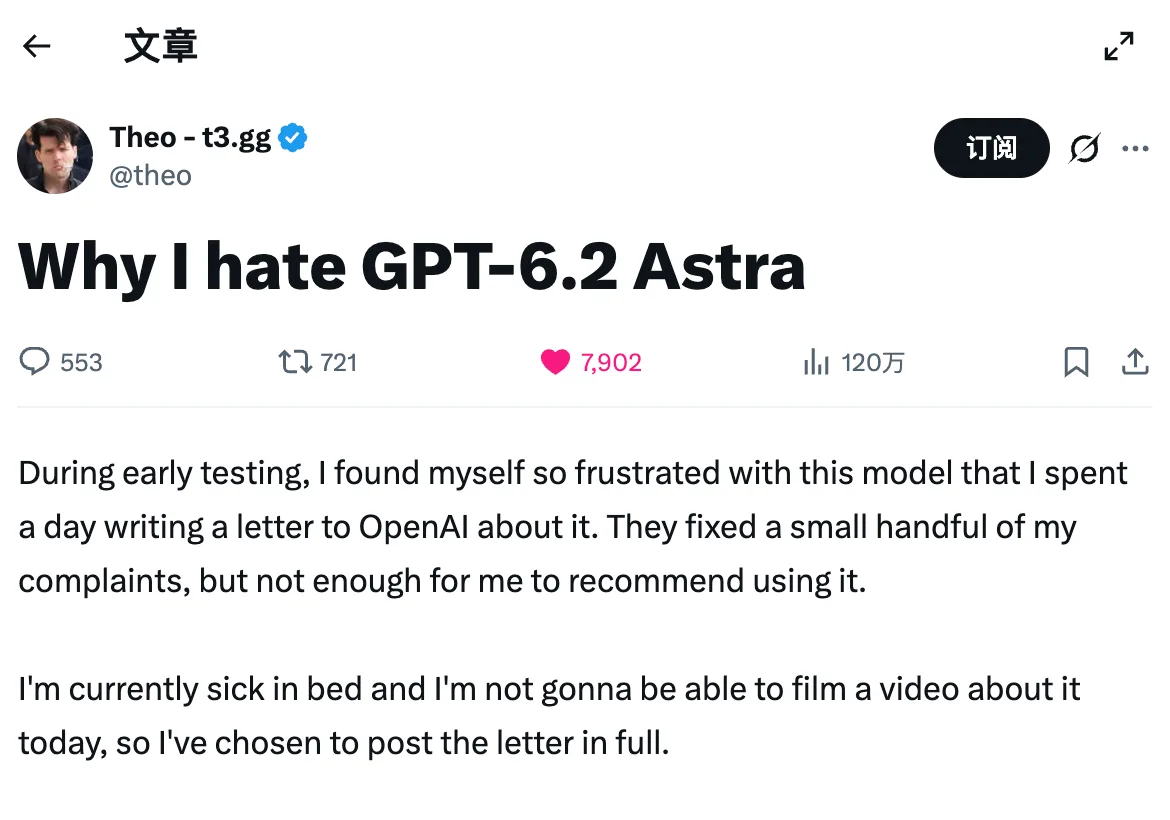
OpenAI released GPT-6.2 Astra in the early hours of 18 November, together with a model called Sol. The author of the post had planned to write a review, but did not see a single post about the launch on their home feed. Three well-known figures in AI published a joint statement that GPT-6.2 Astra is not recommended. Matt's post was one sentence, while Theo wrote a long summary and said he will keep using Opus 5.5.
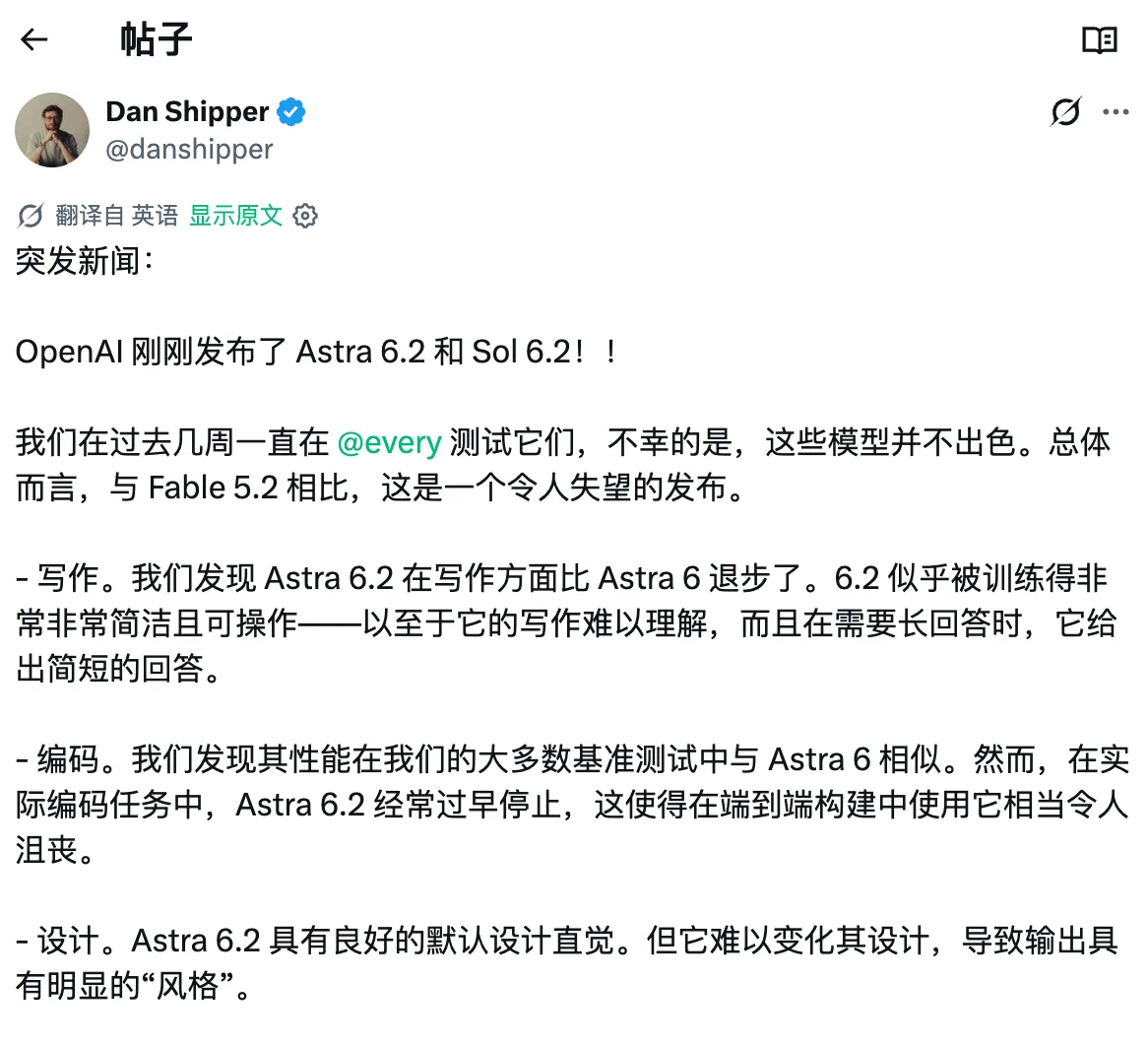
Theo listed strengths: top results in 3D and game development, very strong Computer use[1], better code quality, and good ability to write prompts for subagent[2] systems. He criticized the model for asking odd questions unrelated to coding agents, for explanations that are hard to follow, and for getting stuck in loops while ignoring the prompt. Dan Shipper said its writing got worse, that its performance is similar to Astra 6, and that it stops suddenly during coding, while AI slop[3] remains severe.
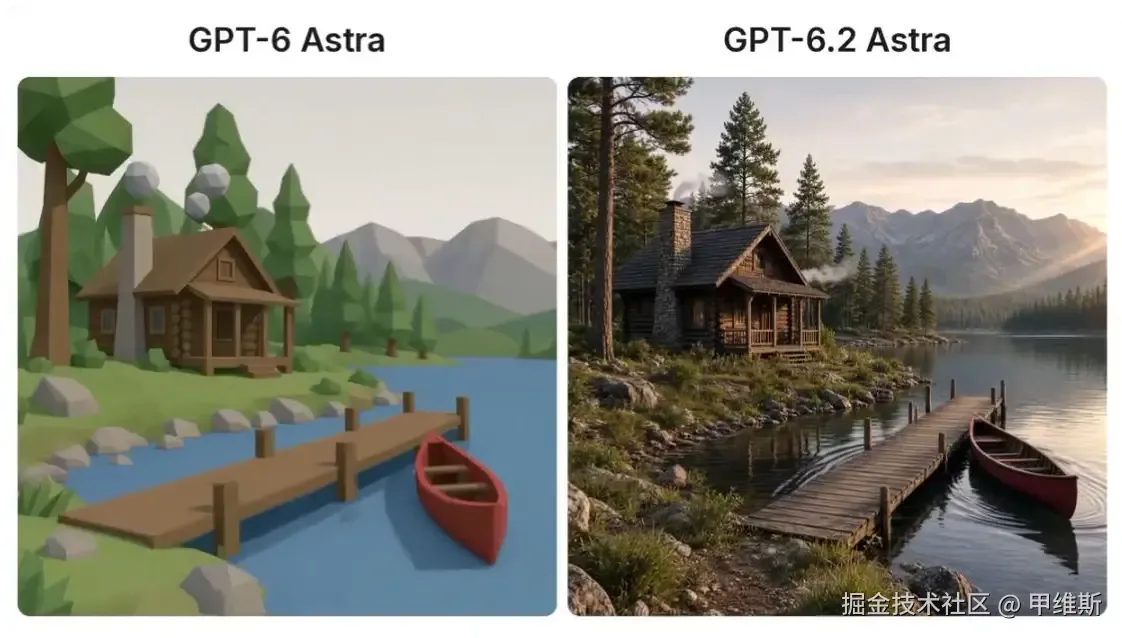
The author tested GPT-6.2 Astra on two demos, a volcano and a rain-curtain greenhouse, and left the judgment to readers. The author says that demos do not show quality on long tasks, which appears only in a real workflow, and that claims of progress and a lower price based on demos say little. The author suggests a test: whether you still want to use the model 15 days from now and after the next model is released.


