Epicurus's method of answering unsupported claims with more explanations
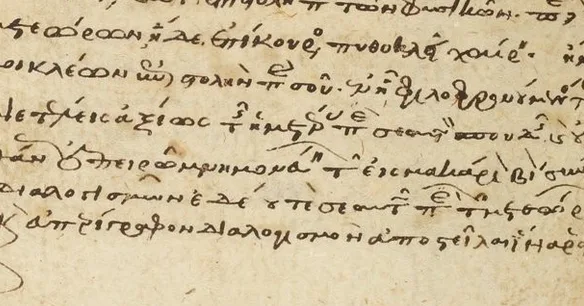
The author revisits a passage from Epicurus's letter to Pythocles, in which Epicurus gave several natural explanations for lightning and said there could be many more. The author says that when someone offers an unsupported explanation, it is useful to propose two or more other plausible explanations. In this view, evidence is what falsifies[1] the alternatives. You can show that a claim lacks evidence by listing other plausible possibilities, not only by pointing out a missing study or a flaw in one.
The author also notes that Epicurus did not always recognise well-supported claims. In the same letter, Epicurus suggested that the moon might have its own light or might reflect sunlight. The author points out that the lit side of the moon always faces the sun, which fits reflection rather than self-glow. Ancient Greek astronomers knew the moon reflected sunlight, and Aristarchus worked out from the pattern of illumination that the sun must be much farther away than the moon.
The author concludes that a good way to see that you have evidence is to identify the alternatives that the evidence rules out. Other standards, such as randomized studies, are treated as a proxy[2] for this.
Read the original lesswrong.com
Sources
-
LessWrong
The Epicurean technique of meeting claims with more claims