Zombie stats: only 40% of numbers cited by AI match the original research
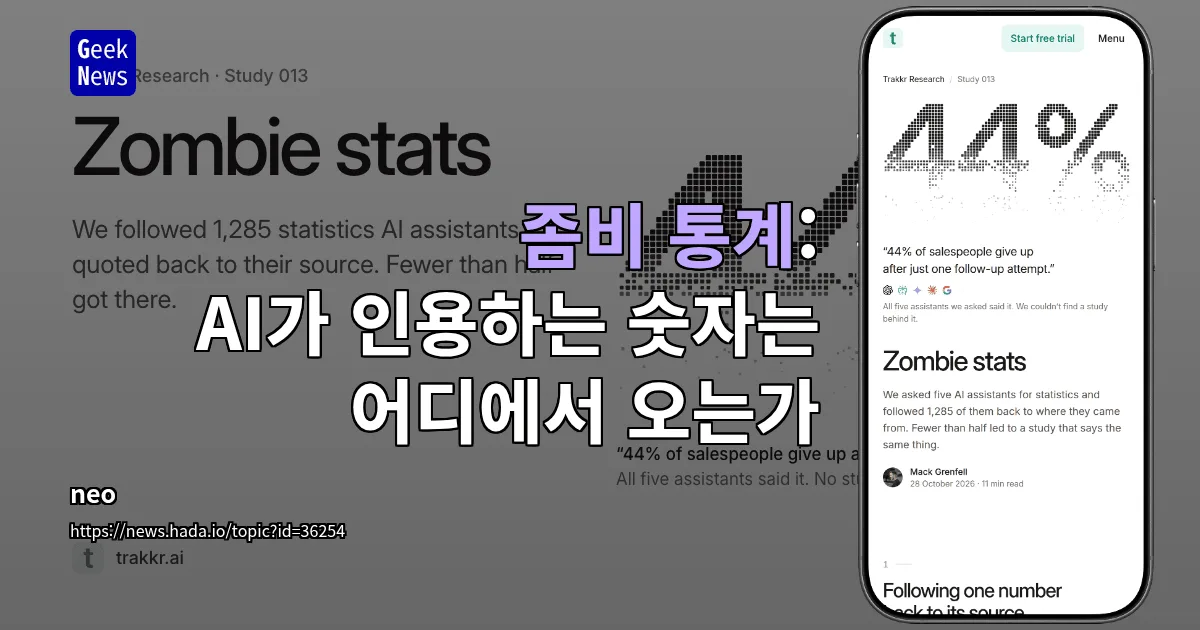
In a study by trakkr.ai, 200 everyday questions that require numbers were put to ChatGPT, Perplexity, Gemini, Claude and Google AI Overviews, and 1,285 randomly sampled statistics from the answers (collected in October 2026) were traced through up to 5 pages of citations, with results calibrated against 150 paths checked by hand. Only 40% of the traced statistics matched the original research (95% interval[1] 34–46%), 8% reached the original study but with changed content, 40% could not be verified because the source was restricted, gone, or lacked the number, 11% ended in pages that repeat the number with no research anywhere in the chain, and 1% of pages would not load.
The first cited page did contain the number in 82% of cases, but only 21% directly cited the original research; corporate blogs made up 54% of citations with a 37% match rate, research institutions 13% with 62%, and government or official bodies 7% with 61%. ChatGPT cited the fewest numbers (108 tracked, 1.3 per answer) and had the highest match rate at 57%, while Gemini and Claude averaged 6.2 and 6.8 statistics per answer with 38% match rates. Among the statistics that reached the original study, 17% had changed en route, and of the recorded changes only 26% were to the number itself — the rest were mostly context: measured item 20%, year 17%, source 16%, survey subject 14%, region 4%. One traced number, the claim that 94% of a website's first impression is design-related, goes back to a 2004 CHI[2] study by Sillence and colleagues that observed 15 UK women evaluating health-related websites.
Agreement between services is not a verification tool: among 71 questions all five answered in percentages, 28 produced 4–5 different values — the share of marketers using automation drew answers from 49% to 96%, with a typical gap of 16 percentage points[3] between the highest and lowest figure. Four "zombie statistics"[4] cited by all five services had no supporting research anywhere in their paths: that 44% of salespeople give up after one follow-up, that 90% of social media users follow at least one brand, that 75% of searchers never go past the first results page, and that acquiring a new customer costs 5–25 times more than keeping one. The authors advise treating AI-supplied statistics as research leads rather than sources — follow the links to the original study and check who was surveyed, how many people and when — and publishers should keep methodology and source links on the same public page as the numbers.
Read the original trakkr.aiDiscussion on GeekNews
Discussion
Commenters on Hacker News argue that AI's real promise would be agents doing the drudgery of verifying every claim down to its source, but that it is mostly used to skip due diligence and get faster answers. Some describe workflows that force Claude to back every claim with a primary source and praise Perplexity's per-sentence citations or point to Wikipedia, while others call the study a disguised ad for trakkr, joke that human-quoted statistics are hardly better, and note that few users check citations anyway.
Sources
-
KRGeekNews KO
좀비 통계: AI가 인용하는 숫자는 어디에서 오는가
-
trakkr.ai
Zombie stats: Where the numbers AI quotes come from


