Wikipedia Volunteers Remove AI-Generated Text as Detector Flags Up to 20% of New Articles
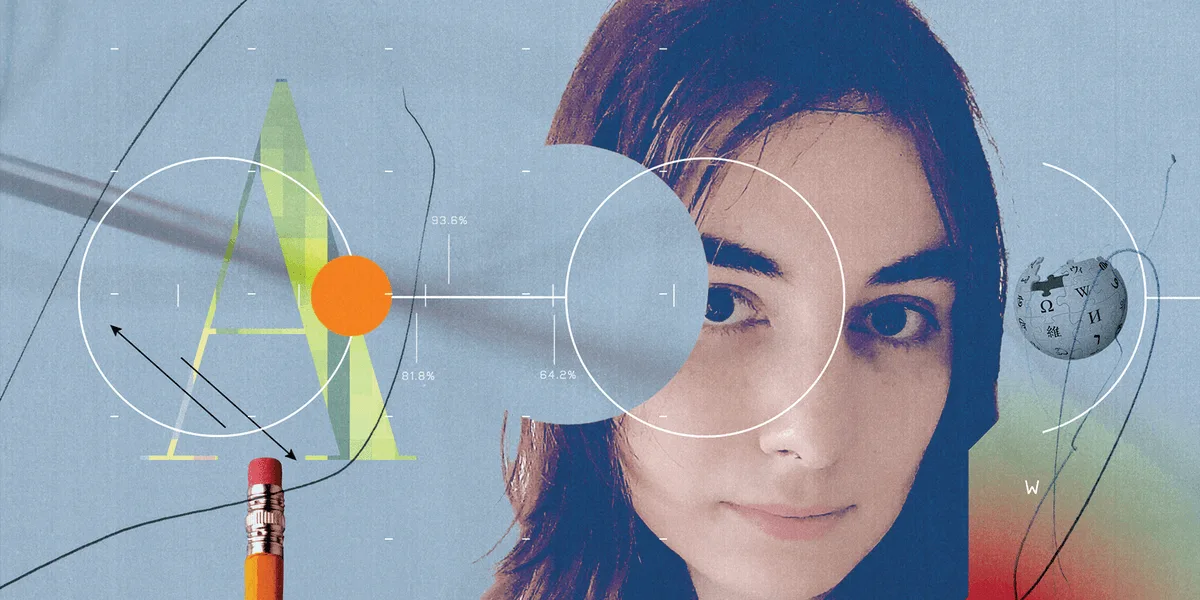
WikiProject AI Cleanup is a volunteer effort launched in 2023 to find and remove AI-generated material from Wikipedia that breaks the site's guidelines. Founding member Ellia Lebleu, a Ph.D. student in AI at the Inria Center of the University of Rennes, says the first machine-written articles were easy to spot, with phrases like “stands as a testament” and sections titled “Why is this important?”. By 2025 the telltale signs had become subtler and more structural — the “rule of three”, negative parallelisms — so editors also look at behavior and suspect AI when someone produces five articles of thousands of words each in 5 minutes. Fake or misleading citations are a major worry: citations hallucinated[1] entirely by AI have become rarer thanks to retrieval-augmented generation[2], but it is extremely commonplace for AI to cite a real source while getting its content completely wrong.
Working with the detection company Pangram, whose tool produced no false positives when tested on Wikipedia content from before ChatGPT and therefore gives a very conservative lower bound, Lebleu estimates that perhaps 20 percent of new articles and drafts were flagged as AI-generated in late 2025, falling to 15 or 16 percent in early 2026; it is not yet clear whether that reflects English Wikipedia's prohibition on using LLMs[3] to generate articles or simply more powerful models. Editors also use an AI source verifier that checks whether a page's sources match its claims, and the Wikimedia Foundation is building Paste Check, a tool that flags text pasted directly from some AI chatbots. Because the vast majority of AI-generated content comes from beginner editors, the rule has been made highly visible in welcome messages, editing help and advice.
Lebleu says that being free from AI slop, meaning low-quality AI content, has become part of Wikipedia's identity as “the last good place on the internet,” and that a purely human-written corpus is valuable for training AI systems. Facing a possible “Google Zero”[4] — a future in which websites no longer get traffic from Google search — the Wikimedia Foundation is working on an attribution framework that would tell AI users when an article was last edited, how comprehensive it is and whether editors have flagged problems. She expects a strong symbiotic relationship between Wikipedia and AI: “Yesterday, AI was something to clean up. Today, it's a tool to help us with the cleanup. Tomorrow, it will be the air we breathe.”
Read the original spectrum.ieee.orgDiscussion
Discussion
Many commenters defend the project, arguing that AI systems would "know" nothing without Wikipedia and that its edit history from thousands of authors makes claims of hidden bias implausible, while others call the site corrupt or accuse editors of pushing political viewpoints, and one argues that lightly rephrased AI text is impossible to detect. On Hacker News, readers welcome the cleanup, though one reports that his fixes of low-quality AI-generated content were immediately reverted by Wikipedia's own AI bot.
Sources
-
spectrum.ieee.org
Wikipedia's Cleanup of AI-Generated Content
-
KRGeekNews KO
위키백과 편집자들이 AI 생성 글을 찾아내고 정리하는 방법


