Why OpenAI and Anthropic cut LLM prices by up to 80% within a few months

Between June and late September 2026, OpenAI and Anthropic repeatedly cut prices across their model lines; prices are quoted per MTok[1] as input / output / cache read[2]. OpenAI cut GPT-5.6 Luna by 80% in July to $0.20 / $1.20 / $0.02 and applied a temporary ~20% cut to GPT-5.6 Sol, while Anthropic made Sonnet 5's temporary launch pricing permanent in August. Fable 5.1 cut the cache read cost by 75% versus Fable 5, and because cache reads are 96–99% of token spending when coding agents run — the cache holds the entire prior conversation and is hit 90–100% of the time — that translates into a 70–75% overall cost reduction. On September 22 both companies shipped cheaper flagships the same day: GPT-6 Sol at $2 / $10 / $0.20 and Claude Opus 5.5 at $4 / $20 / $0.20, with Anthropic stating that Opus 5.5 “requires less compute to serve than Opus 5”. After GPT-6 Sol underperformed, GPT-6.1 Sol halved the cache read price to $2 / $10 / $0.10, making the family cumulatively 75% cheaper; the author sees no cut corners on quality, and the cuts also apply inside subscription harnesses[3] like Codex and Claude Code.
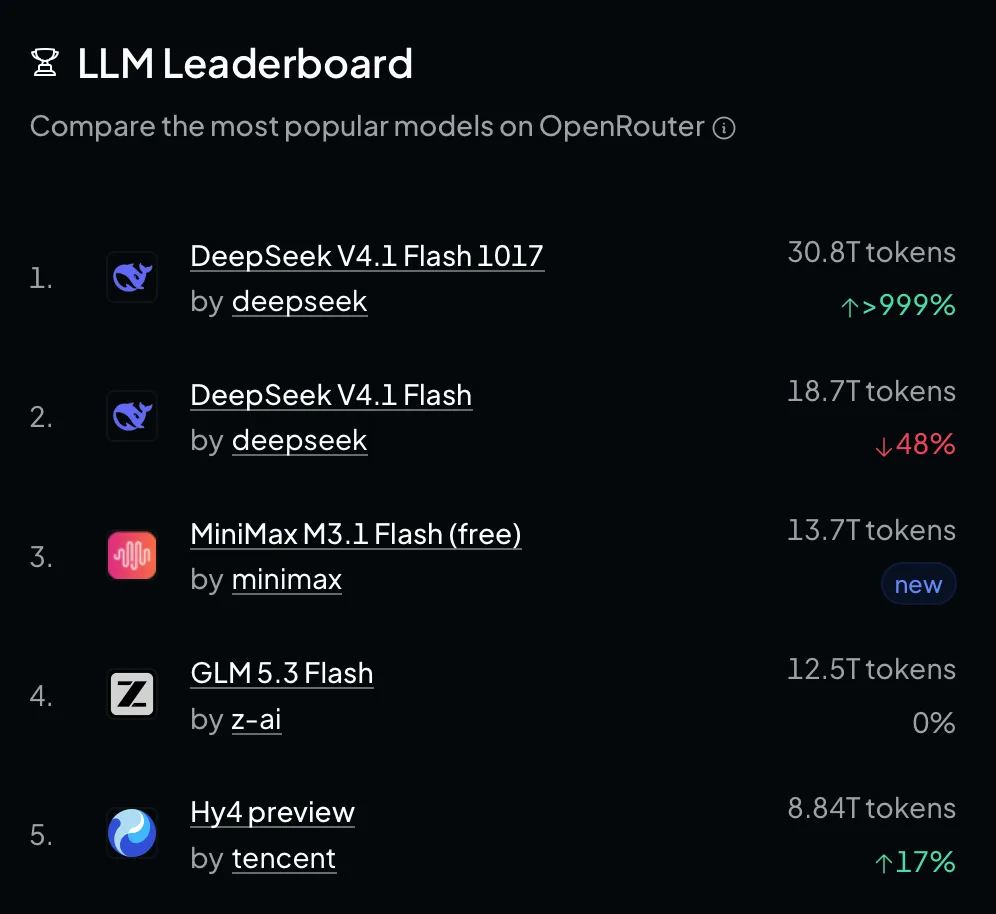
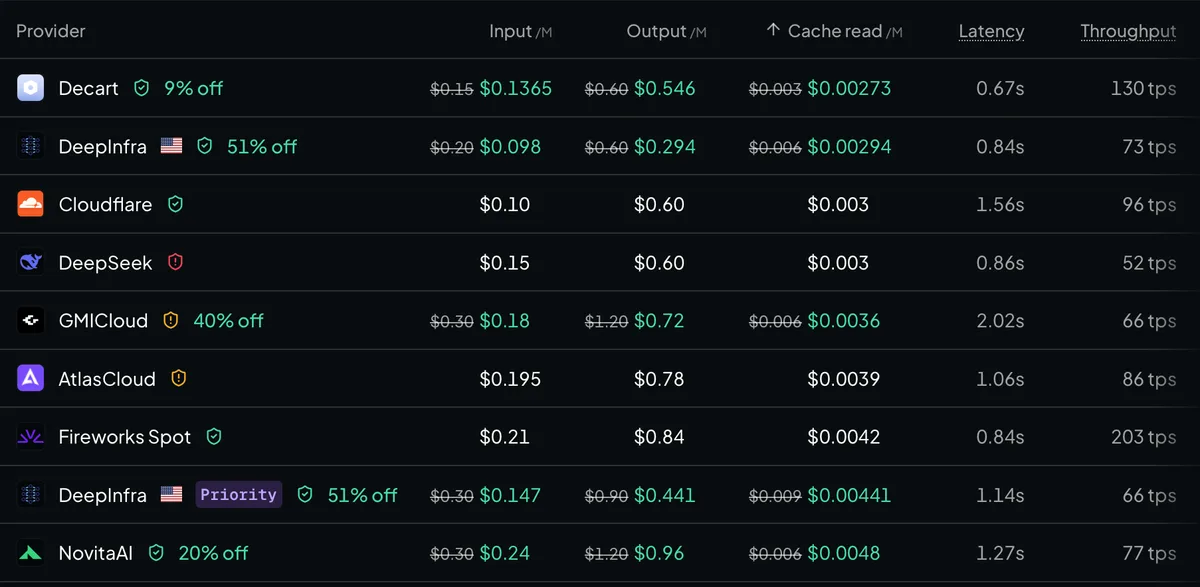
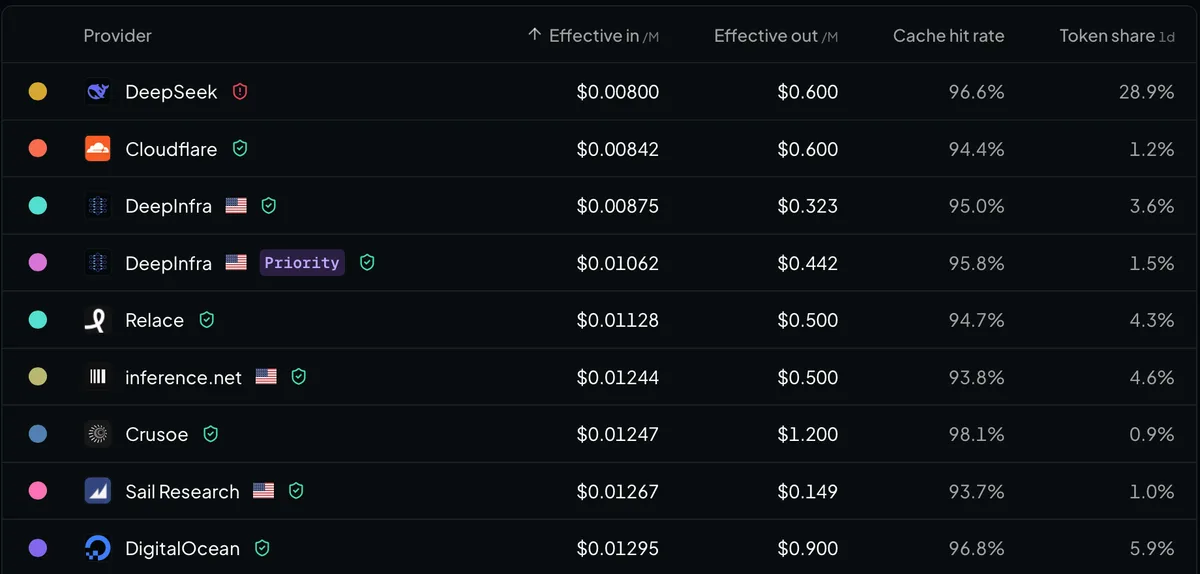
The author attributes the price war to a tit-for-tat dynamic with little moat: since agentic LLMs entered hypergrowth last November, models have become commodities that developers can swap with a toggle in tools like OpenCode and Zed Agent or a different OpenRouter endpoint. Open-weight models[4] add pressure: DeepSeek Flash V4.1 scores 45 versus 24 for its predecessor on the Artificial Analysis index at $0.15 / $0.60 / $0.003, with a 2% cache read share against the 5–10% of OpenAI and Anthropic models, and 29 distinct providers now host it on OpenRouter versus 13 in May. Moonshot AI’s Kimi K3.1 Pro scores 55 versus Opus 5.5’s 58 at $2 / $10 / $0.20 with its weights due on November 4, so OpenAI and Anthropic must keep differentiating on quality — the reason billions of dollars are going into R&D.
The author also weighs the theory that token prices are kept artificially low to hook users into the LLM ecosystem as a loss leader, the way Uber and Lyft built ridesharing in the 2010s, before rising to “the true cost of a token”.
Read the original minimaxir.comDiscussion
Discussion
Commenters mostly credit competition — including from open-weight models — plus more hardware-efficient inference and spare GPU capacity that is “use it or lose it”. Several call the prices unsustainable loss-leaders heading toward bankruptcies or argue LLMs are not a viable business at all, and one sees a push for regulation as an attempt to squeeze open models. One cites DeepSeek’s claimed $38 of revenue per GPU per hour as evidence that vendors have pricing wiggle room, and another reports switching to Kimi and GLM models after “cybersecurity” refusals on OpenAI and Anthropic.
Sources
-
minimaxir.com
OpenAI and Anthropic cut their LLM prices by up to 80% within a few months. Why?
-
KRGeekNews KO
OpenAI와 Anthropic은 몇 달 만에 LLM 가격을 최대 80% 내렸다. 왜일까?


