Why Claude Code can cost you 2x to 10x of your usage limits
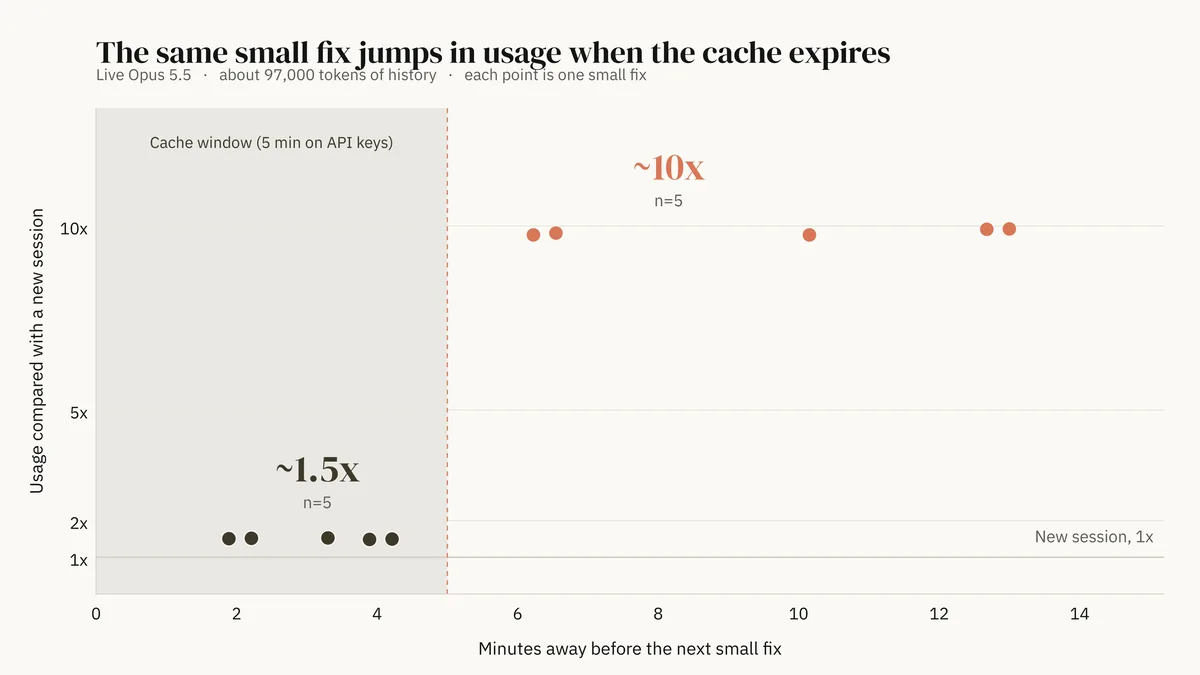
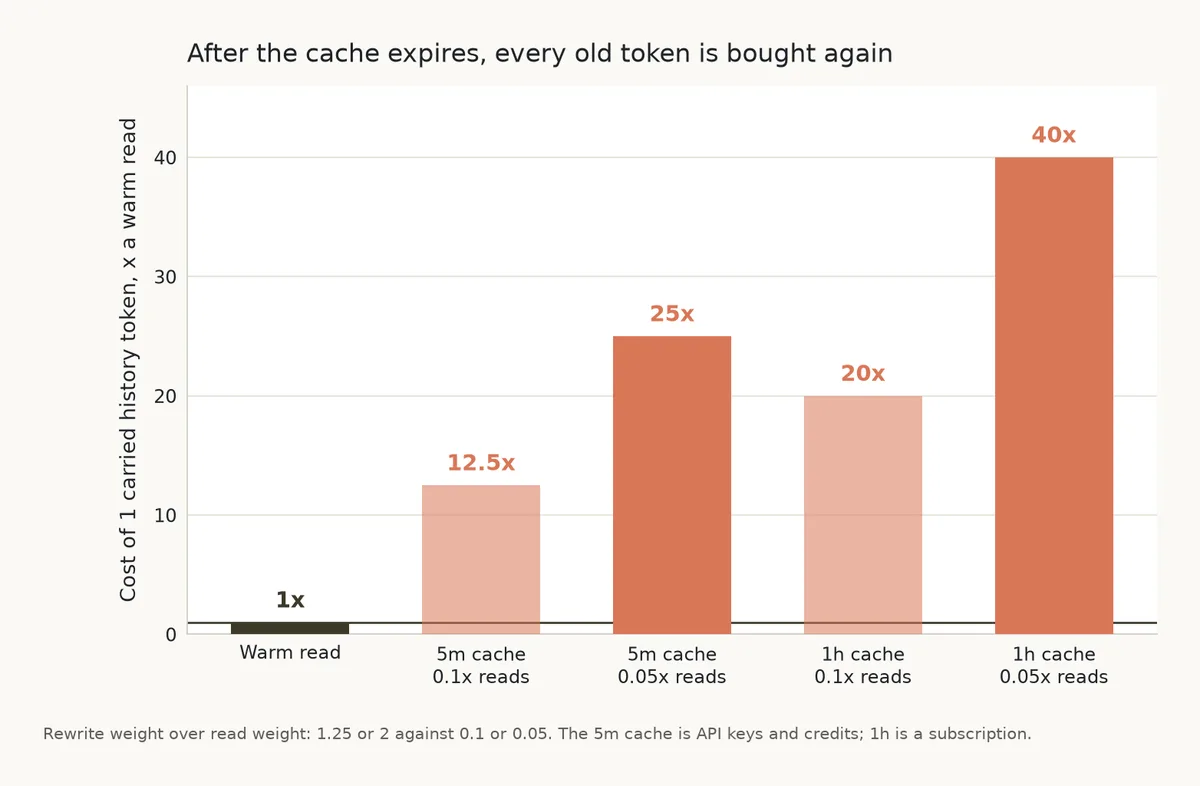
The write-up, which accompanies the claude-code-usage-analysis repository on GitHub, says that Claude Code usage is driven by cache misses[1] rather than by how much the user types. The expensive habits are ways of discarding the prompt cache[2], which lasts 5 minutes with an API key or usage credits and 1 hour with a subscription within its usage limits. The authors measured pauses of 2 to 13 minutes on the 5-minute cache.
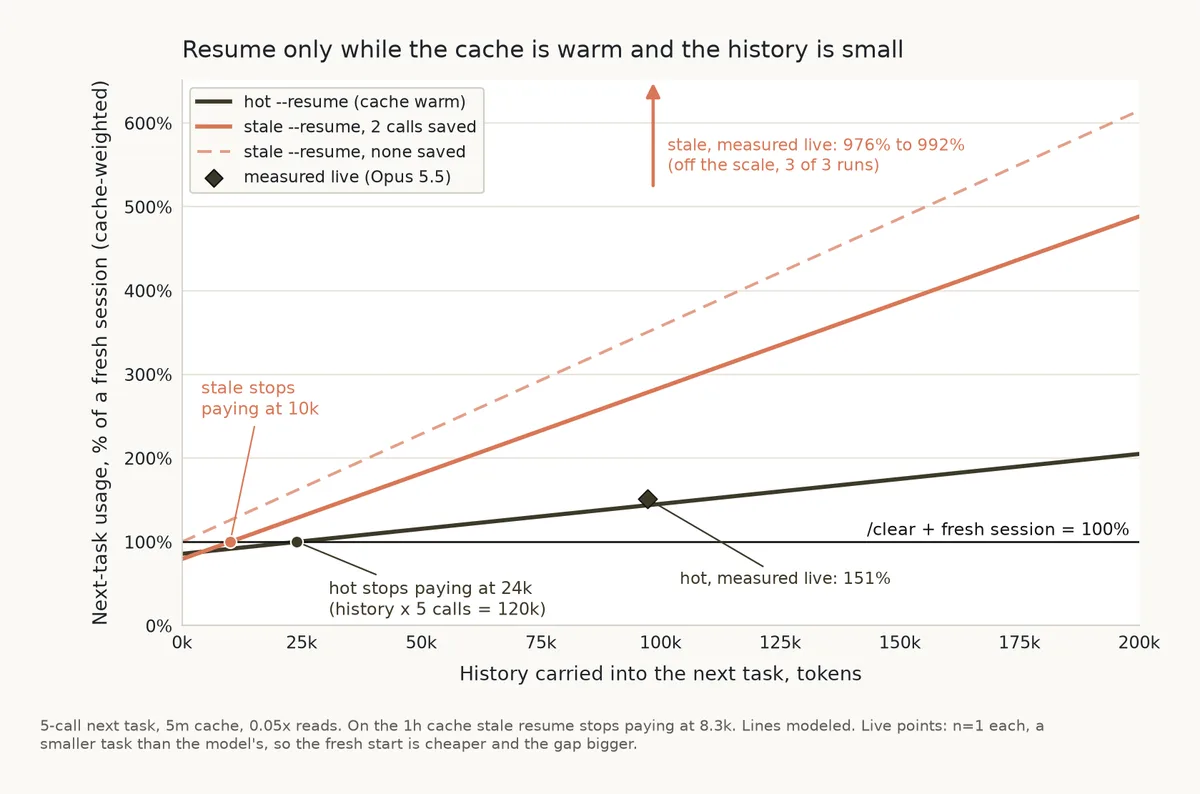
In the authors' live tests, a small fix in a session with about 97,000 tokens of history used about 1.51x the usage of a new session while the cache was warm, and about 9.83x after the cache expired. The article says /compact[3] only helps if it runs while the cache is still warm. The analyzer runs locally on the files in ~/.claude/projects and reads summary numbers, not the text of chats.
The recommended habits are to start a fresh claude -p session for each scheduled run, to run /compact before a break, and to run /clear with a three-line reminder (Goal, Done, Next) when returning to a new task. The article calls --autocompact 180000 an unproven idea: its calculation shows about 43% less usage, but in one live test on a 270,000-token session it only tied the default.
Read the original github.comDiscussion
Discussion
Commenters mostly say the cache timing is hard to see: one asks for a UI indicator when the cache has expired, and another asks how users are supposed to know about the 5-minute limit. Some find the advice too much to manage, while others report that capping context per task or enabling idle compaction kept their usage under control. One commenter called the write-up unuseful.
Sources
-
GitHub
Why Claude Code can cost you 2x to 10x of usage limits