Why 1 + 2 + 3 + 4 + … is assigned the value −1/12 rather than infinity

The post explains why the series 1 + 2 + 3 + 4 + 5 + … is assigned the value −1/12 instead of infinity. The author says the equals sign is a simplification: the sum actually grows without bound, and the equality holds only in a specific sense. The post covers the most direct route, which it calls the canonical approach, and skips the method of rearranging terms until the result appears, which the author calls trickery.
The canonical approach relies on analytic continuation[1], which extends a function defined on a limited set of points into a smooth curve. The author uses the factorial as an example, which extends to the Gamma function[2]. The extension is unique only when it starts from a region of the complex plane rather than from separate points.
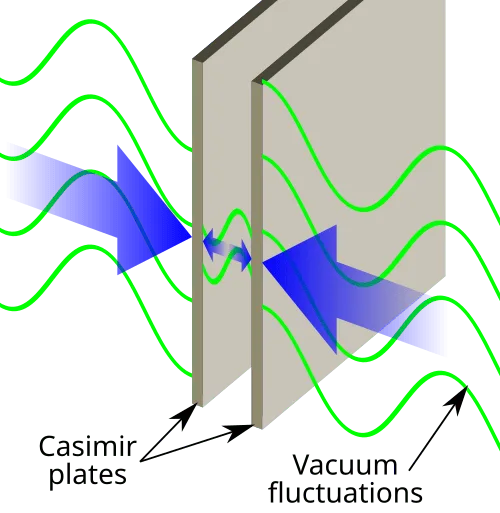
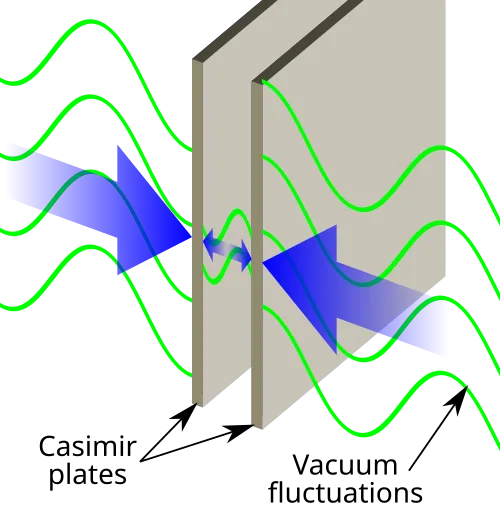
This uniqueness is what keeps the value of the series from being arbitrary, and the canonical section ties it to the Riemann zeta function[3]. The second approach, which the author calls Smooth Cutoff, is presented as clearer: its cleanest exposition dates to 2010, and its basic ideas go back to Ramanujan in 1913. The third section covers a physical application in quantum field theory, related to vacuum energy.
Read the original lesswrong.com
Sources
-
LessWrong
Understanding why 1 + 2 + 3 + 4 + 5 + ... = -1/12 (rather than ∞)



 archive