Being an engineer in 2026: what still sets humans apart from agents
What happened next
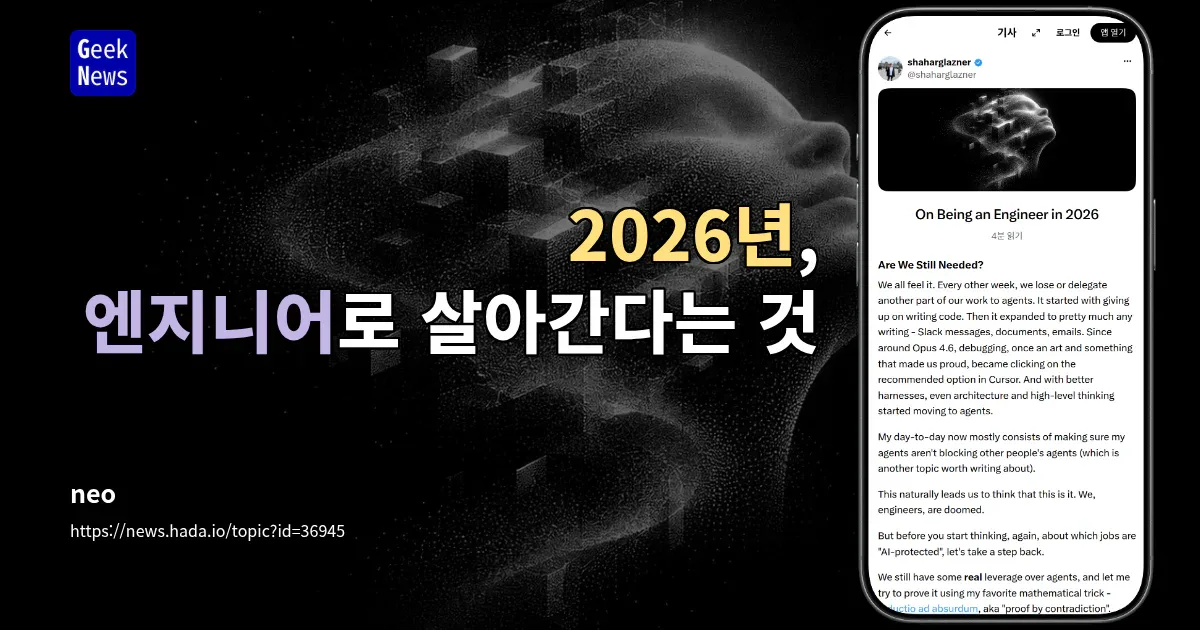
In a blog post, engineer Shahar Glazner describes what human engineers still contribute as AI agents take over writing code, debugging and design. Engineers who use similar AI tools still produce results of very different quality, and the author looks at where that gap comes from. He lists four human strengths he has seen while working with agents: judging whether the real problem is being solved, telling hard tasks from simple ones, deciding whether a design will still make sense in two years, and sensing that something is wrong even when the reason is hard to name, such as recognizing AI slop[1] before finishing a sentence.
The author links this intuition to two ideas: emergence[2], where properties appear from many small interactions, and tacit knowledge[3], the knowledge people have but cannot fully put into words. Models already outperform humans in many areas and are developing initiative and taste, but the author suggests that knowing everything about a subject may differ from living through experiences. Human strength may therefore lie in the whole body of experience that shaped each person, not only in what they know. The author also notes that agents may someday gain their own experience and intuition.
Read the original twitter.comDiscussion on GeekNews
Discussion
Commenters mostly agree that the gap between strong and average engineers is growing, and many worry about what will happen to average developers. Opinions split: some call agents a boon for engineers, others a threat to programmers, and one describes the work as becoming more like product management.
Links from the post and discussion
Sources
-
KRGeekNews KO
2026년, 엔지니어로 살아간다는 것
-
X
On Being an Engineer in 2026


