What changes before and after git push in the age of AI agents
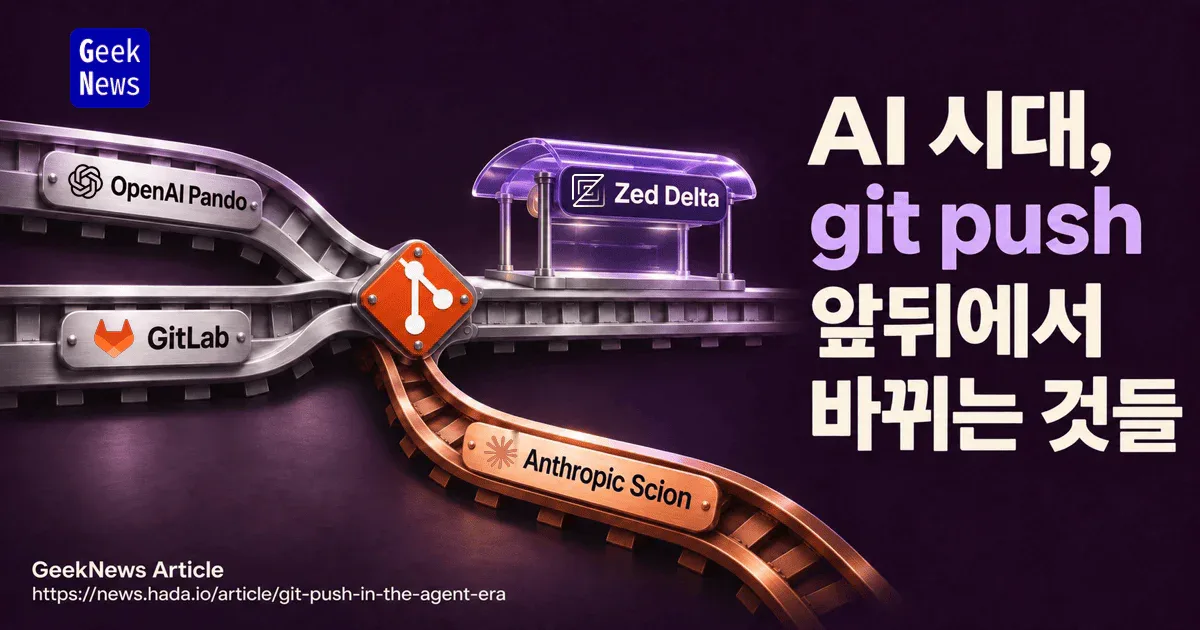
In October 2026, Anthropic said it had replaced Git in its internal monorepo[1] with its own version control system, Scion. In November, OpenAI disclosed Pando, a new Git backend it built for parallel agent development. Both companies faced more load on their repositories as many agents worked at once, but they changed different layers: Anthropic replaced the version control system itself, while OpenAI changed the server side, so its developers still use git clone and git push.
In Anthropic's example, daily merges into its monorepo grew from about 2,500 in May 2026 to over 30,000 in September, roughly 12 times in four months. Checkouts for CI[2] reached about 25 million per day. Scion assumes that most work environments are online: the client fetches the data it needs from the server, and commits, rebases[3] and merges are handled on the server, using Scion's own client and protocol rather than standard Git clients.
The article also covers Aspen, an open-source Git server that independently implements Pando's design. In its own experiment on the git.git repository, Aspen handled 567 pushes per second over five minutes, while sequential merges into main ran at about 4 per second. Aspen keeps each PR as a separate commit but updates main only once, with a result that includes all the PRs. Even when pushes get faster, merging into main remains a separate task.
Read the original news.hada.ioDiscussion on GeekNews
Discussion
Commenters only left a brief positive remark about the article; no other points were raised.
Sources
-
KRGeekNews KO
AI 시대, git push 앞뒤에서 바뀌는 것들