What to borrow and what to give up from Meta's Muse to let an agent use a browser
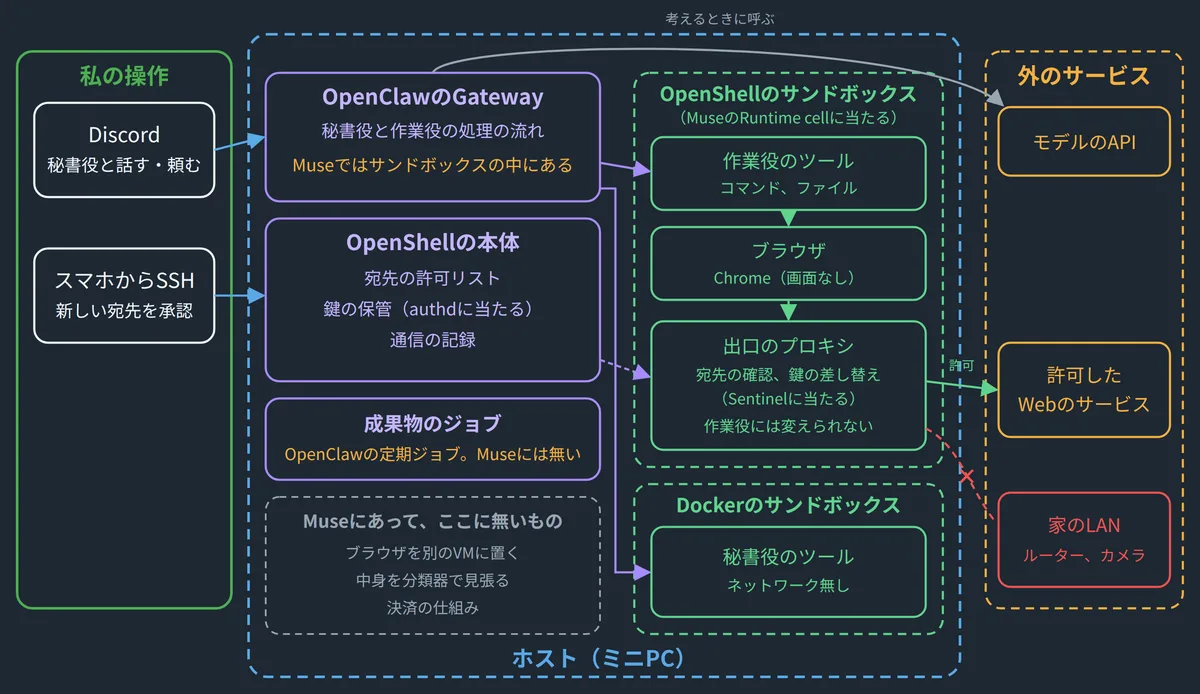
The author studied how Meta's Muse, a personal AI agent released in September 2026 that shops for its user and drives a browser on sites without APIs, secures browser use, then tested how much of that design works at home with OpenClaw and OpenShell. To limit the damage from prompt injection[1], Muse keeps sandboxes[2], outbound-connection permissions, token-based key replacement, confirmation on a separate screen and logging outside the agent, and its dedicated browser child agent sees only each page's accessibility tree[3]. A first plan to rent Cloudflare's Browser Run, whose free tier allows 10 minutes a day, was dropped after a risk assessment showed the AI's assumed risks were broader than the author's answers, so the browser now runs inside the worker agent's OpenShell sandbox. The home setup borrows the split into a secretary agent and a worker agent, the sandbox, outbound-connection filtering and key replacement, while giving up a browser in a separate VM, classifier monitoring of content and any payment path. Asked to design an attack against Muse, the AI came up with slow data exfiltration through user-approved sites that passes Sentinel's rules — the lethal trifecta[4] pattern Meta itself cites, conceding that Muse isn't immune to attack.
Sources
-
JPZenn JA
MetaのMuseの安全設計から、何を借りて何をあきらめたか:OpenClawとOpenShellでエージェントにブラウザを任せる


