Voters demand regulation of Flock license plate readers amid police abuse scandals


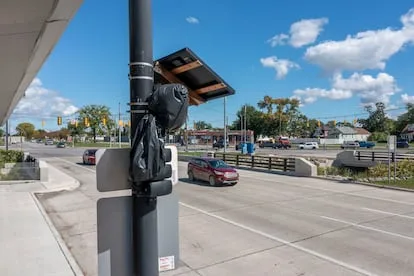
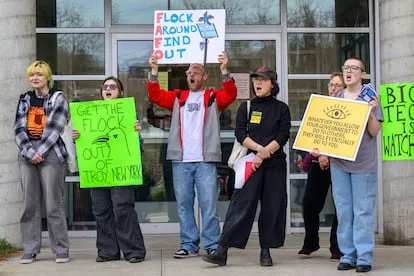
Flock Safety, an Atlanta-based security company, holds contracts for its automatic license plate reader cameras, known as ALPRs[1], with about 6,000 municipalities across the United States, and the devices have spread to 49 of the 50 states. Residents such as Matías Núñez, a 36-year-old businessman from Hollywood, Florida, report that the cameras record their location on every trip, that nothing limits where they point, and that the collected data belong to the company rather than to government agencies. The cameras were initially praised for making it easier to locate crime suspects, missing people and stolen vehicles. They have since been implicated in increasingly frequent episodes of police abuse and privacy violations, and demands to ban or regulate them have entered the campaign for the midterms[2] on November 3.
Dozens of police officials have been fired or charged for unauthorized use of Flock data: in Sharonville, Ohio, lieutenant Walter Cordes admitted tracking a person 29 times over several months, and in Waukegan, Illinois, officer Oscar Magpali was charged with five felonies for tracking co-workers. The Institute for Justice, a nonprofit public-interest law organization, has documented hundreds of such cases and litigates against the legality of the system. In Florida the system was also used to track immigrants as part of the Trump administration's deportation plan: an investigation by the data team at Suncoast Searchlight found the state police carried out more than 250 searches through Flock's system between March 13 and May 5, 2026, before and during "Operation Tsunami," an operation coordinated by federal and state agencies that resulted in more than 1,100 arrests in Florida.
Candidates across the political spectrum have made the cameras a campaign issue: Florida Senate candidate Angie Nixon sells T-shirts reading "Get the flock out," and Wisconsin congressman and gubernatorial candidate Tom Tiffany has promised to suspend state funding for Flock cameras and create a task force on privacy protections. In Pennsylvania, Democratic governor Josh Shapiro and his Republican opponent Stacy Garrity both support banning the cameras, and a similar measure was already approved by Republican governor Ron DeSantis in Florida. Núñez, an independent who has voted Republican, says the desensitization of citizens to constant surveillance is pushing the country toward an authoritarian state regardless of party affiliation.
Read the original english.elpais.comDiscussion
Discussion
Most commenters reject the framing that voters want regulation, saying they demand the outright removal of the cameras and an end to mass surveillance; one points to a bill already in Congress to ban the technology. Others argue that an authoritarian state is already a reality and that the government itself, not voters, is pushing the surveillance.
Sources
-
english.elpais.com
'Constant surveillance is pushing us toward an authoritarian state': voters demand regulation of Flock cameras