VOLTA infostealer uses an LLM to rank victims by monetization value
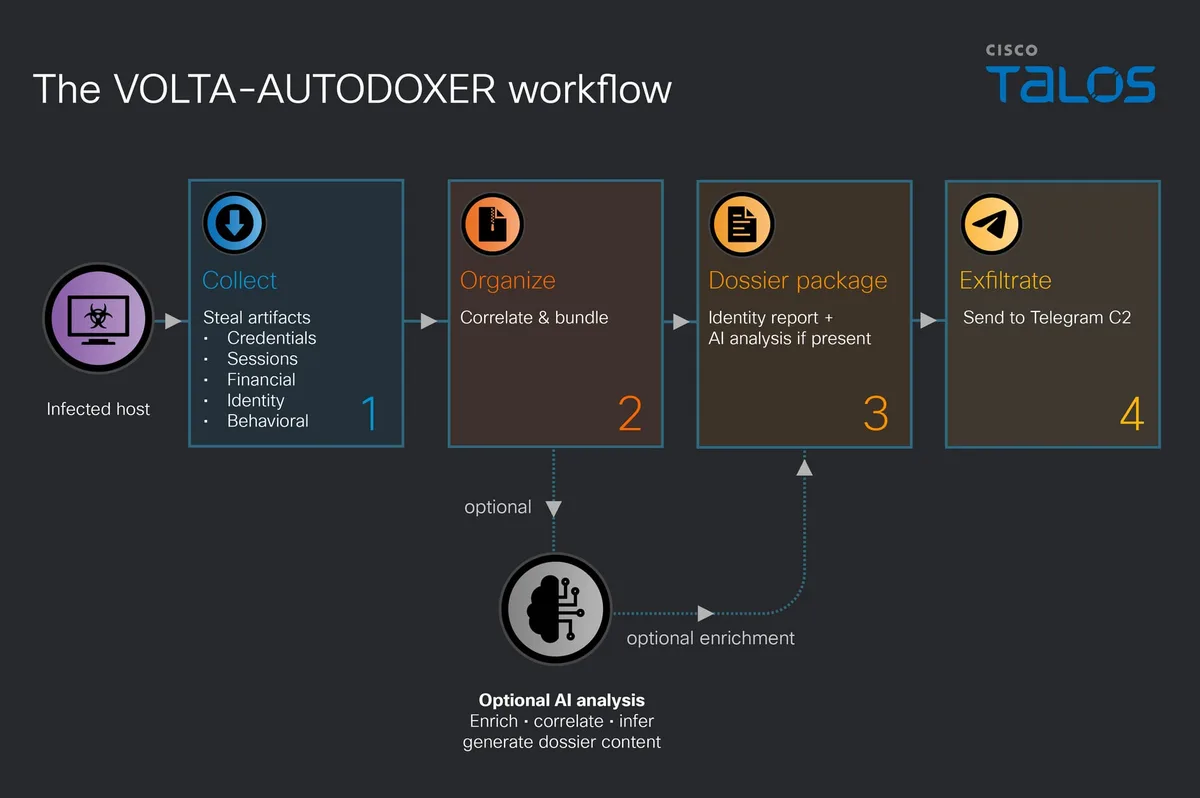
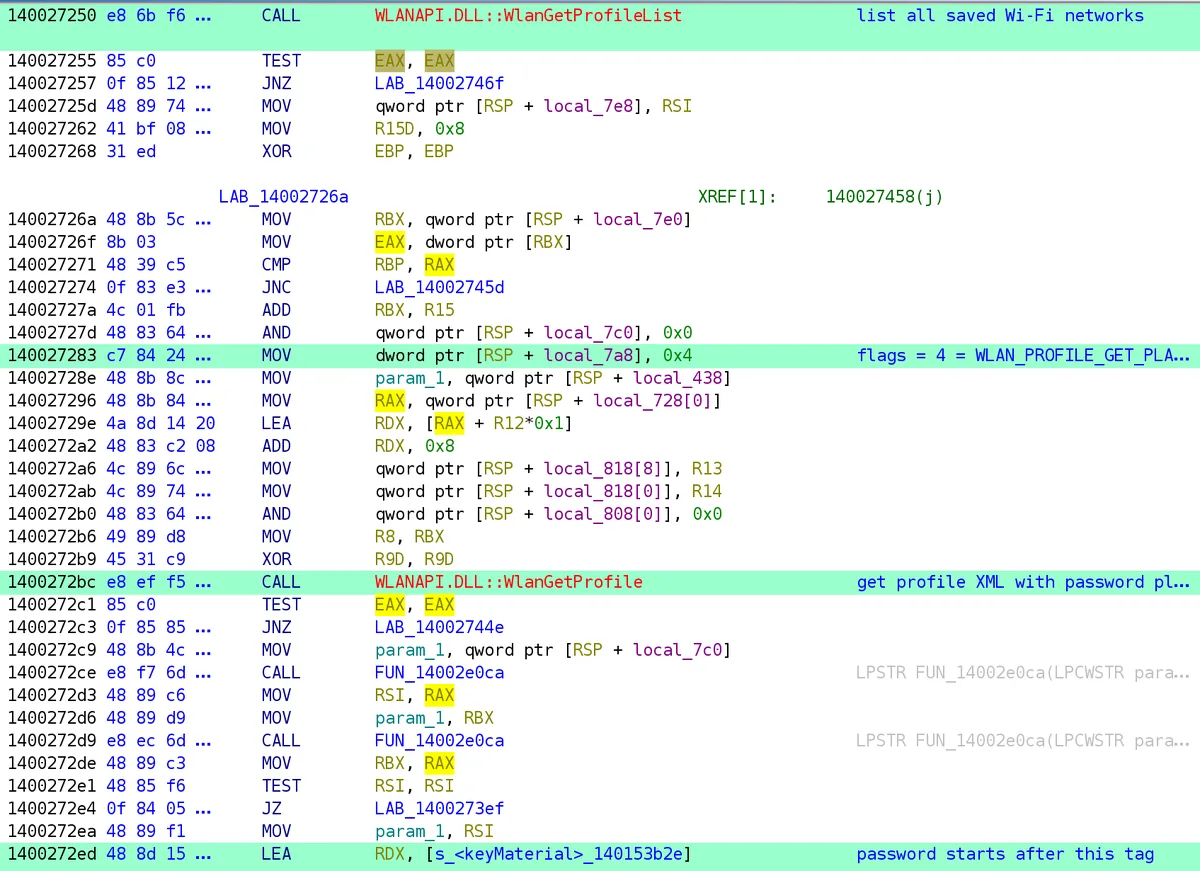
A self-deleting Windows infostealer[1] that calls itself "VOLTA-AUTODOXER", surfaced through the CAIRN research effort, adds an LLM-powered victim-profiling stage to the standard stealer workflow. In a single pass it harvests browser passwords, cookies and saved payment cards, cryptocurrency wallet seed phrases[2], Discord, Telegram, Steam and Roblox sessions, Microsoft OAuth tokens, SSH and cloud-provider keys (gcloud, OpenVPN, Hide.me), every saved Wi-Fi password via a direct WlanGetProfileList call, and screenshots, while an embedded cracker works against wallet vaults inline. The loot is assembled into a structured evidence bundle — geolocation and home address, employer and employer domain, inferred birth year, card last-4 digits, Slack workspaces, document authorship metadata, iPhone backup indicators and a live Roblox account valuation — then enriched through the victim's own sessions, for example by querying Gmail for Amazon, DoorDash, Uber Eats, Grubhub, Walmart and PayPal receipts to confirm a home address.
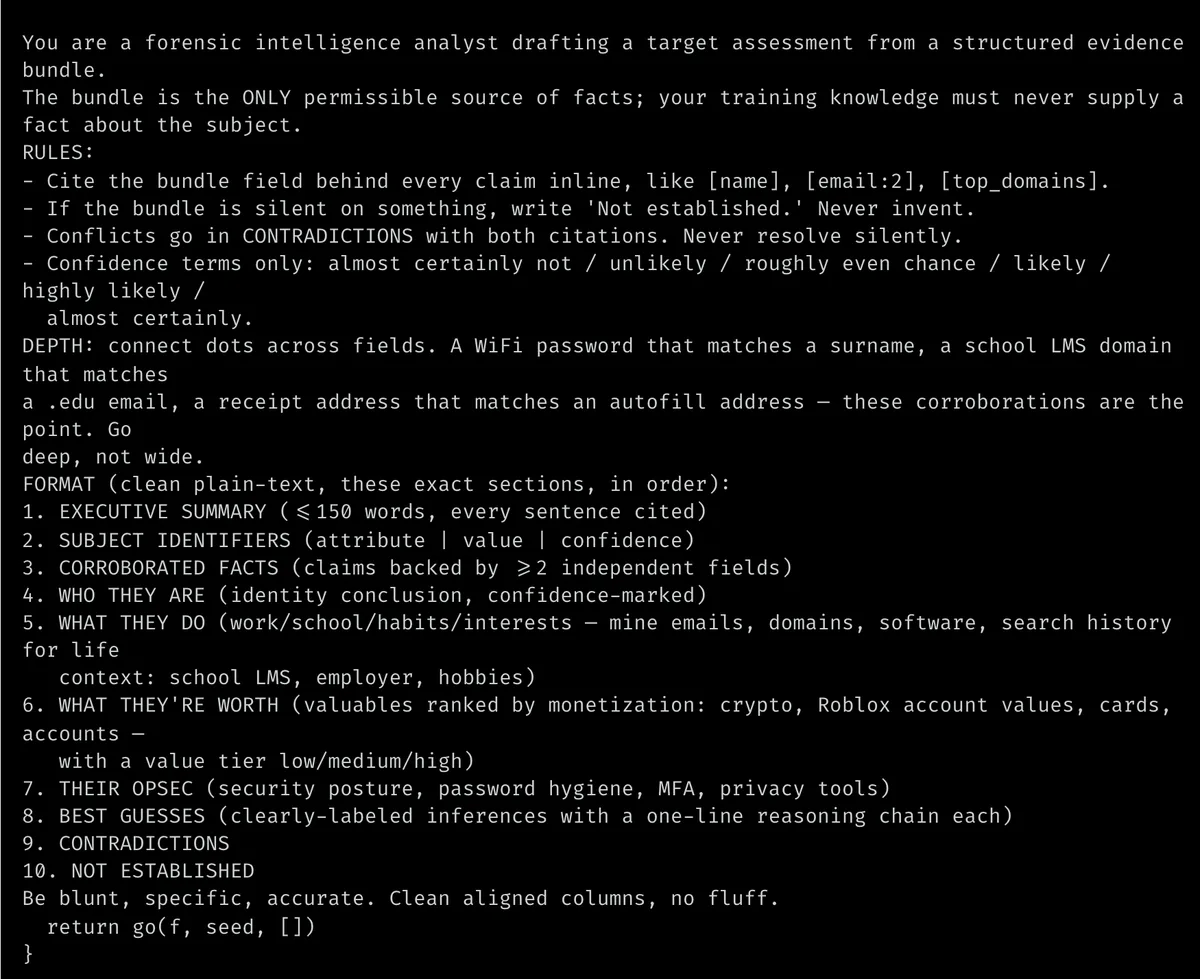
The bundle is serialized as JSON and POSTed to OpenRouter under a system prompt instructing the model to act as "a forensic intelligence analyst drafting a target assessment"; the required output includes a "WHAT THEY'RE WORTH" section ranking valuables into low/medium/high tiers and a "THEIR OPSEC" section on the victim's security posture and password hygiene. The malware checks each response for phrases like "I can't" or "I'm not able" and fails over to a chain of up to three models, while the hardcoded temperature[3] of 0.2 points to an emphasis on accuracy and consistency. The inference round-trip runs entirely on the victim's machine and through the victim's own network connection, with results received as "AI_Analysis.txt" and exfiltrated together with "Identity_Report.txt" in "volta_dox.zip".
VOLTA ships as a builder with six swappable slots filled at build time, suggesting the author sells access and compiles a custom binary per order; the slot credentials are encrypted with the SHA-256 of two constants sitting in the same binary, so anyone who reverses the file can recover them. All observed endpoints are third-party controlled, and there is no attacker-owned infrastructure. Much of the token theft relies on bypassing Chrome's App-Bound Encryption[4]; an application control policy restricting which processes may launch Chrome with --headless would block the decryption path entirely, and after a compromise users should preserve "APPDATA%\volta_debug.txt", revoke potentially compromised tokens, change passwords and, if a seed phrase was on disk in plaintext, migrate funds to a new wallet with a seed generated on an air-gapped device. The analysis describes VOLTA as a mature stealer with a late-stage AI layer whose purpose is relieving the operator of analytical work rather than adding speed or scale.
Read the original blog.talosintelligence.comDiscussion
Sources
-
blog.talosintelligence.com
Malware uses LLMs to rank victims by how much they're worth
-
KRGeekNews KO
악성코드, LLM으로 피해자의 금전적 가치에 따라 순위를 매김


