Vibe coding an FPGA inference chip, from 6 to 213 tokens per second
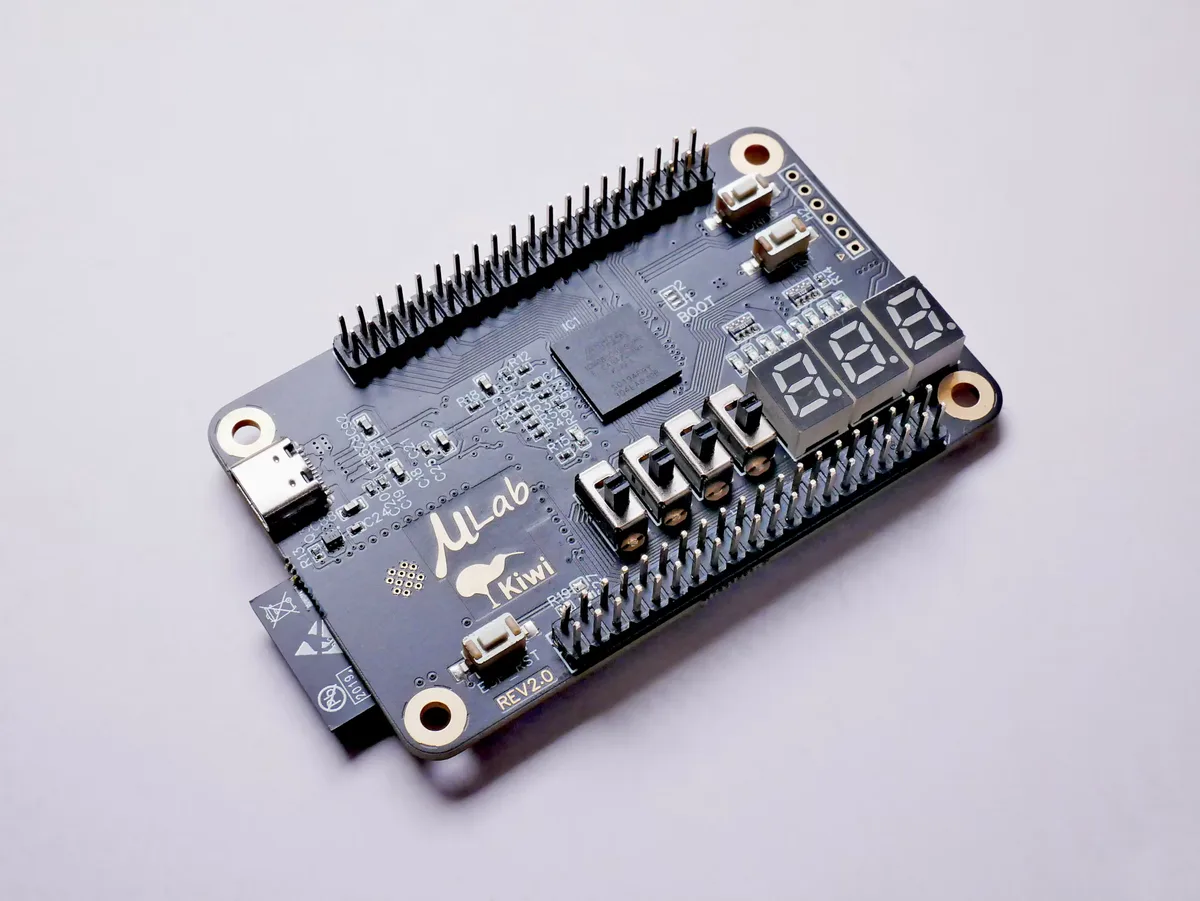
The author describes vibe coding on an FPGA, a reprogrammable chip whose logic is set by a configuration loaded onto it[1]. He wanted to see whether coding agents could write the low-level C++ and Verilog needed to run an AI model on one. Instead of buying hardware, he rented an AWS F2 instance with 16 GB of FPGA HBM[2] and asked Codex to set up a reservation. The model came from a new ternary weight architecture[3] that the DeepGrove founders were working on.
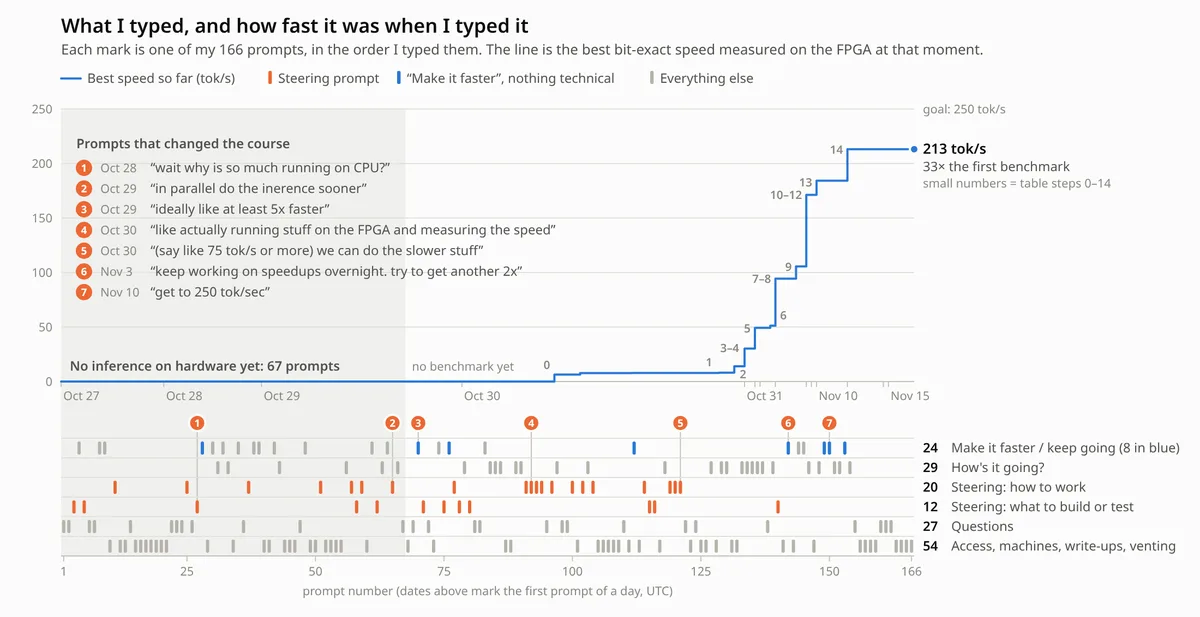
A cloud agent in Conductor ran for several days while the author mostly encouraged it with short prompts such as "let's go for 2x faster." The speed rose from 6 to 213 tokens per second, 33 times the first full-model bit-exact baseline. The work produced roughly 3M lines of code, parsed 30M lines of output, and cost about $10,000 in Claude and OpenAI tokens across hundreds of experiments.
The author says the most useful guidance came from a prompt written by the DeepGrove founders, which he pasted into the session when the speed was around 10 tokens per second. The code is mostly C++ with some Verilog, and the author says he had not written serious C++ in about a decade and had never written Verilog.
Read the original ankitg.meDiscussion
Discussion
Commenters mostly question the cost, with one calling $10,000 in tokens excessive for a curiosity and another noting that the work came down to repeated "make it faster" prompting. Several see promise in ternary models on FPGAs, and one says baked-in weights could run at 5 W at a speed competitive with a large Nvidia card, though the same commenter notes that a decent model would then also be price competitive. One comment raises fab capacity as a limit on making FPGAs at scale.
Links from the post and discussion
Sources
-
ankitg.me
Vibecoding an inference chip
-
KRGeekNews KO
추론 칩을 바이브 코딩하기


