US report urges steps to stop Chinese AI from becoming the 'next Huawei'
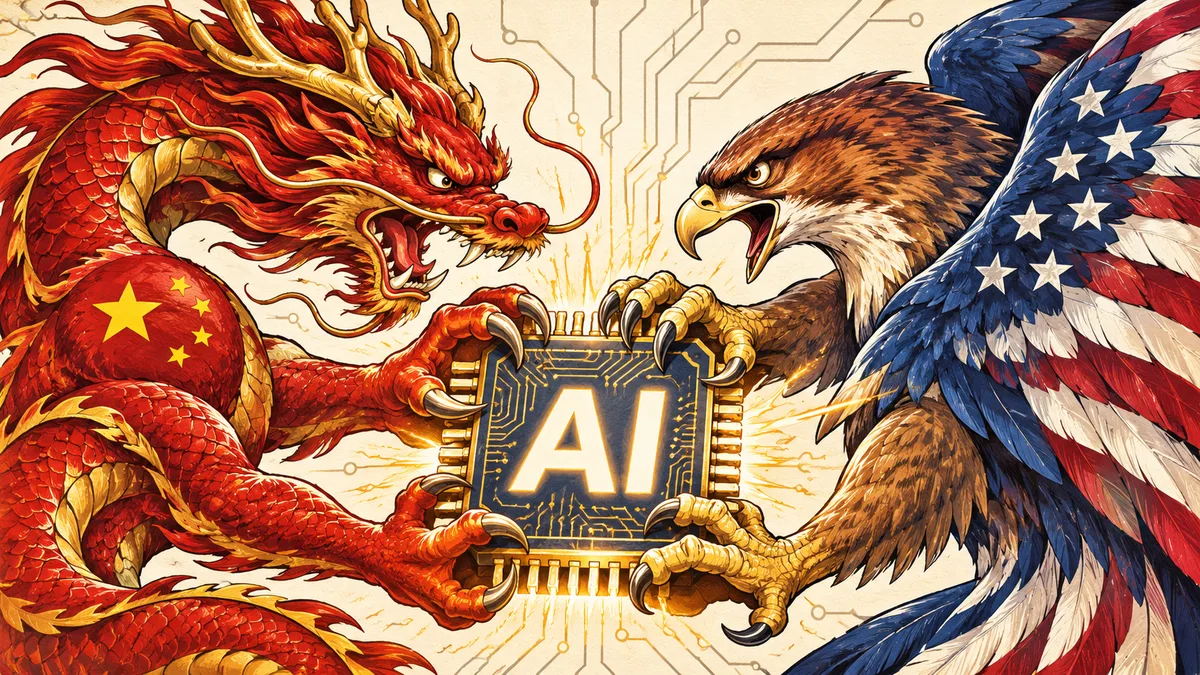
Two House committees released a seven-month investigation on November 20 into how US companies use Chinese AI models. Their report, Beijing's AI Playbook, warns against dependence on Chinese technology that becomes expensive to replace, which it calls the 'next Huawei' risk.
Airbnb uses Alibaba's Qwen models for an assistant that handles about 80,000 guest and host interactions a day. Cursor's maker, Anysphere, built its Composer 2 coding model on Moonshot's Kimi K2.5. The committees say companies can download open-weight[1] models, adapt them and run them on infrastructure they choose, and that US alternatives struggle to match the combination of price, capability and control. The report alleges that some capabilities were extracted from American models through fraudulent accounts and proxy networks, a practice known as distillation[2]. DoorDash reported 25 Chinese model families authorized and deployed, and said replacing one model embedded in a larger system could take up to six months.
The committees also raise security concerns about the models themselves, citing tests with insecure code and safeguards that can be removed. The recommendations include excluding Chinese models from federal systems and contract work, removing them from high-risk functions in critical infrastructure, and launching a national American open-weight AI initiative. The chairmen stress that these are recommendations, not a new blanket ban on private businesses using Chinese AI.
Read the original ournews.aiDiscussion
Discussion
Commenters mostly see the proposals as protectionism that would push companies toward expensive US services, and several note that Chinese models are cheap and work well. Some doubt the motives behind the investigation, and one commenter suggests putting model calls behind an internal interface so the backend can be swapped if a ban comes.
Sources
-
OurNews
US Moves to Stop Chinese AI From Becoming the "Next Huawei"


