Top-down interpretability: how Gemma-4-31B organizes its residual stream
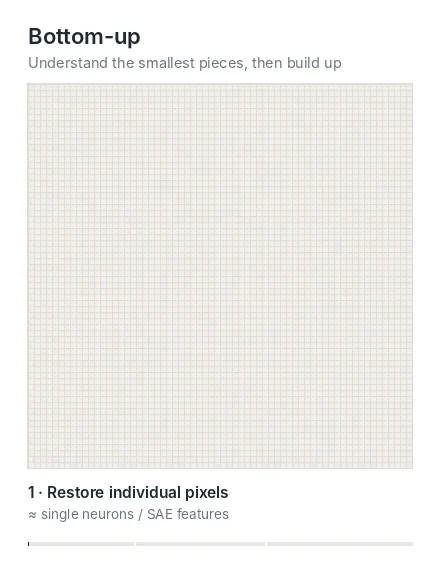
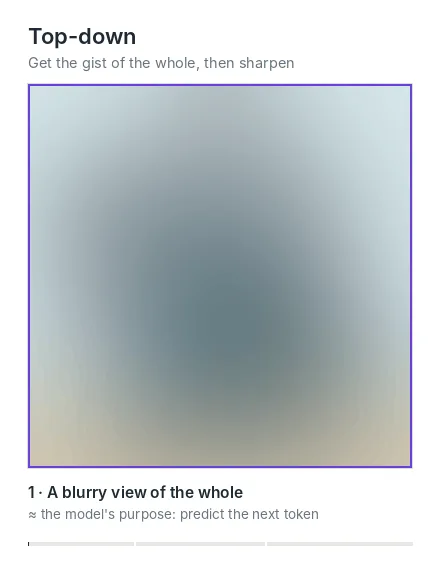
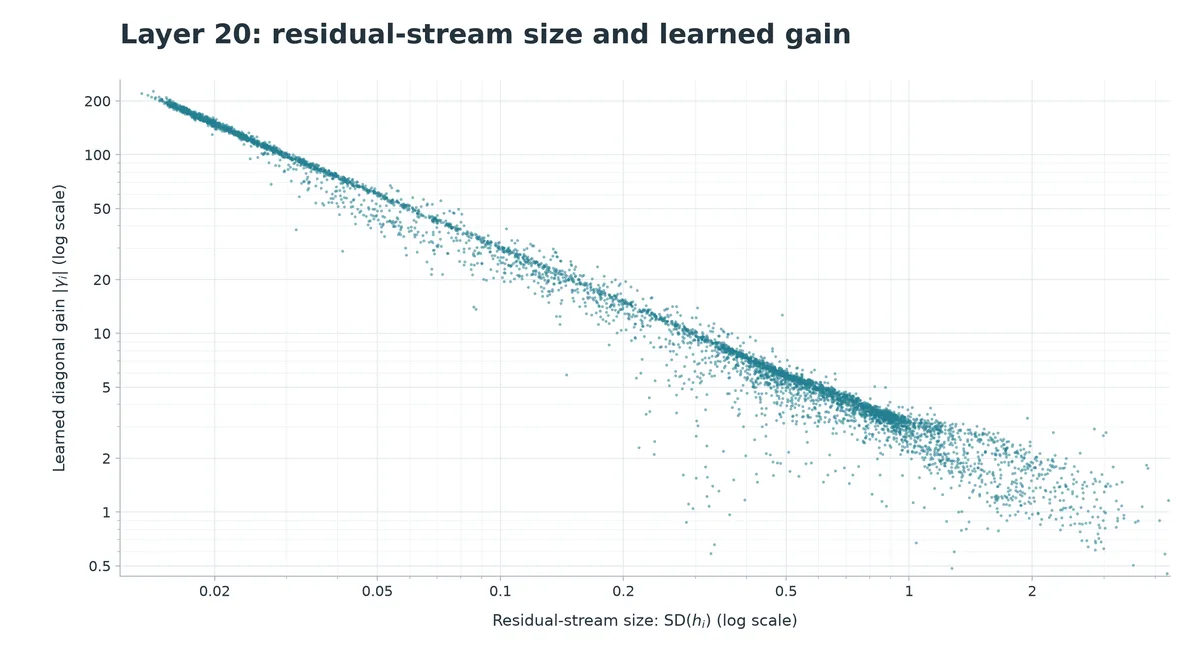
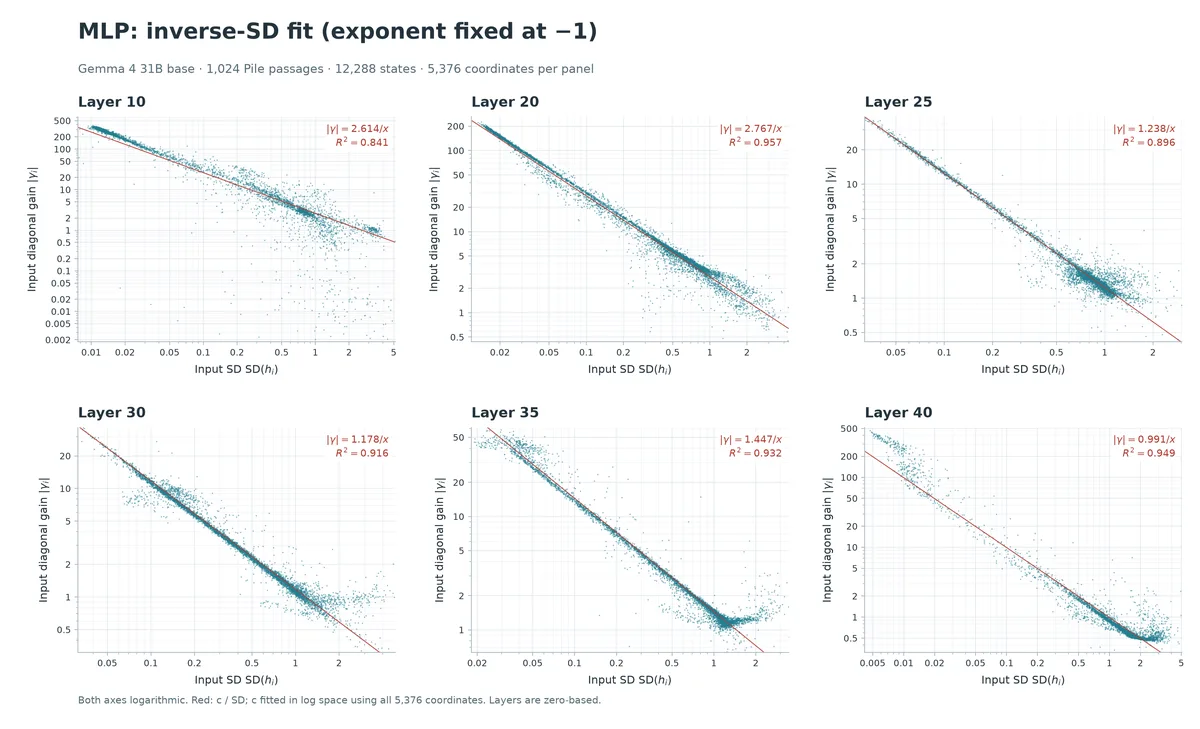
The author outlines two ways to organize mechanistic interpretability[1] research: bottom-up, starting from single neurons and features and building up to circuits, or top-down, starting from a coarse picture of the whole model and zooming into its broad motifs. The post reports first attempts at the top-down route, applied to the residual stream[2] of Gemma-4-31B-base, chosen for being capable enough to be worth studying, having a simple architecture, and running locally; the conclusions are lightly edited preliminary notes from the author's first interpretability project. In raw coordinates the stream is highly uneven, with the largest coordinates about two orders of magnitude bigger than the smallest, but it becomes balanced and stable across layers when read through the pre-MLP RMSNorm[3]. The middle layers (around L20–L40) split into a few distinct parts, including a set of roughly 600 small, unusually stable coordinates that appear to act as a crucial reference and the common source of most of the model's computations. Keeping only those coordinates (plus a handful of norm-controlling ones) at the final position nearly preserves the model's predictions, while keeping the other ~90% breaks it, and patching[4] experiments suggest the space stores the current token along with its contextual meaning, such as which sense of "bank" is meant.
Read the original lesswrong.com
Sources
-
LessWrong
An Attempt at Top-down Interpretability


