Taurine from Bacchus D extends next-generation solar cell lifespan over 5 times
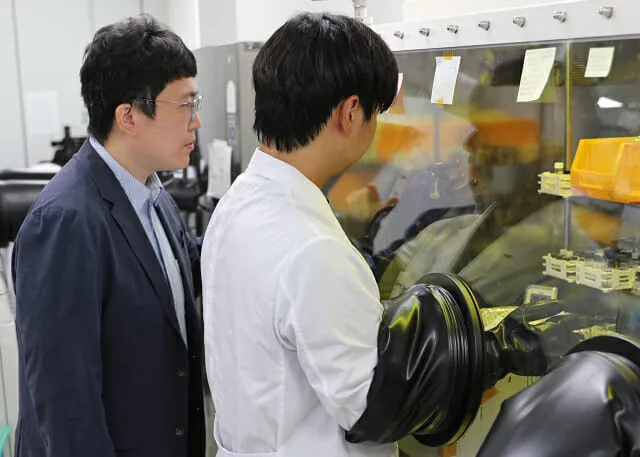
Researchers from DGIST and KIST report that taurine, the main ingredient of the Korean energy drink Bacchus D, can extend the lifespan of perovskite solar cells[1] more than fivefold. The team led by Professor Choi Jong-min of DGIST's Department of Energy Engineering worked with Dr. Moon Byung-jun of KIST's Jeonbuk branch, and announced the result on 12 November. Taurine is also abundant in seafood such as clams and scallops.
During operation, solar cells produce superoxide[2], a reactive oxygen species that breaks down the metal oxide layer. Taurine continuously removes it, which blocks the route by which the perovskite decomposes. Choi said taurine acts as a chemical bridge that fills microscopic defects at the interface through passivation[3], which helps electrons move more easily and raises overall efficiency.
Cells with taurine kept over 95% of their initial efficiency after more than 500 hours of continuous light. In the operational stability test, the time for efficiency to fall to 80% of its initial value (T80)[4] rose from 23.6 hours to 130 hours. The team says the next goals are to reach more than 10,000 hours of operational stability and to develop large-area processes for mass production. The study was published as a cover paper in the journal Advanced Energy Materials (impact factor 25.5, within the top 2.4% by JCR).
Sources
-
KRZDNet Korea KO
DGIST·KIST "박카스 타우린이 차세대 태양전지 수명 5배↑"