Supabase security: why disabled RLS explains only 25% of the vulnerabilities found

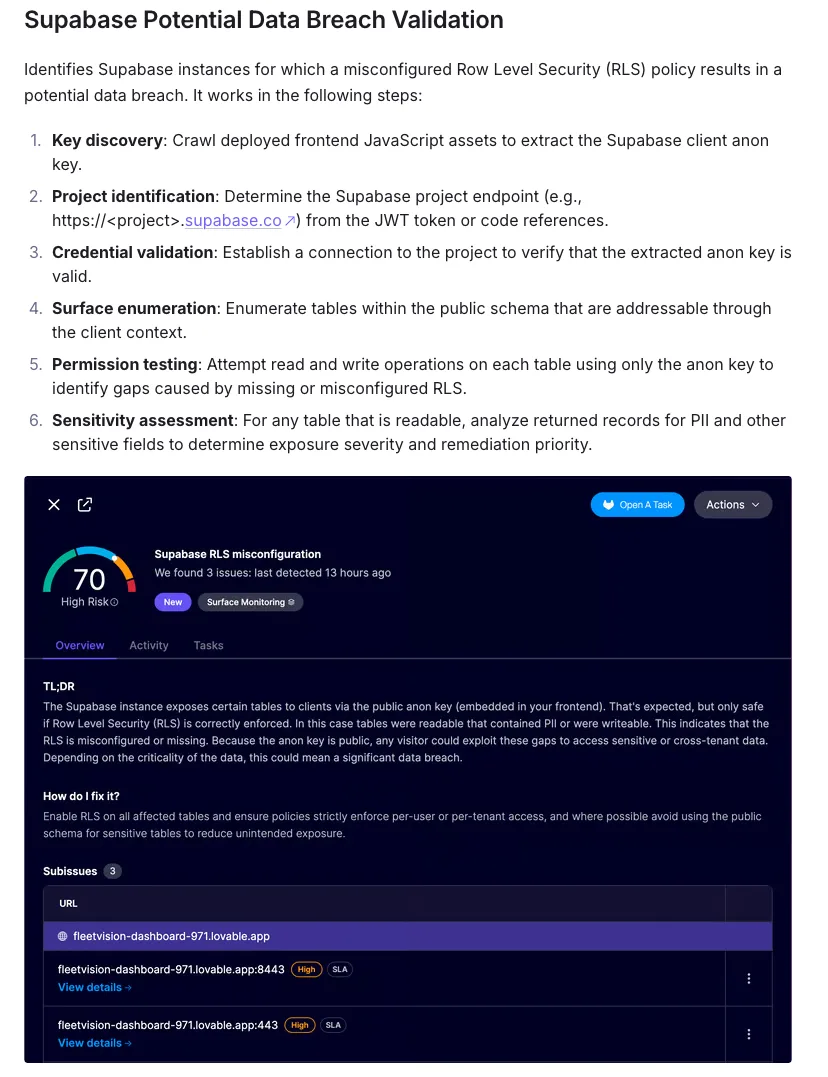
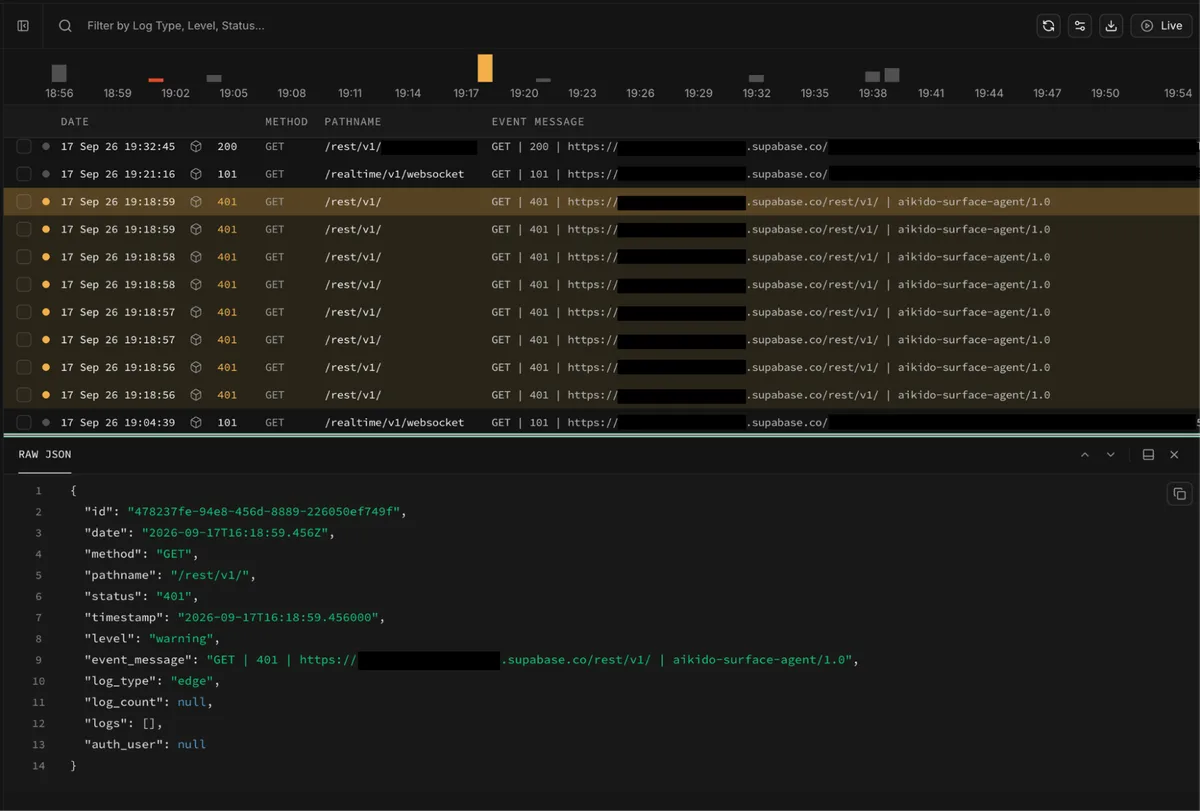
The researchers say a common way to scan Supabase apps no longer works. Previously, an attacker could find the publishable key in client-side JavaScript, read the OpenAPI schema to list tables, and test what anonymous users could access. Supabase has since removed anonymous access to that schema. In their tests, disabled row-level security (RLS)[1] accounted for only about 25% of the vulnerabilities they found, and the other 75% were variants of that flaw or unrelated to RLS. Exposed data included personal data of users in hundreds of thousands of rows, private AI conversations and their uploaded documents, sales pipelines, call recordings, payment details, and customer support chats.
Many internal applications, often built with AI and meant only for employees, let anyone create an account. Once logged in, authentication was often the only barrier, so the team set its scanner to sign up on each target and repeat every test as a logged-in user. Registration could be bypassed in several ways: by calling /auth/v1/signup directly, even when the interface had no sign-up form; by getting around an email domain check that existed only in the frontend; or through a Before User Created hook[2], which stayed vulnerable if email confirmation was disabled, if the allowed-domains table had a permissive policy, or if the hook allowed unrecognized domains by default.
Requests to the PostgREST API[3] pass through three layers: exposed schemas, Postgres access rights, and RLS policies. For every table, the team varied the schema, the role, access to individual columns, and the action, either a read or an insert. RLS is the only one of these layers that can see which caller is making the request. A policy such as to authenticated using (true) is valid, but it ignores who the caller is.
Read the original oneleet.comDiscussion
Sources
-
Oneleet
Supabase Security findings why RLS is only 25% of the issues

