Solar power overtakes nuclear as panel prices hit record lows
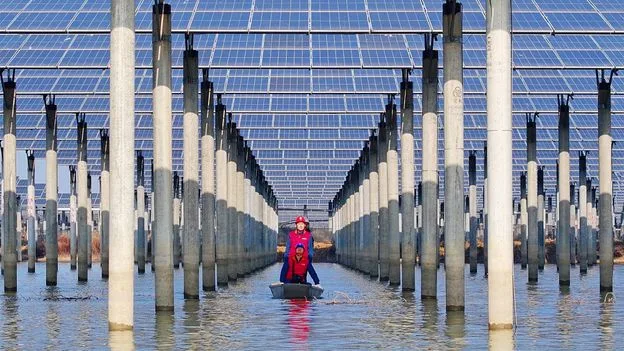
Global solar generation overtook nuclear power in 2025, according to statistics from the UK-based energy think tank Ember[1], and analysis of Ember data for the 12 months to September 2026 shows solar producing 13% more electricity than nuclear. A decade ago solar provided just 1% of the world's power; in 2026 its share will almost certainly reach 10%, overtaking nuclear, which has been a mainstay of electricity since the late 1970s. Nuclear generation has stayed roughly constant since 2000, while solar's has grown around 2,700-fold.
Solar became the cheapest electricity in history in 2020, and a sharp fall in panel prices in 2023-24, driven by Chinese manufacturing scale and overcapacity[2], pushed a panel's cost to well under $100 (£75) while it generates power for 30 or 40 years. Solar is the fastest-growing source of new electricity in history and in 2025 met three-quarters of the growth in global electricity demand, overtaking wind. New solar has met 60% of India's rise in power demand in the past two years, Pakistan went from under 2% of its electricity in 2019 to 24%, African countries install some 100,000 panels per day, and in Australia over four million homes, well over a third of all households, have rooftop solar. Despite tariffs, the US remains second in installations and now has enough solar to power more than one-third of its households.
Batteries are extending solar's reach: solar plus storage[3] is now routinely cheaper than new fossil plants in sunny regions, and in California solar and batteries met on average over a quarter of electricity demand from 19:00 to 21:00, the evening peak, in the first half of 2026. Researchers calculate that rising US wind and solar generation brought $249bn (£186bn) in climate and health benefits between 2019 and 2022, and renewables already make up over 90% of new capacity in the US. The limits on solar are now grids, storage and the pace of electrification[4] rather than panels or cost, says Jan Rosenow of the University of Oxford.
Read the original bbc.comDiscussion
Discussion
Commenters mostly agree solar is cheap but argue that US tariffs and federal policy keep it expensive for American consumers, and several object to the word 'quietly' in the headline. Others point out the gap between the headline quote 'offensively cheap' and the speaker's direct words 'unbelievably cheap', while some contend solar's low density and land use mean it still needs wind, nuclear or storage alongside it.
Sources
-
bbc.com
Solar power is becoming bigger than nuclear
-
KRGeekNews KO
태양광 발전, 원자력보다 커지고 있음


