Six facts of macrohistory: everyone used to be poor, and growth is speeding up
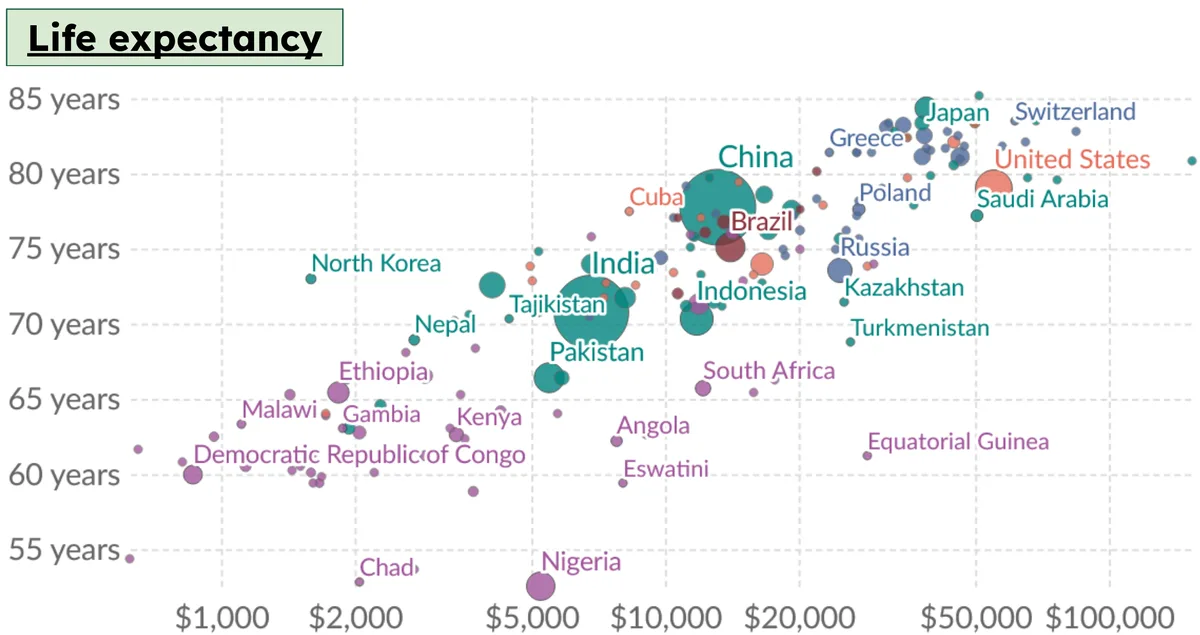
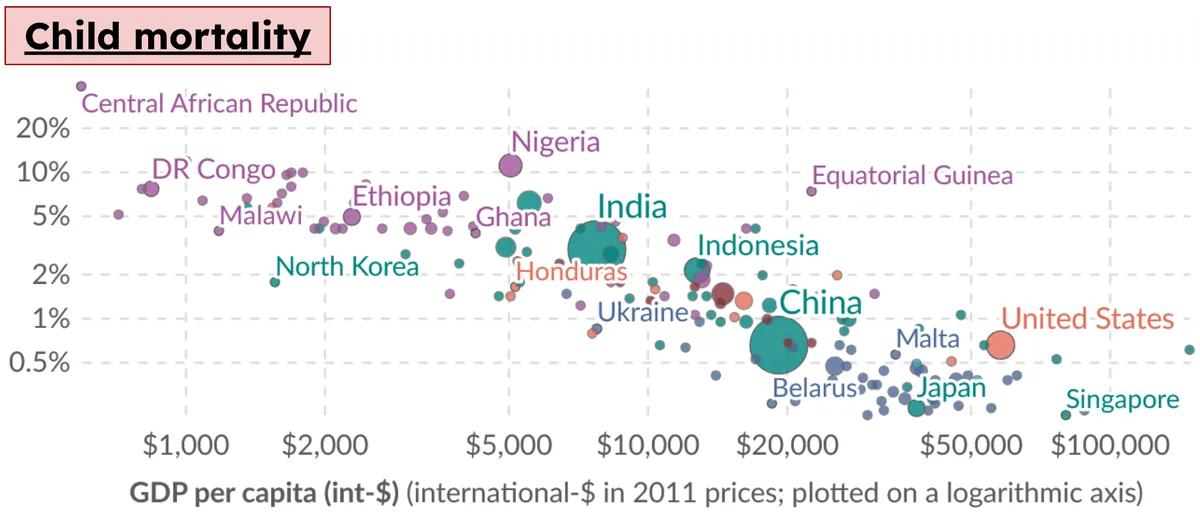
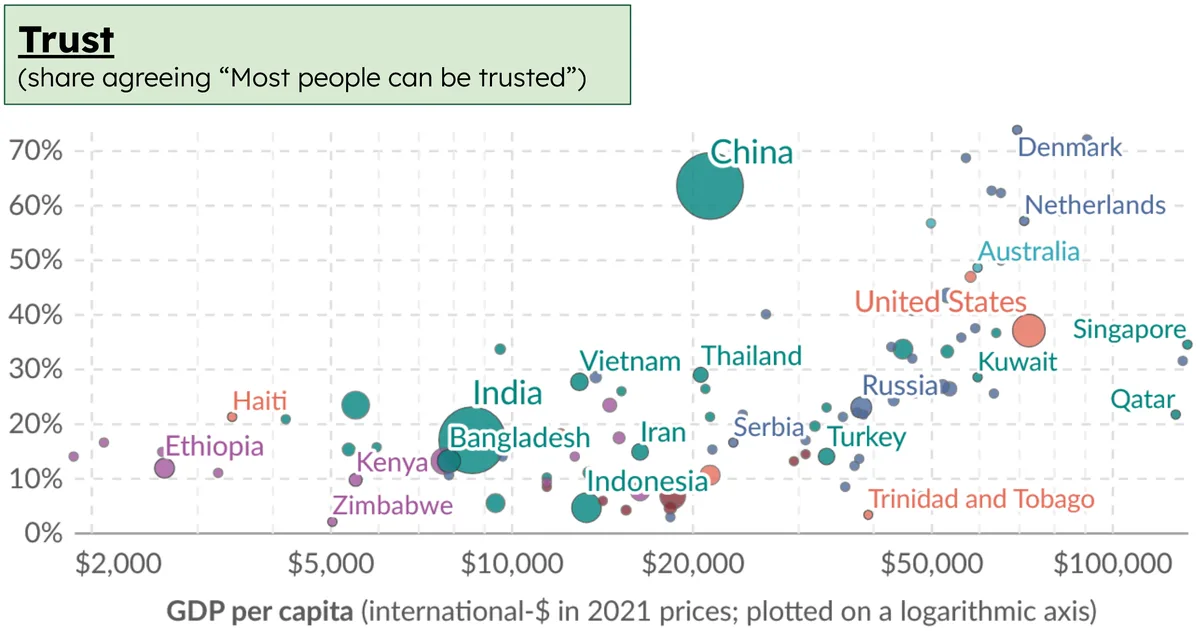
Basil Halperin condenses the lessons of macroeconomics and macrohistory into six facts, which he uses to frame an undergraduate macro course. He uses GDP[1] per person as the measure of well-being and finds that richer countries have happier people, longer lives, fewer infant deaths, more trust in neighbors, and less work. He notes that these are correlations rather than causes, and that richer countries also emit more CO2 per person.
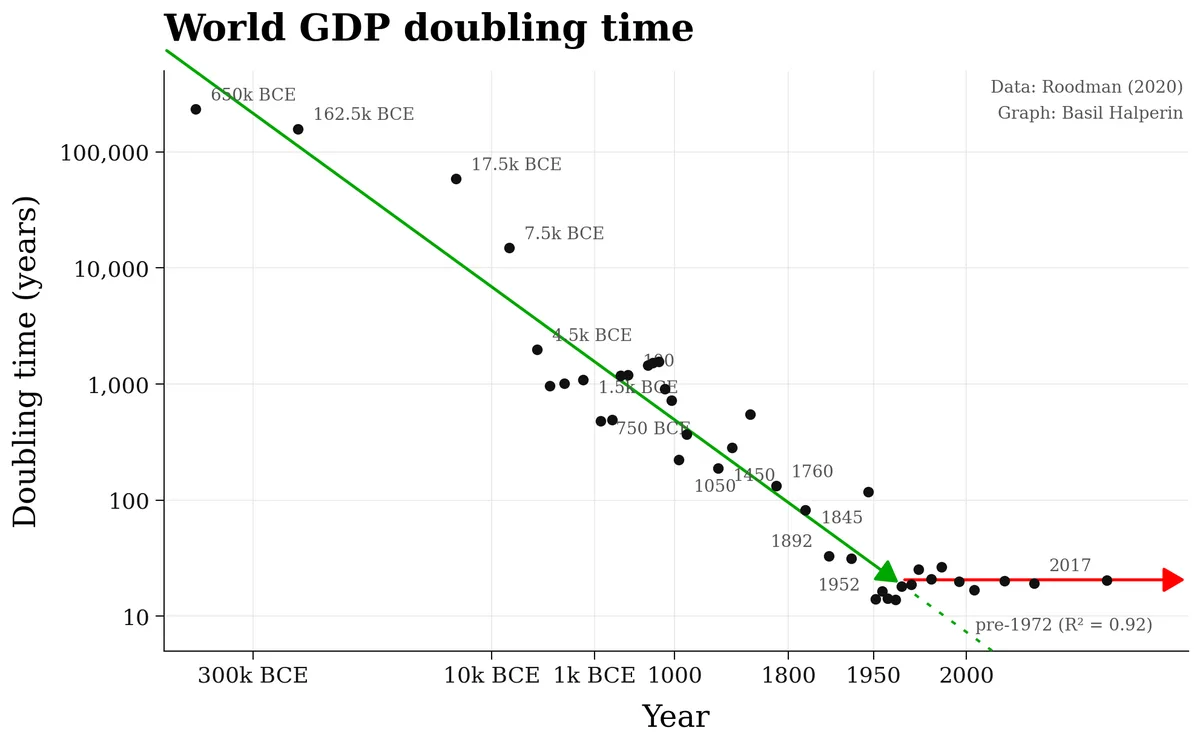
Everyone used to be poor: people today are about 10 times richer than their great-great-great grandparents, who were about 2 times as rich as Jesus of Nazareth. Before the Industrial Revolution this was a Malthusian trap[2]: any rise in wages led to more surviving children and a larger population, until wages were driven back to subsistence[3]. Growth rose from 0.01% per year to 0.1% around 1750, to 1% around 1870, and to the modern 2%.
US GDP per person has grown at a steady 2% per year for the last 150 years, with a temporary drop during the Great Depression. Japan and South Korea, about as poor as sub-Saharan Africa is today at the turn of the 20th century, caught up closely with the US, while Argentina, once one of the richest countries, stagnated. Looking back 1 million years, the time for world GDP to double has fallen from about 100,000 years to about 35 years.
Read the original basilhalperin.comDiscussion
Discussion
Commenters mostly question GDP as a measure of well-being, saying it misses things like cycling instead of driving, which lowers spending without lowering quality of life. Others doubt that macrohistory means only economic history, and some disagree with the author's remark that being born in the US is luck. One commenter recommends Andrew McAfee's book More from Less.
Links from the post and discussion
Sources
-
Basil Halperin
Macrohistory in Six Facts
-
KRGeekNews KO
여섯 가지 사실로 보는 거시경제사


 archive