SenseNova-Loop-9B GGUF model page on Hugging Face

This Hugging Face page is the model card for SenseNova-Loop-9B in GGUF[1] format. On 18 November the page added download links for the AWQ and GGUF weights. SenseNova-Loop-9B itself was released on 17 November with weights and code, after a Preview version on 31 October.
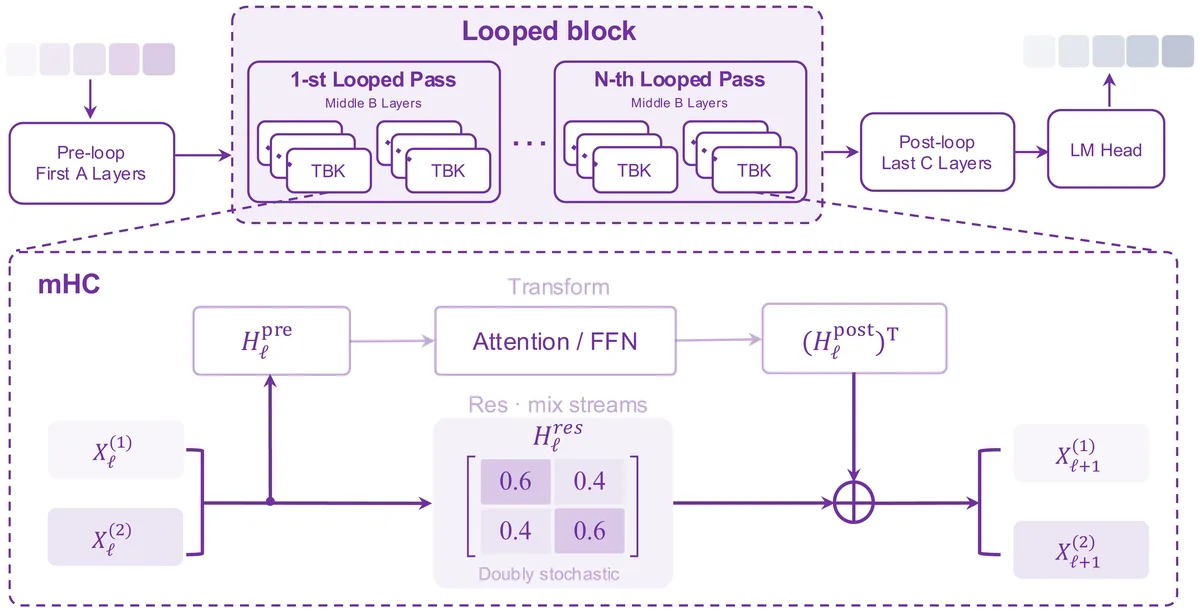
According to the description, the model reuses layer weights through a looped architecture and combines this with manifold-constrained hyper-connections (mHC)[2]. This expands computational depth within a compact parameter budget. The model is designed for complex reasoning, coding, tool use and multimodal tasks.
The page gives instructions for running the model with llama.cpp[3] and the Q4_K_M quantization, which starts a local server compatible with the OpenAI API. It also describes running it with vLLM, SGLang, Ollama, Docker Model Runner and several agent tools.
Read the original huggingface.coDiscussion
Discussion
Commenters report mixed results. One user with an RDNA2 card got 6 t/s, rising to 15 t/s after a fix, and said that MTP[4] seems almost useless on this model. Another worried about memory needs on low-spec machines, then corrected that the reported figures are total memory requirements, not only one part of them. Two other users said LM Studio and Unsloth Studio failed to load the model because of an unknown architecture named 'sensenova_loop'.
Links from the post and discussion
Sources
-
huggingface.co
sensenova/SenseNova-Loop-9B-GGUF · Hugging Face


