RTX 5080: over 220× FPS boost from new DirectX Raytracing, 3.4× faster than RX 9070 XT

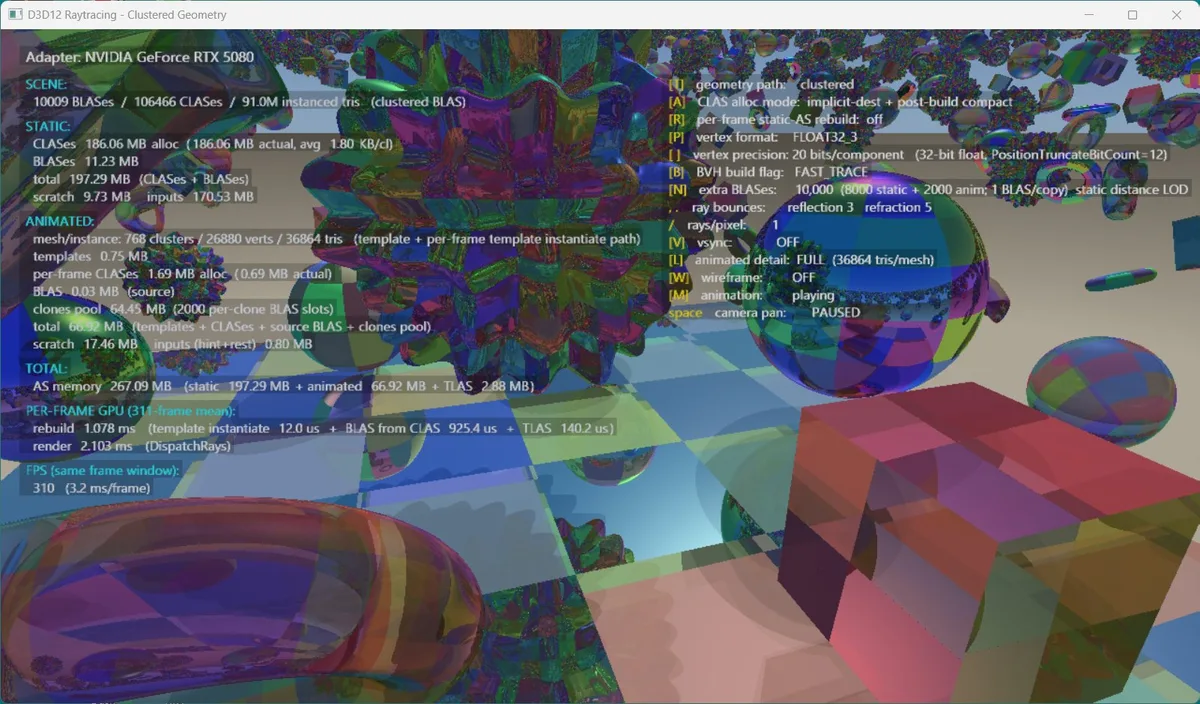
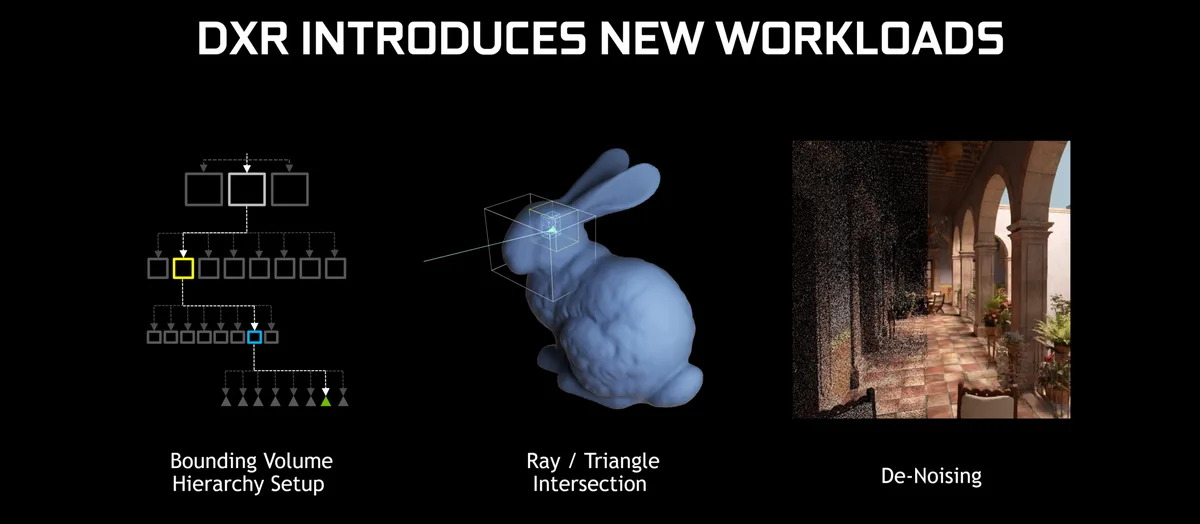
Graphics enthusiast Osvaldo Pinali Doederlein ran Microsoft's D3D12RaytracingClusteredGeometry sample on a GeForce RTX 5080, comparing the new Clustered Geometry feature of DirectX Raytracing (DXR)[1] against conventional Bottom-Level Acceleration Structure (BLAS)[2] rebuilding, with the animation paused on the same frame for a consistent comparison. With Clustered Geometry enabled, the card delivered 310 FPS instead of 1.4 FPS — roughly 221× higher frame rates — along with 720× faster acceleration structure rebuilding and 94.3% lower memory consumption. Ray dispatch time itself rose slightly from 1.8 ms to 2.0 ms, showing that the gains come from eliminating acceleration structure construction overhead rather than from faster ray traversal.
Against the Radeon RX 9070 XT, which managed 91 FPS with Clustered Geometry, the RTX 5080 was about 3.4 times faster and consumed less acceleration structure memory, which Doederlein attributes partly to NVIDIA's more mature Bounding Volume Hierarchy compression, in place since the Turing architecture. With the feature disabled, however, the RX 9070 XT was ahead at 1.7 FPS versus 1.4 FPS. Doederlein cautioned against extrapolating the numbers to real games: the sample lacks a level-of-detail system, and real-world path-traced games[3] employ far more sophisticated optimizations.
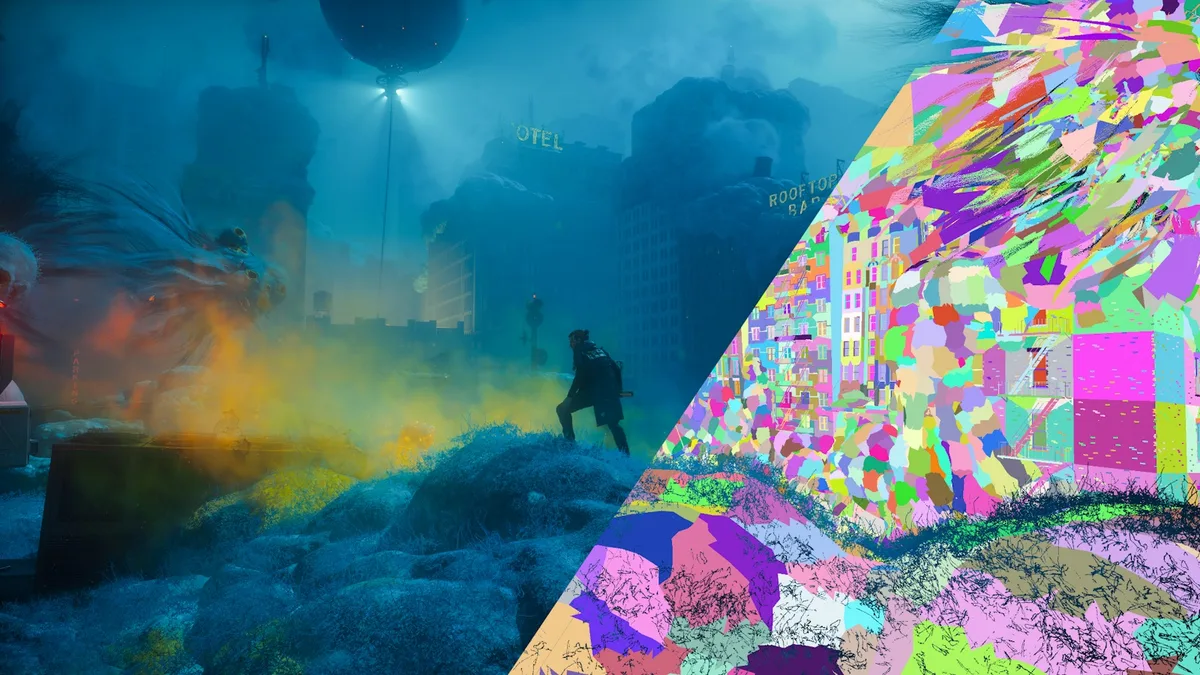
A new NVIDIA whitepaper explains that Clustered Geometry and Partitioned Top-Level Acceleration Structures (PTLAS)[4] essentially standardize key capabilities of its RTX Mega Geometry technology: Clustered Geometry organizes triangles into reusable acceleration structures that avoid expensive rebuilds when detailed meshes are animated or modified, while PTLAS lets developers update individual sections of a large environment instead of rebuilding the entire top-level structure. NVIDIA demonstrates the potential with an upcoming DirectX 12 sample of a 25 km² forest holding 60 million individually animatable plants rendered with real-time path tracing and using 636 reusable tessellation patterns; NVIDIA has already demonstrated this RTX Mega Geometry foliage technology for The Witcher 4. NVIDIA Game Ready Driver 621.01 already supports Clustered Geometry and PTLAS across every GeForce RTX generation without a dedicated preview driver, though the DirectX 12 features themselves remain part of Agility SDK 1.722 Preview, and AMD currently offers a separate developer preview driver for compatible Radeon GPUs. Microsoft's standardization of the technologies should make advanced geometry management accessible across supported NVIDIA, AMD and Intel hardware.
Read the original wccftech.comDiscussion
Discussion
Commenters are most excited about the memory savings, though several stress that actual gaming gains will be far more modest. Many ask which existing or future games will use the technology, which GPUs it will run on and when it will ship; one commenter cites Alan Wake 2 as an existing implementation that only becomes effective from 2 million triangles in a scene.
Sources
-
wccftech.com
NVIDIA RTX 5080 Sees Over 220X FPS Boost With New DirectX Raytracing Technology, Outpaces RX 9070 XT By 3.4X