Reply to Patrick Collison on why public spaces look worse today
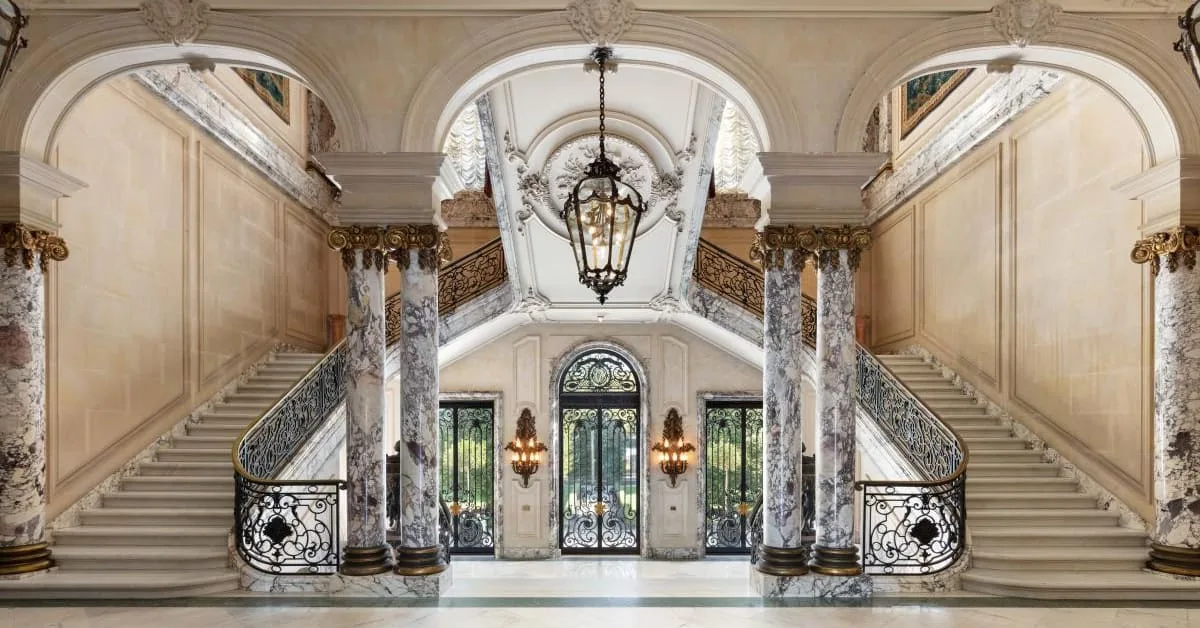
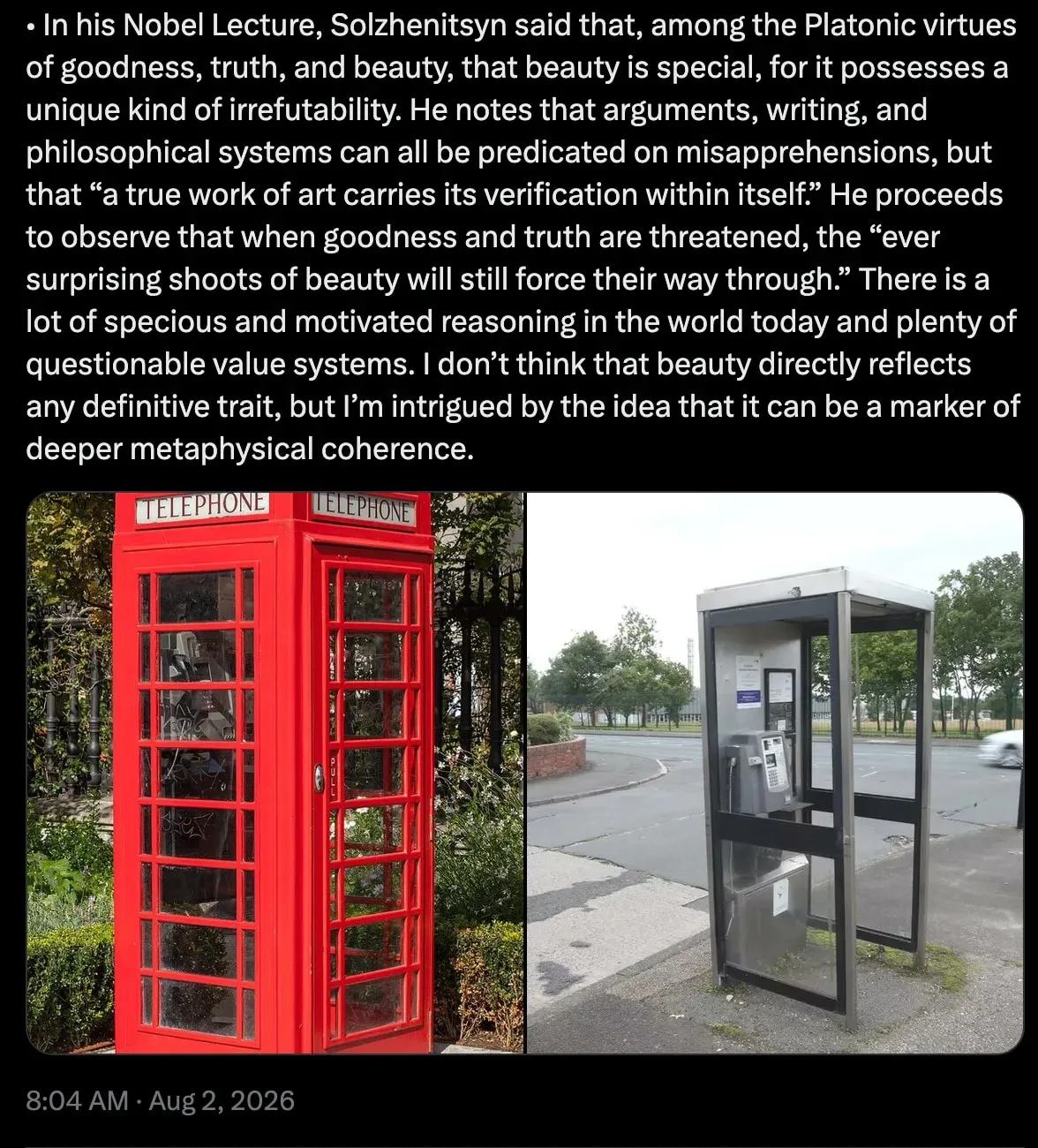
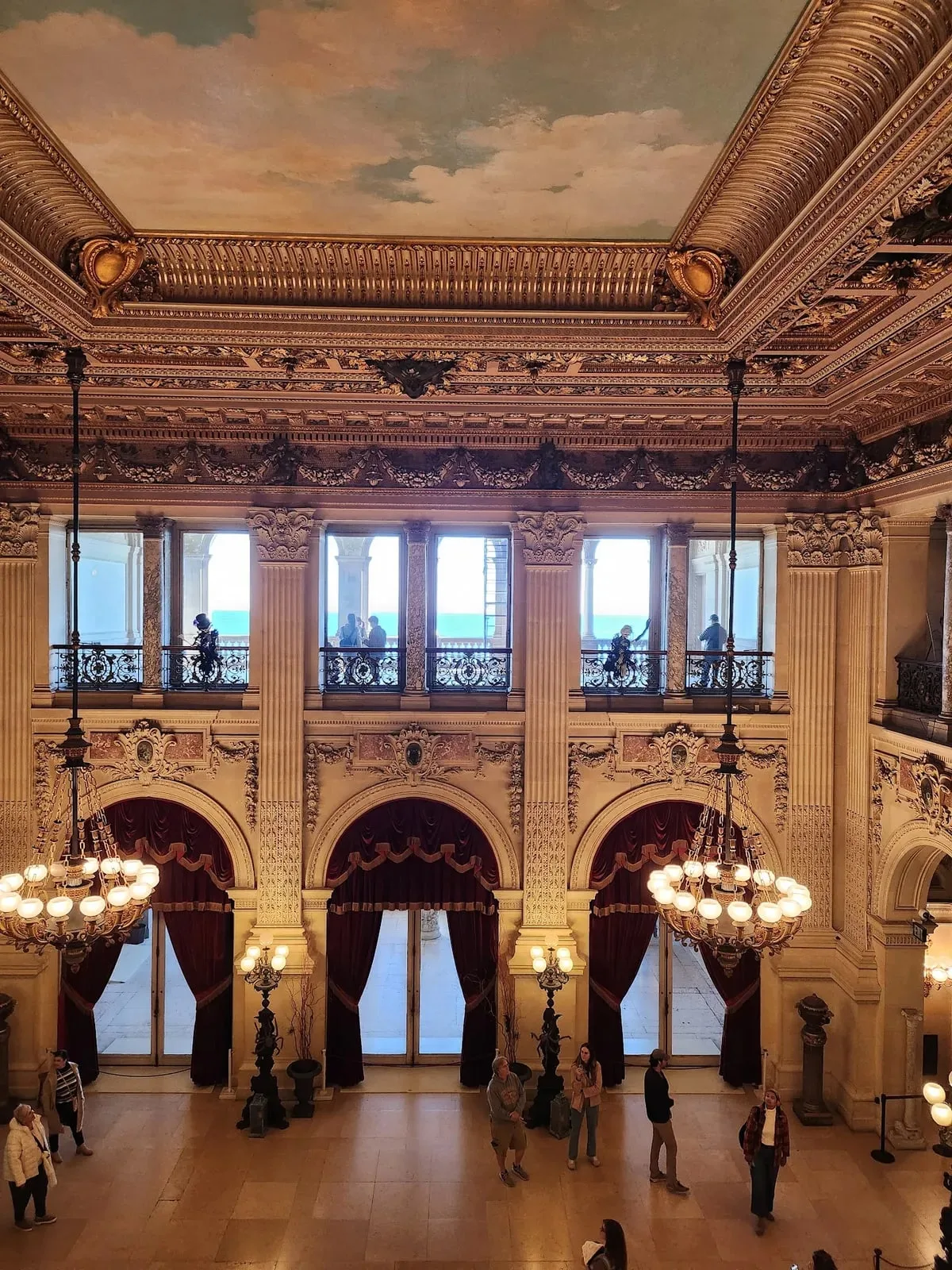
The author wants public spaces to be more beautiful and comfortable, and argues that the usual explanations for their ugliness are wrong. Patrick Collison wrote in an X post that many things today are uglier than they used to be, such as early twentieth-century phone boxes and water fountains, and asked why this happened.
The author rejects the idea of an evil elite or counter-signalling. Elite places such as Michelin-starred restaurants and Four Seasons resorts are comfortable inside, urban planning courses teach humane design, and urban planners are not elite. The author proposes that the cause is Baumol's cost disease[1]: labour-intensive work like childcare gets more expensive as wages rise in productive sectors. The author also cites Ben Southwood's piece, which argues that ornament could be mass-produced and so should not be affected by this effect, and calls that counter-argument empty.
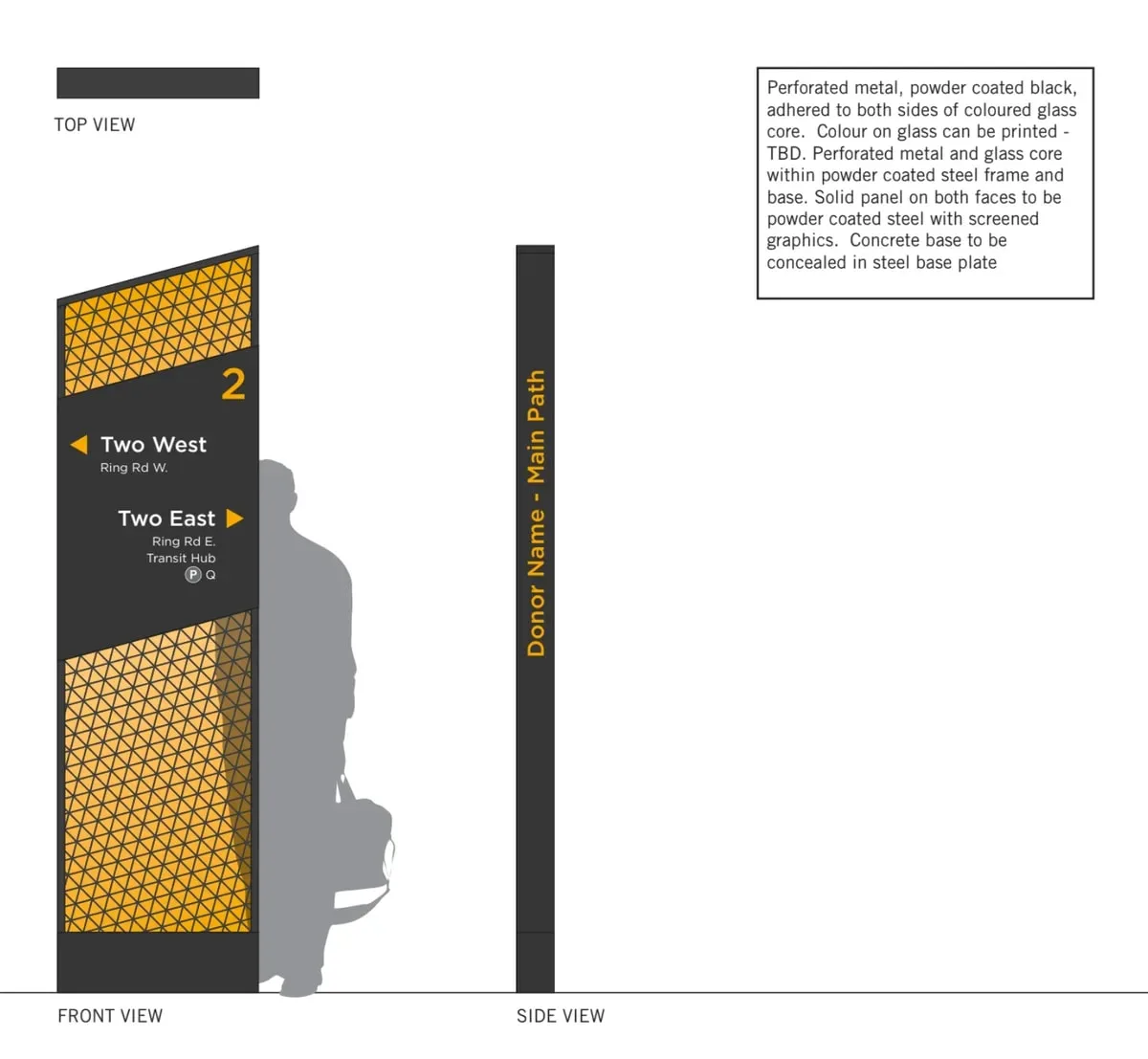
The author also describes a university signage project. The plant operations department, which maintained about 8,000,000 square feet of space, objected that elaborate signs would be stolen, warped by power washing, or vandalised, and its budget could not cover upkeep. The final signs were almost exactly what such requirements would produce.
Read the original jenn.siteDiscussion on LessWrong
Discussion
Commenters mostly say the post added a useful hypothesis. One commenter argues that the market is increasingly guided by its own internal structure, with Baumol's cost disease as an example, while another says there is no proof that more R&D funding would fix the problem. One commenter also notes that a chatbot gave a higher modern price for a public bench than for one in 1925, and asks why, if Baumol's effect explains design, benches cost more now.
Sources
-
LessWrong
Patrick Collison you are WRONG about street furniture!!!