Real2Sim2Real: from on-site scanning to robot test environments

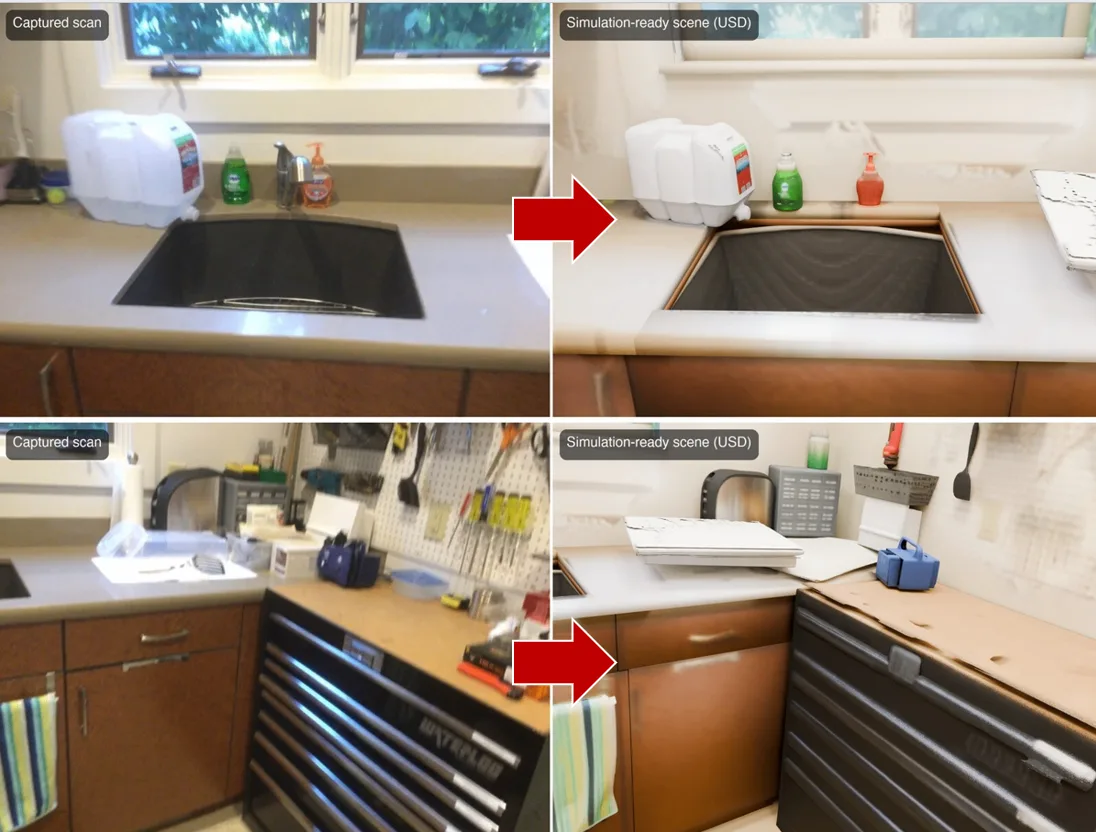
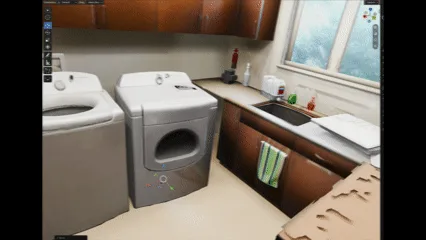
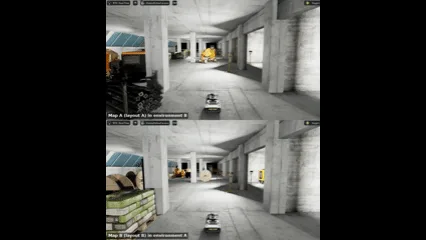
Kudan builds simulation environments from scans of real sites to develop autonomous mobile robots. The Real2Sim2Real[1] approach has four steps: digitize the site, turn the data into a space the robot can move in, increase the number of conditions, and then test and check on site. The article says that in practice the hard part is less the scanning itself than converting the data into a usable environment and deciding which conditions to add.
Handheld SLAM scanners have improved a lot, and in 2026 some products claimed a relative accuracy of 5 mm. Scans from camera images can now produce 3DGS[2] data, but point clouds and 3DGS cannot by themselves calculate robot movement, collisions or physical behavior. Kudan has tested an LLM[3] that operates 3D modeling software. It read wall and passage dimensions roughly correctly, but tilted walls, telling doors from walls, and removing people and noise still needed human work. Kudan is also prototyping automatic reconstruction of individual objects from scans.
Domain randomization[4] changes object placement, lighting, weather, floor condition, people, vehicles and sensor noise on each test run. Kudan used it to check the robustness of self-localization. Simulation is useful for scenarios that are hard to reproduce safely on site. In one case, automated runs of candidate causes and conditions found the cause of an obstacle-avoidance failure in one night, work that had taken days on site. The article says efficiency gains can reach dozens of times or more when many conditions are involved.
Sources
-
JPZenn JA
Real2Sim2Realの現在地:現場スキャンからロボット検証環境へ